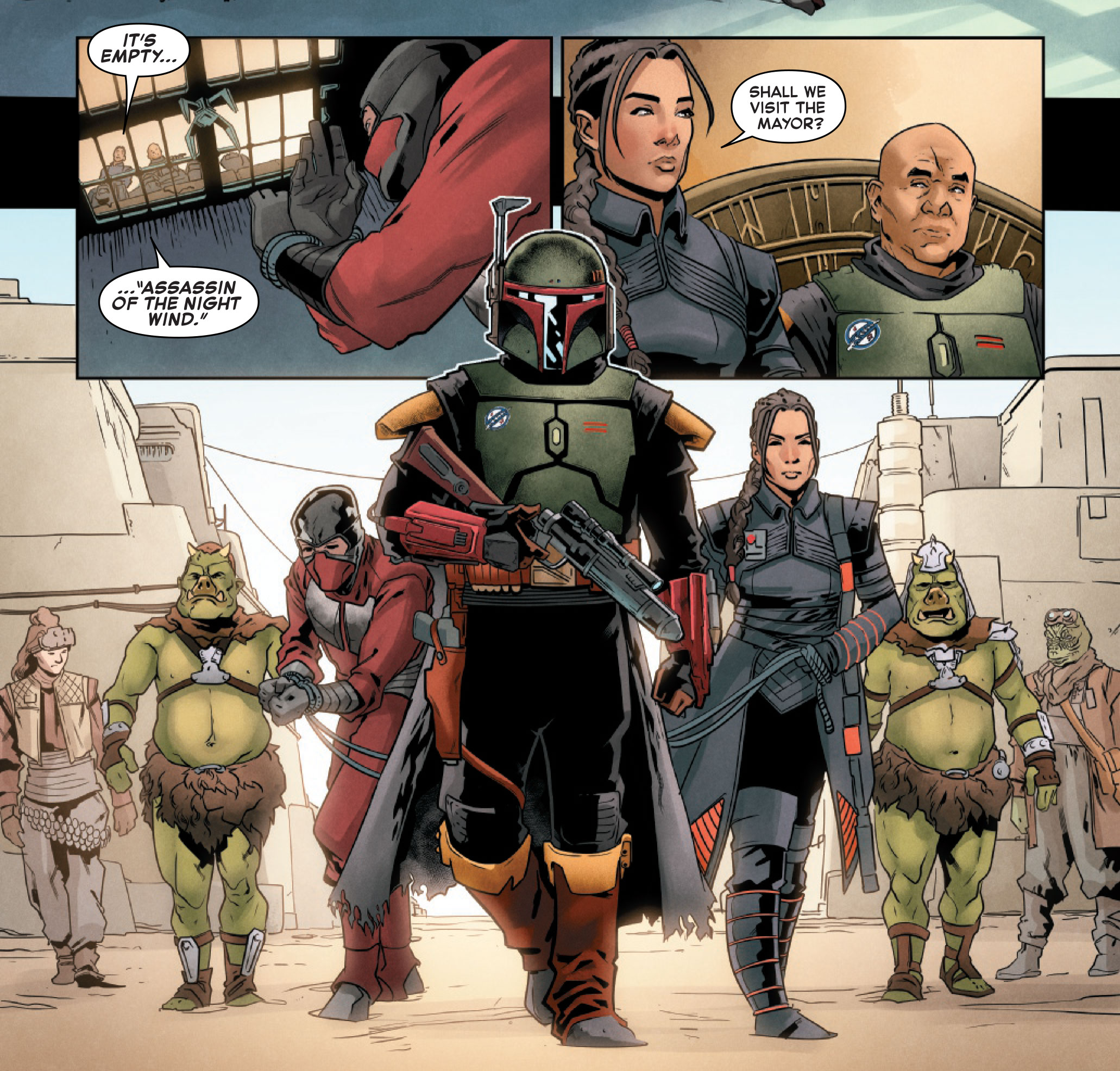
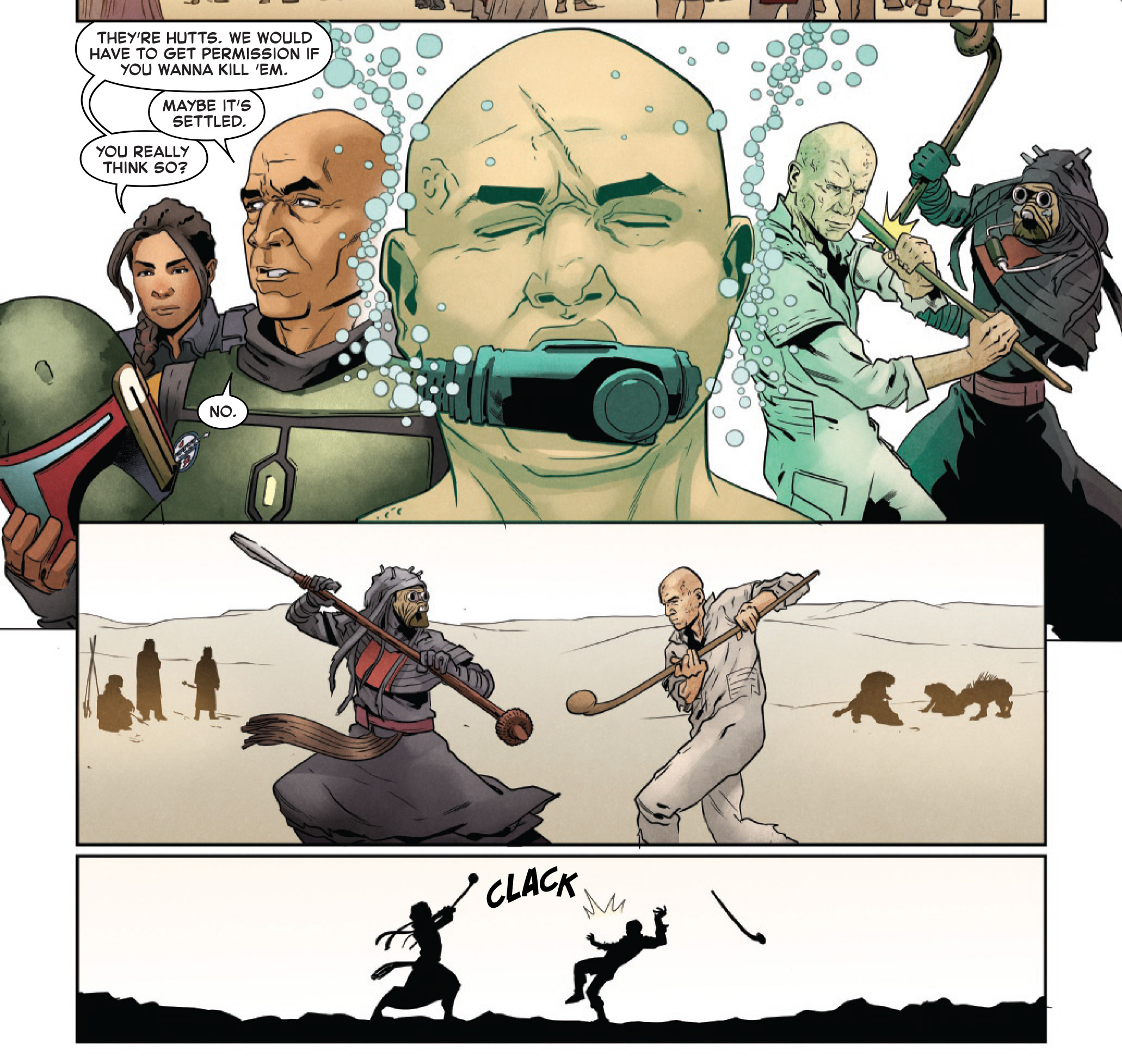
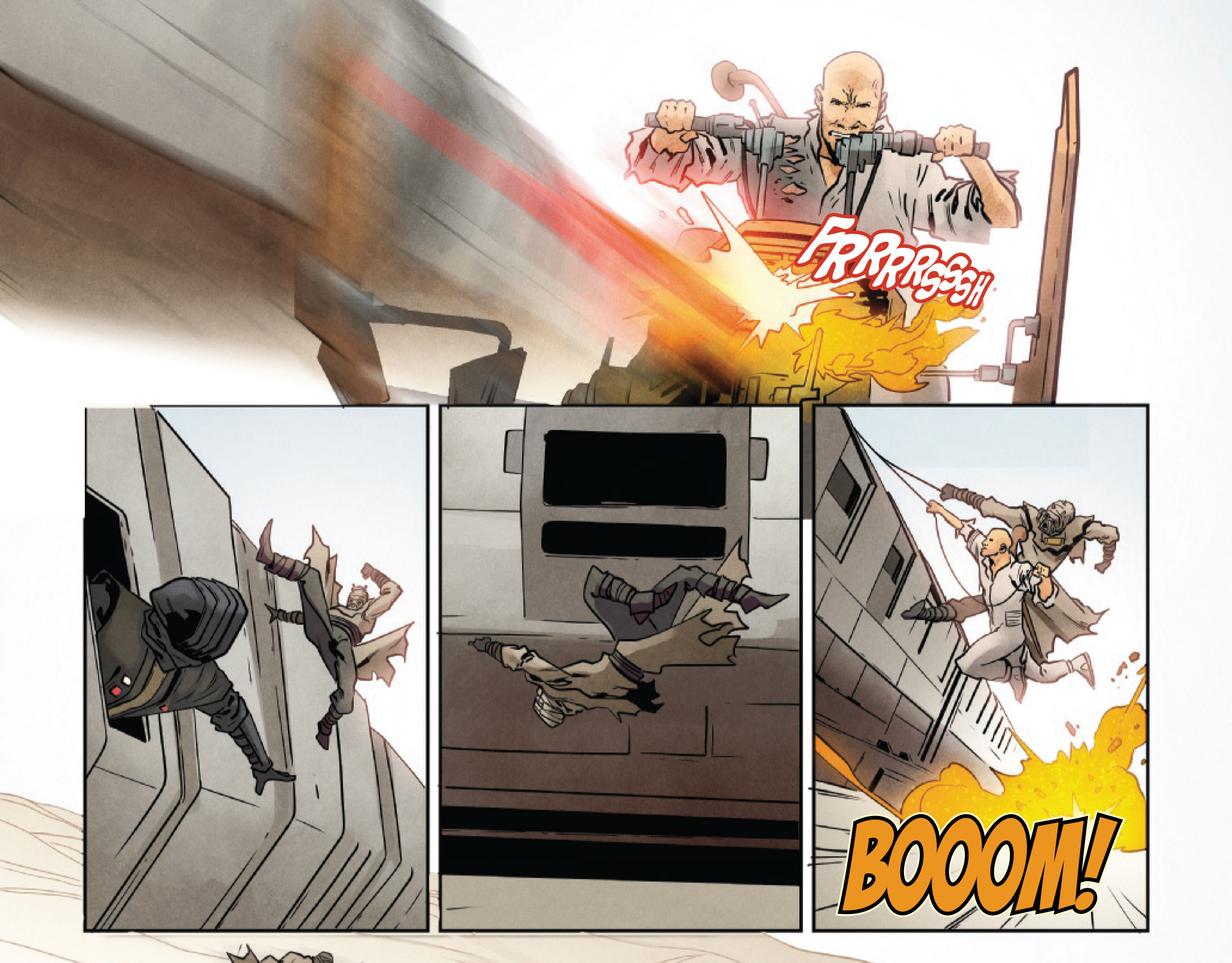
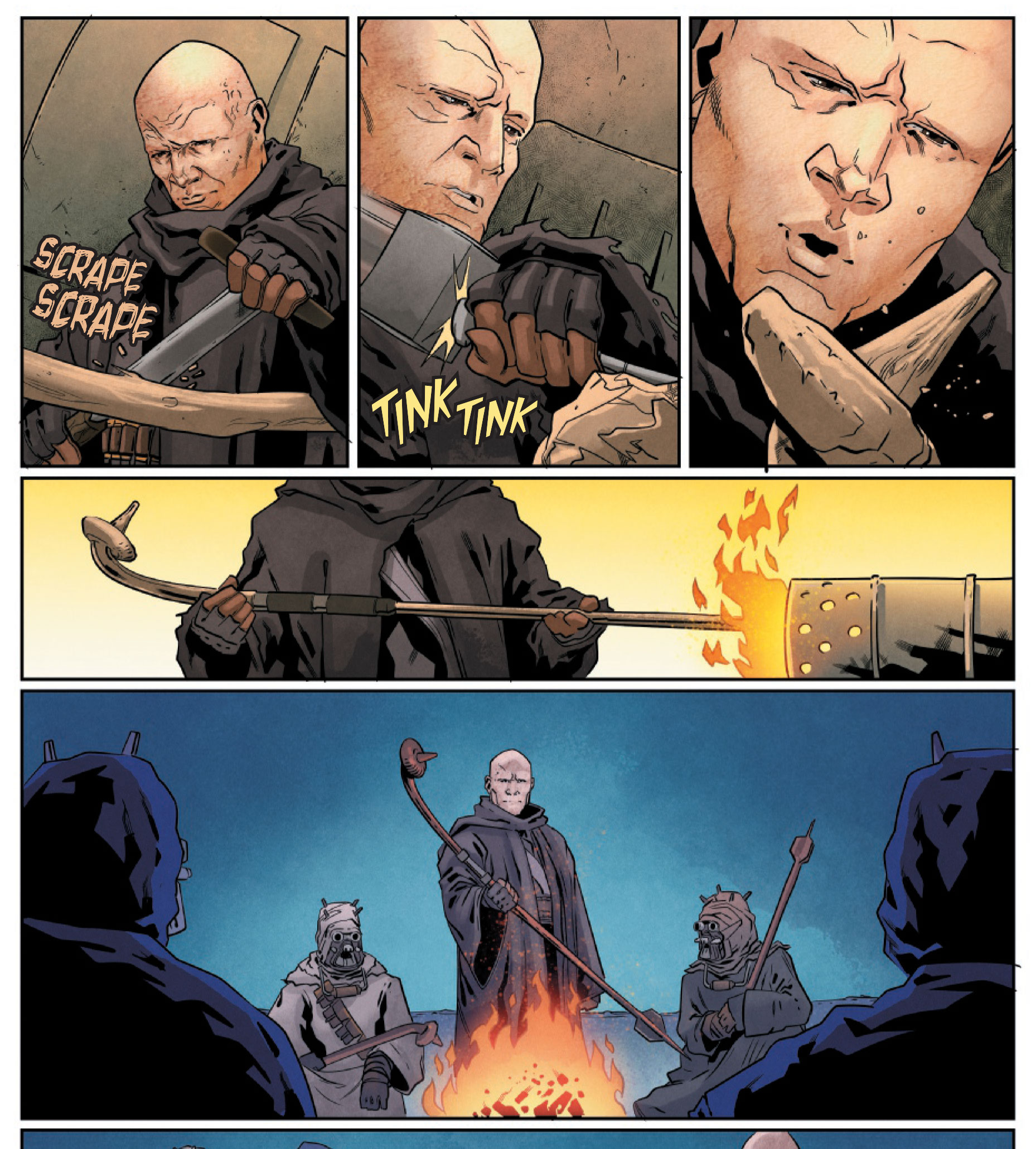
News

The Bad Luck of Boba Fett

Published March 9, 2026Updated • Written by • Filed under Fettpedia

What’s bad luck? It’s misfortune that leads towards failure. Bad luck isn’t prejudicial either — it can happen to the best of us. As great as Boba Fett is, considered among the best bounty hunters in the Star Wars galaxy, and certainly the best within the framework of the Original Trilogy lore, he has had his share of misfortunes that led to failure. In this article I explore all the bad luck that plagued his otherwise envious legacy.

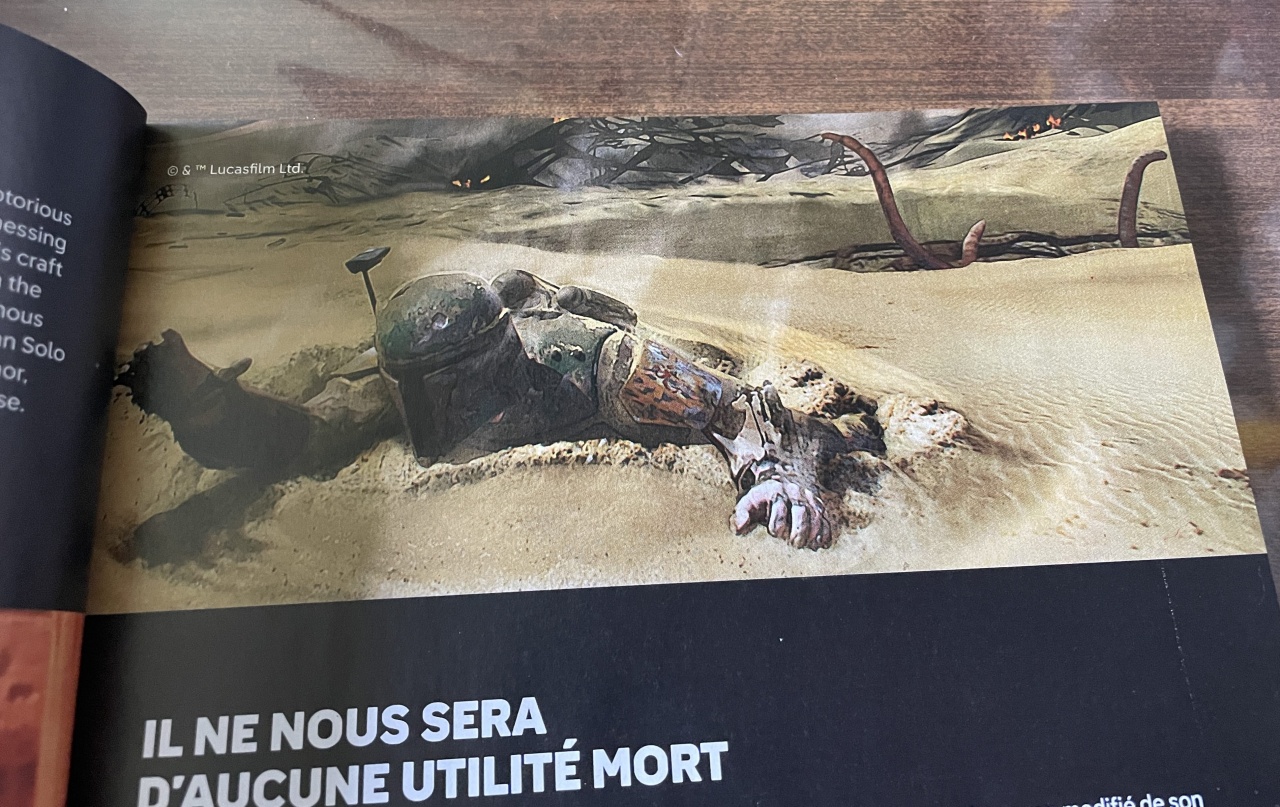
It would be dishonest for any fan of the Fett men to not admit Boba’s defeat in “Return of the Jedi” wasn’t comical, just as a general moviegoer. It was meant to be, of course, except for anyone who wanted to see more out of the character and felt he didn’t deserve a gruesome fate in the belly of a creature that slowly ate its victims alive in a cavernous acidic belly with tentacles nearby to hold down any food that attempted escaping the mouth. As a movie fan I know it is an effective technique to kill villainous characters in humorous and gruesome ways, but did Boba deserve it?

To understand that moment best we have to go before the release of “The Empire Strikes Back.” Boba Fett’s bad luck began with how he was introduced, on the “Star Wars Holiday Special,” which aired in November 1978 on the CBS network. There was nothing wrong with his appearance but the production as a whole was below the standards of a Star Wars movie. The Holiday Special as a whole was never given an official release but the animated segment Boba Fett first appeared in is now a separate independently available title in the Vintage category of Disney+ Star Wars (“The Story of the Faithful Wookiee”) but it was originally released within that infamous 98 minute TV movie that was preserved by fans who circulated bootlegs of the recording much to the dislike of George Lucas. Eventually it would get shared over the Internet becoming a more global sensation. George was not a fan of the Holiday Special but there was nothing he could do about it.

Most Star Wars fans agree that the Boba Fett animated segment of the Holiday Special is one of the saving graces of the production, more than the return of some of the original film’s cast, or the celebrity musical segments (who doesn’t love Bea Arthur singing in a Cantina though?). But for a character as high quality as Fett to have The Holiday Special as his “First Appearance” was embarrassing, but at least in a unique way. The only other character that had a “first appearance” as unlucky is Quan-Chi from the “Mortal Kombat” universe, who first appeared in a forgettable kids cartoon called “Defenders of the Realm” before becoming an iconic figure in that famous fighting game series. Boba Fett’s 1978 television appearance would prove to be a blessing, although had he not become a popular character it probably would not have mattered. Without the animated segment the Holiday Special is nothing much more than an advertisement for a Wookiee holiday called Life Day that’s sort of the Thanksgiving of Star Wars with a focus on family. Boba Fett overcame his initial hit of bad luck, but it was the first example of it, thus noteworthy to this story.

The following year in 1979 bad luck struck again when the Kenner toy company had planned to give out rocket-firing Boba Fett action figures in a mail-away promotion but then pulled the feature due to it being a possible choking hazard. A few prototypes survived and were auctioned off for a lot of money, as high as $1,342,000 in a 2024 auction, something nobody back then could have seen coming. The irony is not lost that what was meant to be a free Boba Fett toy turned into one of the most expensive toy collectibles ever. Boba Fett survives bad luck yet again, but at the expense of those fans that should have got those figures back in ’79 in anticipation for “The Empire Strikes Back.”

“The Empire Strikes Back” was the first official sequel to Star Wars, an epic film that perfectly blends sci-fi action and fantasy that starts with on an ice planet that becomes a battlefield that has the forces of good departing their base and the forces of evil pursuing them. The story then leads to a swamp planet for one character and a city in the clouds for the others. It ends with the heroes uncertain about their fates rather than a traditional style of ending. The protagonist Luke Skywalker discovers an unpleasant truth about his father, the twisted Darth Vader, while a city administrator Lando Calrissian betrays and fails to save his smuggler-turned-hero friend Han Solo, who gets taken away by the bounty hunter (Boba Fett) who accomplishes two jobs at once, proving his worth as an asset to both the Empire and Underworld.

While Han Solo gets hurt bad by Boba Fett, especially given Vader doesn’t mind torturing him prior to Fett delivering him to Jabba, it’s really Princess Leia, Lando, and Chewbacca who Boba hurt the most in the film, as they are who love Han Solo the most. We see Leia’s moment of heartbreak in losing Han right after she admits her feelings for him before Vader orders Han encased in carbonite. We see Leia’s look of sadness upon seeing Boba Fett (“the bounty hunter”) fly away in his starship (Slave I) with her boyfriend in the cargo hold; it’s one of the most memorable in the Skywalker Saga. Sadly one scene that was filmed for the movie where Boba Fett’s name is said out loud in a conversation between Luke and Leia was deleted, which was unlucky in the sense that he never got a proper name introduction in The Empire Strikes Back, although maybe it was for the best since then it would leave people curious as to how Lando knew his name, since Boba didn’t seem like the type to give out personal information.

Jeremy Bulloch, who played Boba Fett, also expressed that what made Boba Fett very special was the “mystery” around him, as said in an interview from the “Bucket Head” webisode made for Episode II: AOTC. Jeremy was very much right in that, that the initial intrigue is the mystery of the character, and not knowing much about him. In the same interview from “Bucket Head” he also mentioned how his son thought it was funny how his character Boba could look cool despite being a guy with a bucket for a head. So the mixture of mystery and looking simultaneously cool and silly are what give birth to the Boba Fett effect, something unique to him that other Mandalorian characters could never truly have because they are made from his image rather than completely original character ideas.

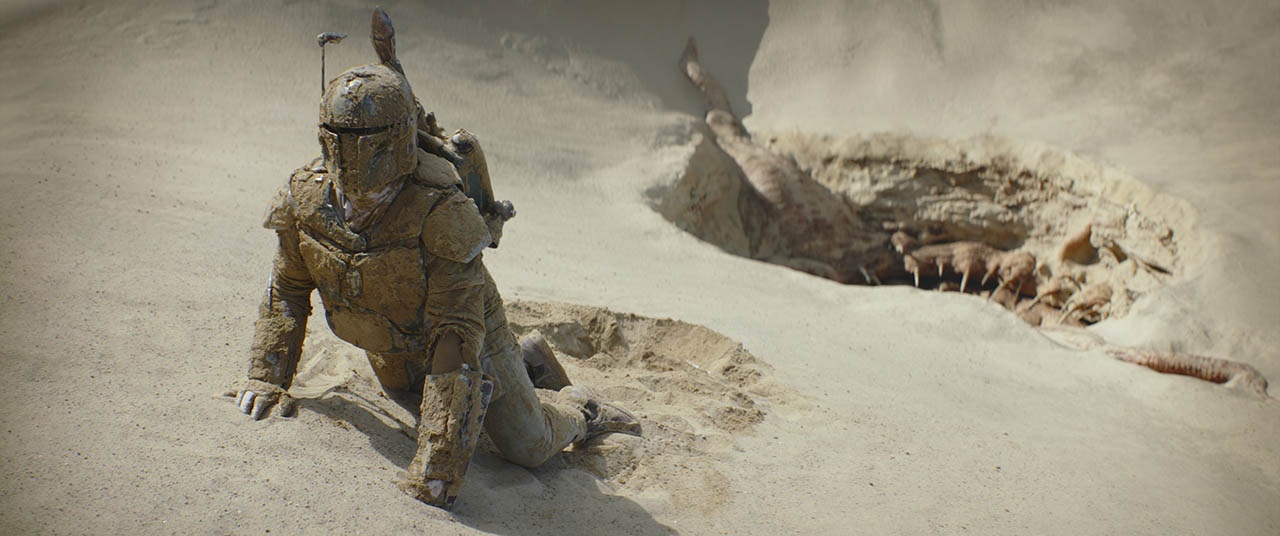
Right before “Return of the Jedi” (originally titled “Revenge of the Jedi”) released many theorized what the role of Boba Fett would be. Some hypotheses/theories were published in magazines (like in “Fantastic Films”, April 1982) with ideas such as Boba Fett working undercover for Lando to save Han from Jabba. Some people wondered if Boba was a Skywalker himself and others wondered if he was maybe a female character under the armor. The most accurate theory was that Luke would have to come save Han Solo and fight off Boba Fett, but even that accurate prediction could not have seen Boba Fett humiliated and a victim of blind luck when a vibro-ax Han Solo held hit Boba’s jetpack when Solo panicked on hearing (from Chewbacca) of Fett’s presence around him on the damaged skiff. Fett was one second away from shooting down Luke Skywalker after his whipcord attack was countered by friendly fire. Fett’s damaged jetpack launched him towards a hard Sail Barge wall that bounced him towards the sand pit and through the Sarlacc’s mouth where he’s heard screaming in the agony of defeat.

Boba Fett sadly had no dialogue in the film. He mostly spoke through body language. He doesn’t move during the performance in Jabba’s court, so clearly not much of a dancer. Whether he joined in the laughter of mocking Han Solo frozen in carbonite, or the laughter that came from the Rancor eating a victim, is a complete unknown. Boba Fett seemingly stayed silent, only moving when necessary, and keeping his interactions with others as limited as possible.

Fett’s defeat sequence showcased the first live-action Star Wars example of a jetpack in use, the first use of the whipcord launcher (which became a signature weapon of many Mandalorians), and the first use of the Dur-24 wrist laser (which he uses right before his fall). For such a cool character it was tough to see him knocked out of the film before the halfway point, along with Jabba the Hutt, because of how good “The Empire Strikes Back” was in handling the setup to that storyline (although the true beginning of the Jabba/bounty hunters storyline was Greedo’s death scene from the first film). To go from a storyline of a gangster and his bounty hunters and minions to one of teddy bear looking creatures beating up Stormtroopers was an unexpected trajectory. That kind of summed up Star Wars in the 1980s, there was a lot of variety.

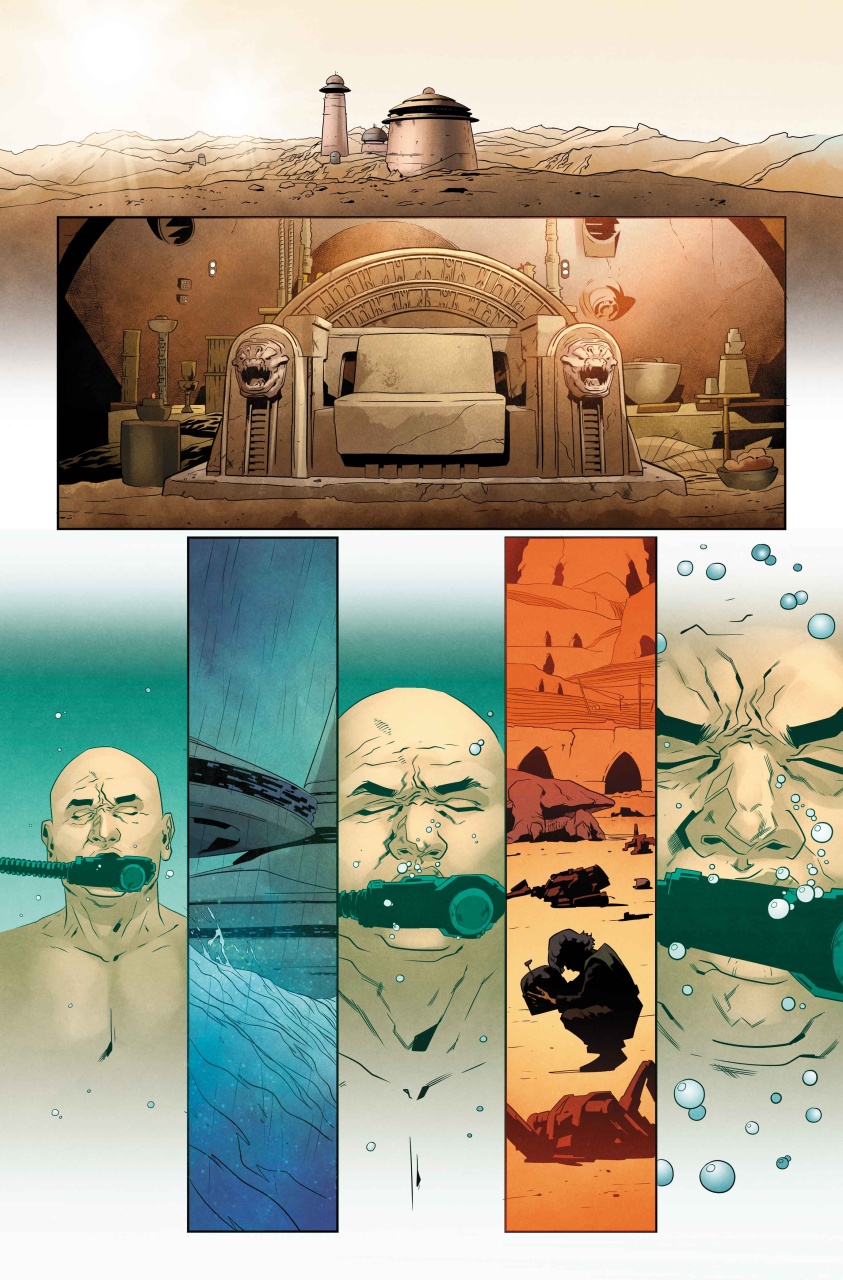
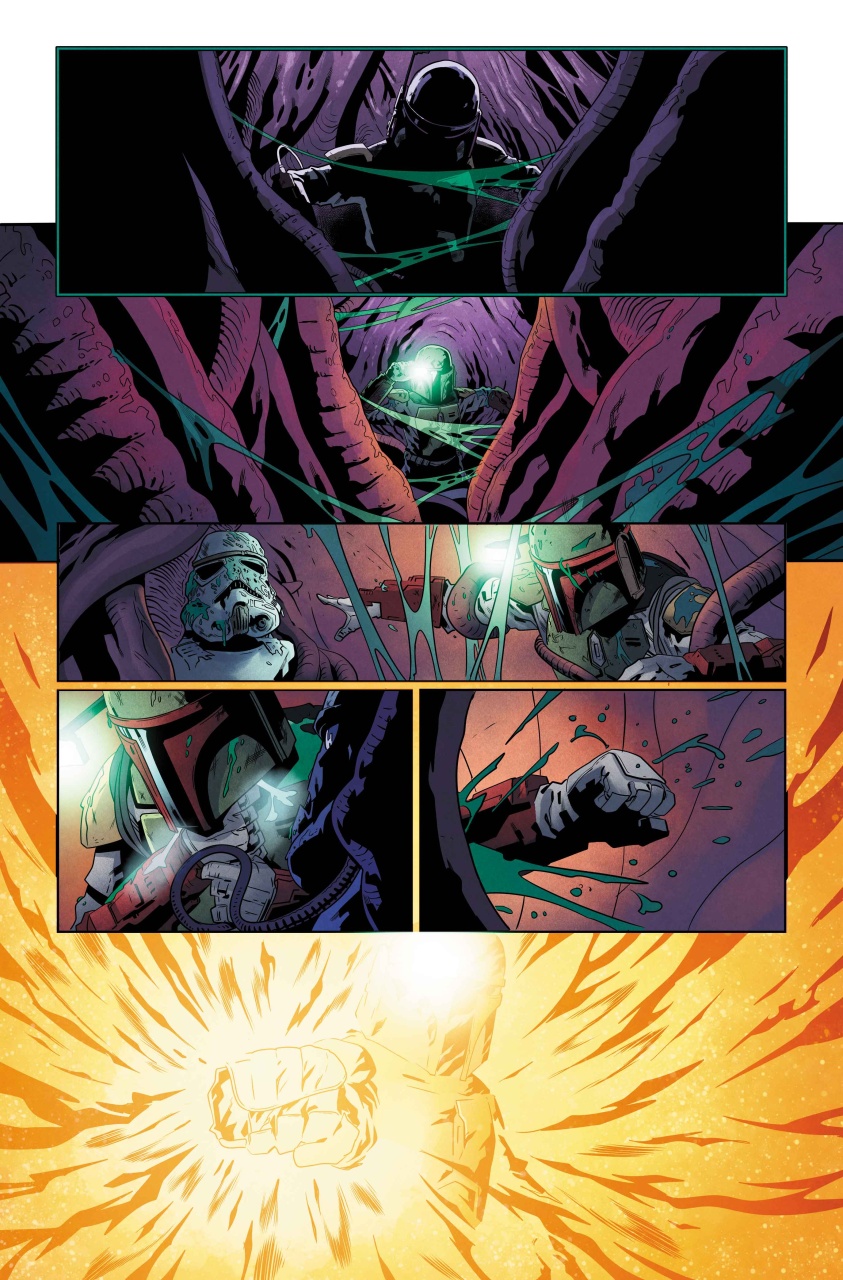
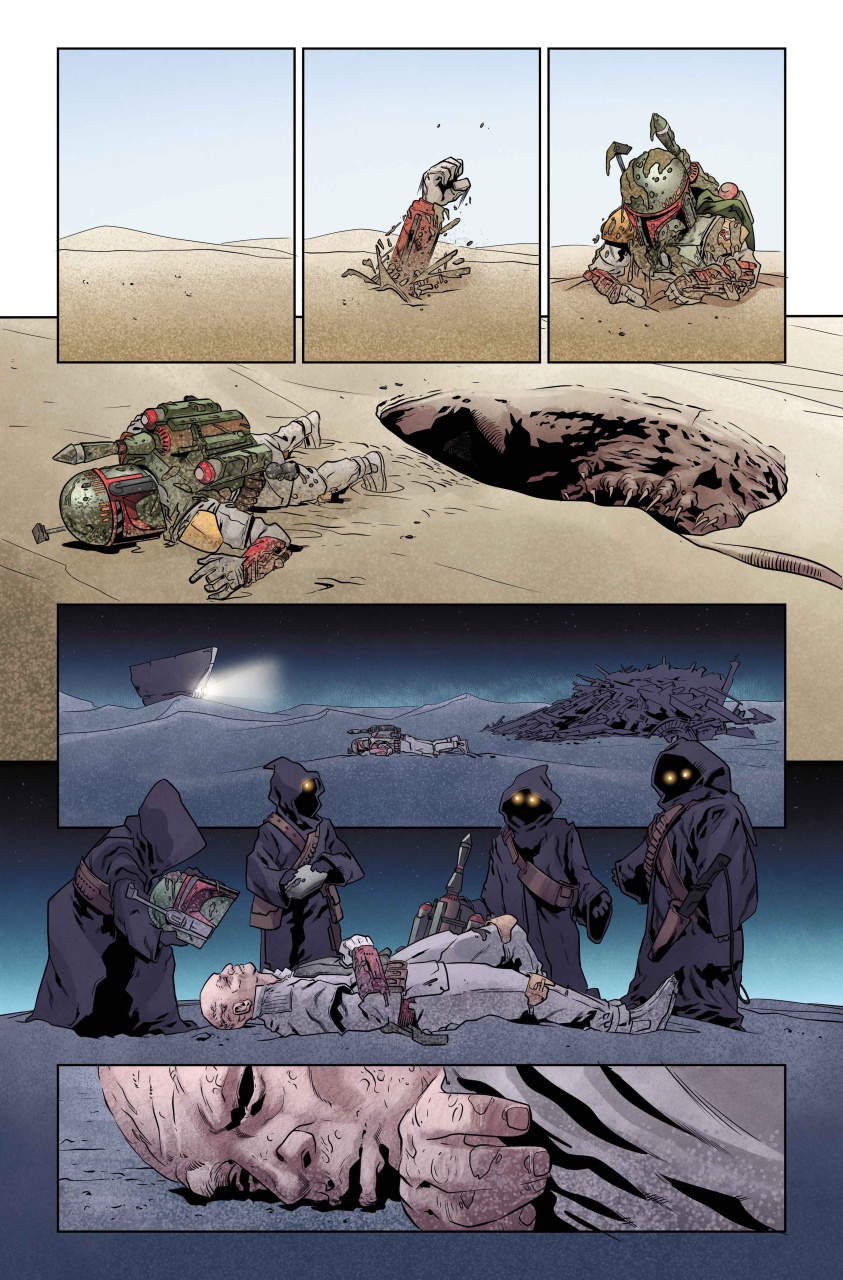
But Fett got unlucky twice in 1983, as he didn’t just fall down the Sarlacc pit once, but twice, falling into the Sarlacc again in the story “Jawas of Doom” for Marvel Star Wars #81. In the opening of the story Boba Fett is spit out of the creature and left for dead on the sandy surface in an unconscious state. Jawas find him but mistake him for a droid, and they load him into their Sandcrawler. R2-D2 was also in the Sandcrawler, with Han Solo and Princess Leia in pursuit of recovering it, finding themselves in conflict with Jawas and attracting the attention of local Tusken Raiders. Boba Fett unfortunately had amnesia from the Sarlacc experience and in his awakened confused state he was unprepared for the situation, refusing help from Solo (exiting the Sandcrawler) when he recovered enough of his memory to remember who he was. He prioritized attacking Han instead of accepting help, and took another trip into the Sarlacc pit, but this time within an entire Sandcrawler too. (Note: the Sarlacc had no beak in its mouth design then.) It was lucky that the idea of Boba Fett surviving the Sarlacc existed months after the movie but unlucky that the idea ends with him back in the pit, making it seem like an unavoidable fate at the time.

Despite the bad luck falling into the pit twice Fett stories continued to be made, like his appearance on the DROIDS animated series, exploring his earlier bounty hunting days for one episode, but we would not get another Sarlacc-Fett follow-up until 1992 in the famous Star Wars: DARK EMPIRE storyline where Boba Fett with Dengar explains to Han Solo and Leia that the Sarlacc found him to be “somewhat indigestible”. Outside that line there was no explanation to his survival. Boba also had a new starship, named Slave II, in the story, but its existence is short-lived after suffering serious damage (and later getting stolen while Boba went back to his original ship). His bad luck continued in Dark Empire and Dark Empire II in the sense that Han Solo and also Chewbacca (who stole one of his helmets in the storyline) continued to be a problem for him despite his reputation as a successful bounty hunter.

Speaking of Slave II, there was a Slave III and Slave IV as well. While Slave III never really got a story Slave IV first appeared in one of the most famous Fett Legends stories called “The Last One Standing: The Tale of Boba Fett” (from Tales of the Bounty Hunter) which gave him an origin story as a Journeyman Protector of Concord Dawn (around 12 BBY) who gets sentenced for the crime of murder against a corrupt Journeyman Protector. Later in the story it goes forward to the present in 19 ABY where Boba Fett is in the Slave IV hunting down a Devaronian war criminal. The Guild contacts him on Han Solo’s whereabouts and he confronts Solo him in an ultimate standoff scenario.

Slave IV would reappear in the “Young Jedi Knights” series in multiple stories which originally featured Boba Fett in them before lore changed with the Prequels and that version of Boba was revised and made his estranged daughter Ailyn Vel. Ailyn Vel had Mandalorian armor that she took from the Jango Fett clone known as Spar who she mistook as Boba Fett (and who was a character originally conceived as Boba Fett in Marvel’s Star Wars issue 68, 1982). She then found Slave IV, which Boba left behind after the death of Mandalorian Fenn Shysa (the man who encouraged Boba to take up the position of Mandalore in the Revised Original Lore-turned-“Legends”). Also as far as the final design of the Slave IV, it’s the same type of vessel design as Jaster Mereel’s ship that Jango Fett also flew (in the “Bounty Hunters” game). The point is the ship history of the Fetts is a bit complicated, even though his main ship Slave I is iconic for its appearances in two Star Wars films. But to make things even unluckier the official name of Slave I was decided (not by fans) to be controversial around 2021 and officially revised — mostly on merchandise — to “Boba Fett’s Starship” which is a generic description rather than a real name. The fans, correctly so, have for the most part chosen to ignore the renaming. If we go by corporate sensitivity the Slave II would be renamed Boba Fett’s Second Starship. Where’s the fun in that?

Aside from giving us the Slave IV, the author Daniel Keys Moran also did a great job in giving Fett a pre-prequels origin and expanding the rivalry he had with Han Solo with “The Last One Standing” tale, but unfortunately his story of Boba Fett’s survival and escape from death “A Barve Like That” (Tales from Jabba’s Palace, December 1995) was unlucky, in the sense it was compromised in the creative sense, resulting in not using his real name for the story credit (thus J.D. Montgomery, the phantom writer, was credited). Daniel envisioned “the nightmare of a strong man dying a slow death across years, losing his sense of who he was piece by piece” and “a final shot at life long after he’d accepted the inevitability of death.” In his interview with BFFC (see part 1 and part 2), he added “I wanted to send Boba Fett to Hell” but instead his idea was vetoed as Fett could only stay in the pit a few days, and the Sarlacc was not allowed to be a sentient creature as Moran intended, so instead J.D. wrote in an alien entity into the story as a substitute that Fett fought with on a psychological level while he used a jetpack explosion and his concussion grenades to climb out of the pit (where he was found by Dengar, as explained in Dengar’s tale from “Tales of the Bounty Hunters”).

Clearly those who wrote Star Wars novels and comics liked the idea of Boba Fett being available to use post-Sarlacc rather than unavailable. It was no surprise fans welcomed the idea of more Fett, but it was curious that George Lucas seemed to be confused about his degree of popularity back then, like in 1997 when he said Boba “seems like a powerful character, except he gets killed”, acknowledging “people who write the books, and everything, and the comics say ‘we can’t kill him, we gotta bring him back, we can’t let him die!’ In regards to Boba Fett’s death, Lucas said in 2004’s DVD commentary of “Return of the Jedi” that “it makes it even more of a misstep that we wouldn’t make more out of the event of his defeat, because most people don’t believe he died anyway. I’d contemplated putting in that extra shot in where he climbs out of the hole, but y’know I figure that’s… it doesn’t quite fit, in the end.”

Clearly despite his EU survival story being approved by Lucasfilm as legitimate lore he didn’t regard the expanded universe as much as fans. Regardless he still realized the flaw of that scene from “Return of the Jedi;” that many didn’t believe he died, we weren’t buying the death regardless of how funny or disappointing we thought it was. By the unwritten rules of storytelling it either should have been more epic and convincing based off how he was portrayed in the previous film and also on how cool and battle-ready he looked. Either that or it should have looked as if his survival was implied, rather than accidentally implied based off being the only one to fall in the pit with armor that could keep him alive long enough to find a way out. But one has to consider that, as a superhero serial-inspired film and conclusion to the Trilogy, “Return of the Jedi” has to hammer the point home that villainy has consequences, so Jabba dies, many of his minions die, the Emperor seems to die with the second Death Star (prior to him somehow returning), many Stormtroopers die on Endor, and Darth Vader dies as well, although he ends his life on a heroic note.

While the idea of Boba Fett surviving was great, seeing it in “Return of the Jedi” wouldn’t make much sense unless it was setting up a future storyline, but that was George’s last film for many years until he opted to do the prequel films as opposed to starting with the sequel trilogy as some may have preferred) so leaving Fett’s film fate up to imagination for so long was fine in that sense but even George warmed up to the idea of Fett’s survival by the final years of his ownership of Star Wars, around 2012 at Star Was Celebration VI where George Lucas opined in a hot-mic recording where he’s heard validating how the rest of the world felt, that Boba Fett didn’t die, describing him as a “survivor”, just as the comic book and short story writers felt about it, and the many Boba Fett fans. I think one can compare his years of avoiding an official position though as similar to how producer/writer/director David Chase of “The Sopranos” avoided confirming if Tony Soprano lived or died in the finale of the series, because by not being so absolute about it the whole situation becomes more fun for the audience, giving them something to debate. Just like Jeremy Bulloch said about the mystery of Boba Fett being what made him very special it can be said that the mystery of a character’s fate has an intrigue to it as well.

Sadly Disney decided to put Boba Fett fans through a worse scenario in regards to wondering of Fett’s survival since all the original EU lore stories fell under the umbrella of a manufactured category called “Legends”, with only George Lucas’ stories, and The Clone Wars animated series, to work with as a foundation for an alternate canon, a separate lore from the previous one that the audience is left to decide is good enough. Unfortunately in the decade plus of alternate lore there haven’t been as many universal hits like there were in the past, and while Boba Fett has been portrayed well enough in the past decade of alternate canon he’s rarely used with any regularity and his Sarlacc survival wasn’t as certain at first under Disney’s ownership.

In the Disney era it was writer Chuck Wendig who would be the first to set up the survival story of Boba Fett, but indirectly, following up Boba Fett’s “all-too-familiar Mandalorian armor” in ‘The Aftermath Trilogy’ of novels (2015-2017), but given Boba wasn’t named it was unclear if it was his armor, before clarification by the author on social media. The armor officially survives the injured Sarlacc having been taken by Jawas and sold to Cobb Vanth of Freetown who uses the armor to protect his town. Boba Fett was unlucky again, as his fate was left unknown, and his armor given away to a new but seemingly unimportant character named Cobb Vanth. But Boba Fett’s return would get teased a few years later, in December 2019’s episode of “The Mandalorian” (“The Gunslinger”) before he officially returned in “The Mandalorian” Season 2 (2020) seeking a return of his armor from Vanth.

As a result Cobb Vanth lost the armor he should never have had to begin with – not that he’s a bad character, but if it wasn’t okay that Jodo Kast posed as Boba Fett, then it shouldn’t be okay when anyone else does it. One could joke that Disney Star Wars was fixing a problem that Disney Star Wars created by making sure Cobb Vanth gave up the armor. But it’s story complications like that which made it tougher for Jon Favreau to create a simpler Boba Fett story, instead of one that has the obstacle of explaining Fett’s survival in a way that respects George Lucas’ vision of a flawed survivor (flawed in the sense he worked for bad people), a vision that respects the fans of the original Sarlacc survival story, also one that can incorporate Cobb Vanth in a way that strips him away of his/Boba’s armor but doesn’t make him look bad either, since Vanth was developed to be a heroic character, and if Favreau is writing Fett as a heroic character, it wouldn’t look right if Fett simply killed him. Instead he went a more creative direction where Fett tracks down a Mandalorian who had it because he didn’t like seeing Cobb Vanth wearing stolen Mandalorian armor (just like how Boba Fett fans didn’t care for Vanth wearing it either) but Vanth proves his worth and Boba saves his life as a thank you.

But it would be unfair to criticize only Disney’s unlucky complication of Fett lore without considering the complications the Prequel Trilogy. Given George liked the character of Boba Fett he sought to make another one with Jango Fett, the father of Boba. Originally, as said in commentary for “Attack of the Clones,” George Lucas’ original plan for young Boba Fett was he was a regular clone trooper that at some point left the army to do his own thing, but then later George thought to make Boba the unaltered clone son of Jango in order to make Jango seem like a complex villain that had a heart, caring for his clone son throughout his journey as a bounty hunter living on Kamino working on behalf of the Separatists led by Dooku under the influence of the Sith, while simultaneously being the clone template for the army the Jedi would inherit (and later be betrayed by). George Lucas made Jango Fett a formidable villain for “Attack of the Clones” showing off more of what Boba Fett’s suit and starship (Slave I) can do having Jango fight Jedi on the ground and in outer space. He even saves Dooku (who he knew as Tyranus) from Jedi Master Coleman Trebor, blasting him off a balcony in the gladiator arena on Geonosis, although he loses his life during the battle, because his unlucky end is necessary for Boba’s new beginning, as he gets the motivation to follow the way of his father. George Lucas gives Boba Fett almost a Batman type of origin story in “Attack of The Clones” in the sense their motivation to do what they do comes from tragedy and the loss of a parent. This was not the original motivation of Boba Fett, as he was originally a more mysterious character, so this added revelation made him a little less mysterious in terms of why he was motivated to be a great bounty hunter, which was unlucky, but on the flip side it created an additional mystery of why Jango Fett wanted a clone son at all.

The revelation of Boba being a clone of Jango Fett caused revisions to his pre-existing lore, which was unlucky in the sense of convoluting his history, but Jango Fett himself was luckier, with Jango’s lore thriving within comic book stories like Open Seasons, video games like Bounty Hunter, and also novels that would also showcase other clones or the young version of Boba Fett who later had his story expanded upon as well, having his story continued in The Clone Wars cartoon series where he made a modest 5 appearances (1 of the 5 being a Cameo appearance) which seems unlucky considering how many seasons TCW had. Boba Fett was meant to have more appearances on The Clone Wars in story arcs involving Cad Bane and their duel, Krayt’s Claw and Tyranus/Dooku, and Anakin Skywalker, where he fights Boba who finally wears his Mandalorian armor on the series, but they were never finished and only a few unfinished scenes have been shared for the public to see.

As unlucky as it was to not get those TCW Boba Fett episodes at least unfinished clips give us an idea of what they would have been like although it’s unlucky that even in all the series that spun off The Clone Wars there has been no Boba Fett appearances since. Oddly enough he was not used or seemingly considered for The Bad Batch series, which takes the young Boba Fett concept of “Attack of the Clones” and reimagines it, creating a female counterpart who saw her brothers as family and someone who saw her home of Kamino get destroyed, inspiring her to fight the Empire and years later join the Rebel Alliance as a fighter pilot; while her Bad Batch brothers know of Boba Fett’s existence they never meet him nor mention him to Omega (or if they did, it was off-screen, which could be said of the possibility of Fennec Shand mentioning Omega to Fett years later). Omega is sort of the lucky version of Boba Fett in the sense she had a more positive life after losing her home, being able to settle down peacefully awhile and grow up with other clones of Jango Fett after fighting the Empire back when they still had Clone Commandos in their ranks. Boba was not lucky enough to have a proper family substitute after Jango’s death in the years he was still growing and thus he had nothing to lose in working for the Empire. Had he grown up like Omega with a proper support system he likely could have found himself being a Rebel fighter pilot too but as he was unluckier in life he became a cold-blooded bounty hunter instead.

Also unlucky was the cancellation of Star Wars 1313, where the player would take on the role of an armored young Boba Fett sporting a redesign that could have been seen as a spiritual successor to the ‘Bounty Hunter’ Jango Fett game. George Lucas’ Star Wars Underworld live-action TV Show likewise also got cancelled; a series that could have expanded upon the early life of bounty hunter Boba Fett, and then we could have seen George Lucas really expand on the new vision he had for Fett then. Young Boba Fett may have been the unluckiest version of the character when you think about it; he never really got enough time to shine, which maybe was a deliberate move in order to preserve the mystery of the character, but one that robs fans of seeing his early adventures and how he came to rise to fame in his profession (since simply being the son of Jango isn’t enough in the competitive cutthroat world of bounty hunters). He also missed out appearing in Revenge of the Sith, as George Lucas had considered the idea of Boba joining in on Order 66 to confront Mace Windu before he ultimately rejected that story idea and changed it so that Palpatine kills Mace Windu. For whatever reason, young Boba Fett has almost no luck at all, despite the nickname “Lucky” that he used in his first appearance on The Clone Wars when he indeed did make an attempt to assassinate Mace Windu, coming ever so close, but being stopped by the usual suspect; you guessed it, bad luck again, and then it was followed up with Aurra Sing proving to be the worst substitute mother figure in Star Wars, leaving Boba to get arrested by the Jedi.

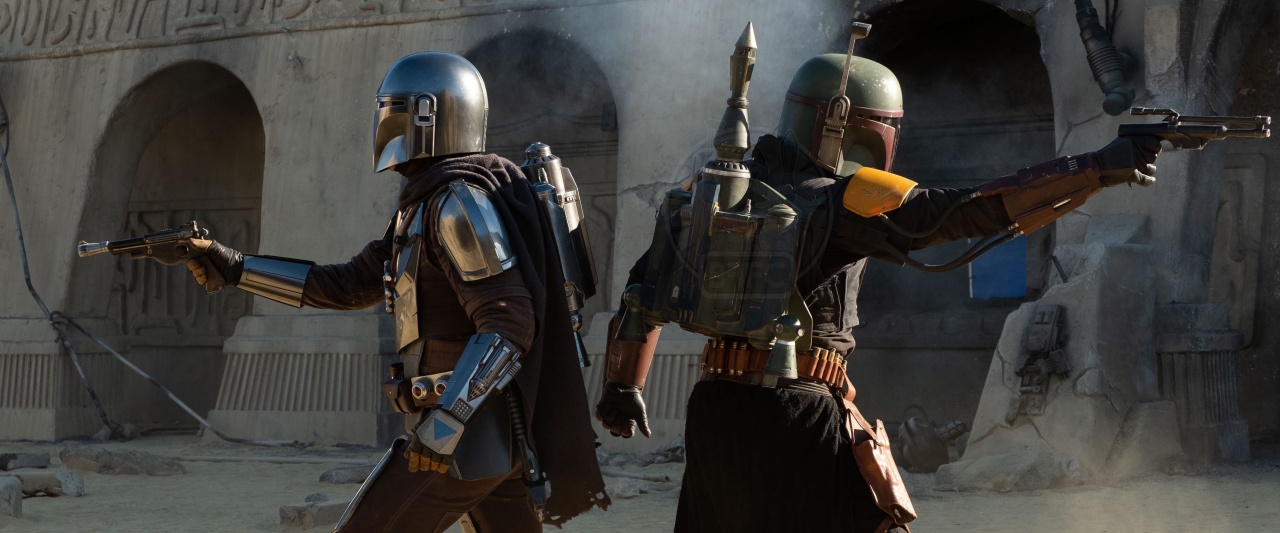
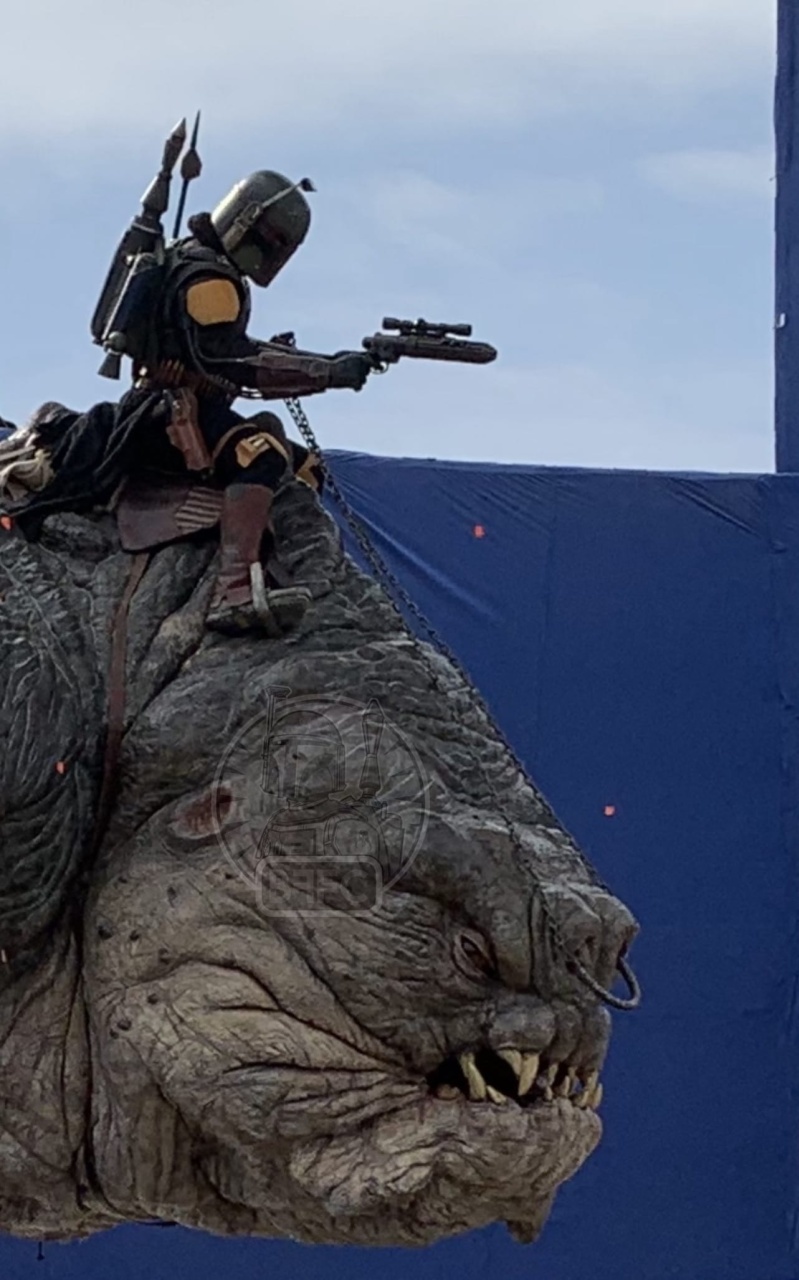
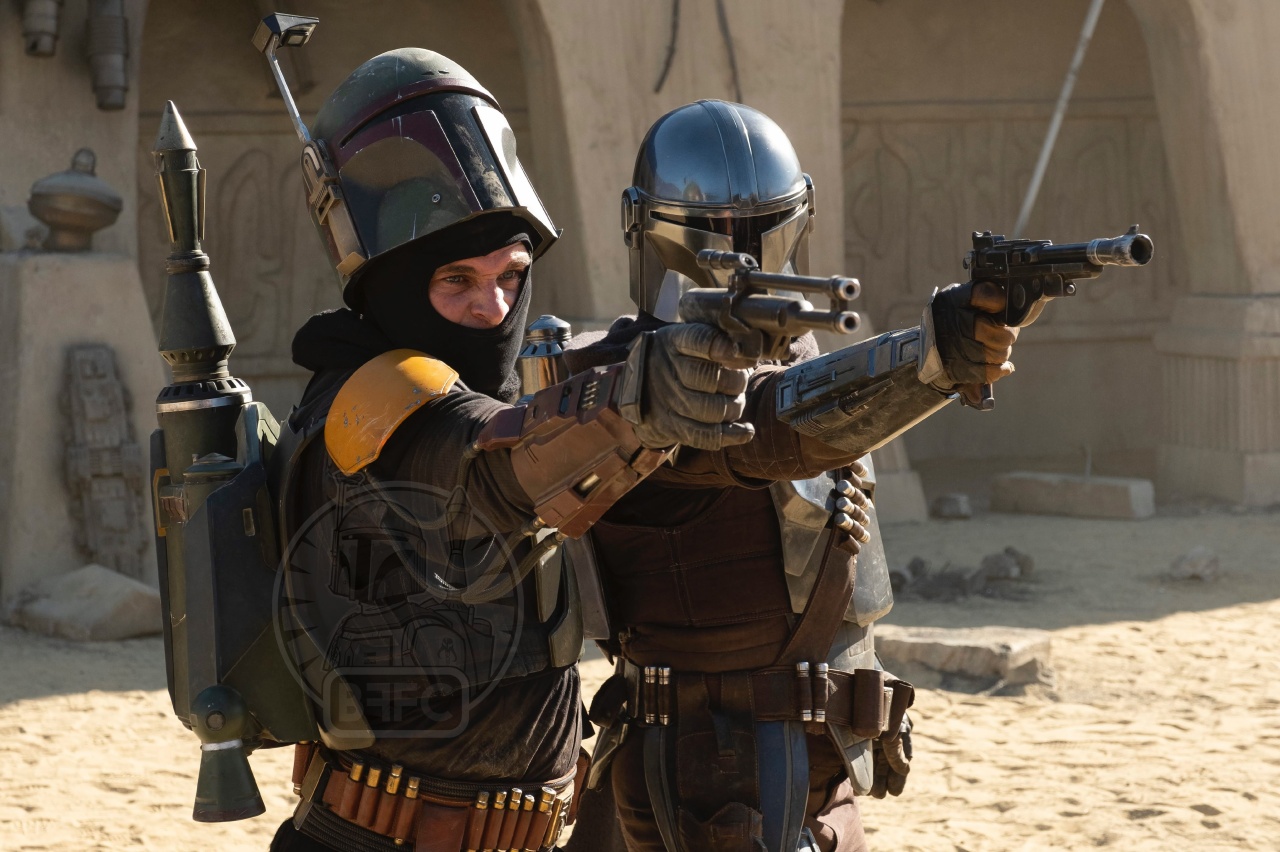
But when the acclaimed Season 2 of “The Mandalorian” aired about a decade later from young Boba’s adventures it seemed like the Boba Fett blues were finally over, that the classic Fett was back in business. He was alive, not dead. He got his armor back. His armor was confirmed to be Beskar too, ending a debate if it was made of the alternative Durasteel; one of those unlucky debates that the character really didn’t need back then, since we weren’t sure if he was dead/alive at that point. On top of stopping dumb debates that don’t benefit the character “The Mandalorian” series got his ship back too, with Boba Fett’s (Slave I) Firespray starship making its return in “The Mandalorian” Chapters 14-16 and then “The Book of Boba Fett” Chapter 4 (and other episodes where it got a cameo). He got to engage in some cool fight scenes too, wiping out Stormtroopers with ease, so things were looking up, and on top of that, a show with his name attached to it was announced in a post-credits scene showing Fett take Jabba’s throne away from Bib Fortuna. This was probably the pinnacle of Fett under new ownership, the height of Disney Boba Fett. Who knew it would be followed by more bad luck though? Jeremy Bulloch, who played Boba Fett in “Empire Strikes Back” and “Return of the Jedi,” died around the same time “The Mandalorian” Season 2 ended and “The Book of Boba Fett” was announced. His death was a big blow to the many who appreciated him, and then the next round of bad luck came in “The Book of Boba Fett” then arriving about a year later with mixed reactions, with negative reactions being louder than the positive ones. Fans of Boba Fett were unlucky to find him missing in nearly 2 of the 7 episodes, with the other episodes being controversial for not having Boba wear his helmet enough, making him too talkative, and having him retired from bounty hunting, which was the core of his character previously.

Also, the action packed Boba Fett characterization of “The Mandalorian” Season 2 was somehow not really seen on “The Book of Boba Fett” up until the finale, although there were hints of it in some of the other chapters, like Chapter 2 where we see how much damage Boba Fett can do without armor (in the flashback scenes where he is a member of a Tusken tribe), and Chapter 1 featured Boba in a couple of battles, and Chapter 4 showed him shoot down a biker gang from the sky, but Chapter 3 failed to showcase him properly, with Krrsantan attacking him while he slept. A scene of Boba Fett fighting a Wookiee sounds great until you realize Boba has no armor in the scene. While it’s an entertaining scene showcasing Krrsantan’s strength and Boba’s ability to take a punch for it to be the only real action scene Fett got in the episode really shows a disconnect with what fans want and expect. Likewise a cameo in Chapter 6 where his only contribution in the episode is nodding his head (“Return of the Jedi” style, but without a helmet on) shows a lack of effort. What was once a mysterious gesture originally was turned into a callback to “Return of the Jedi,” as if Boba’s cameo is only there to remind the audience he was in that movie. It’s an unlucky tribute. “The Mandalorian” series has paid tribute to Fett’s legacy in cool ways before in each season but having Boba Fett nod as his only interaction in an episode was an absolutely bizarre, and likewise it was unlucky how it followed Chapter 5 which had no Boba Fett in the episode at all outside of being mentioned in the final scene. Temuera Morrison despite his great performances in Star Wars was unlucky in being robbed of about 2 episodes in a 7 episode season, and not getting a call to come back for anything since (outside of voicework like Jedi: Survivor’s Boba Fett, the clone troopers in Season 3 of “The Mandalorian,” and voicing Captain Rex in “Ahsoka”).

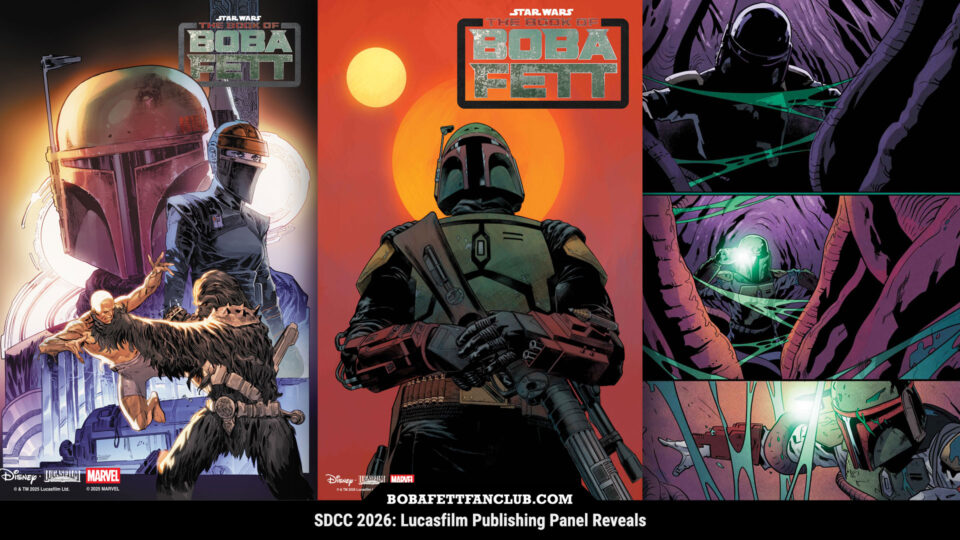
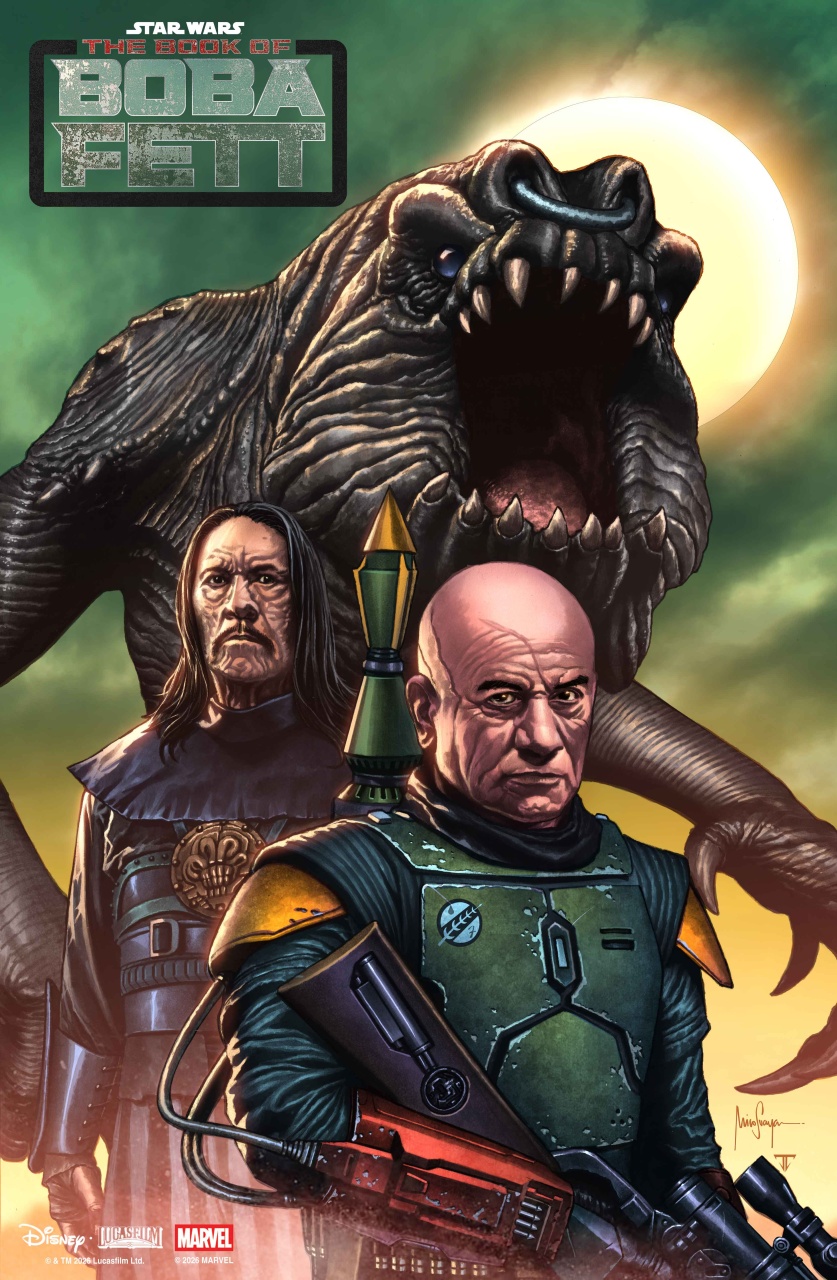
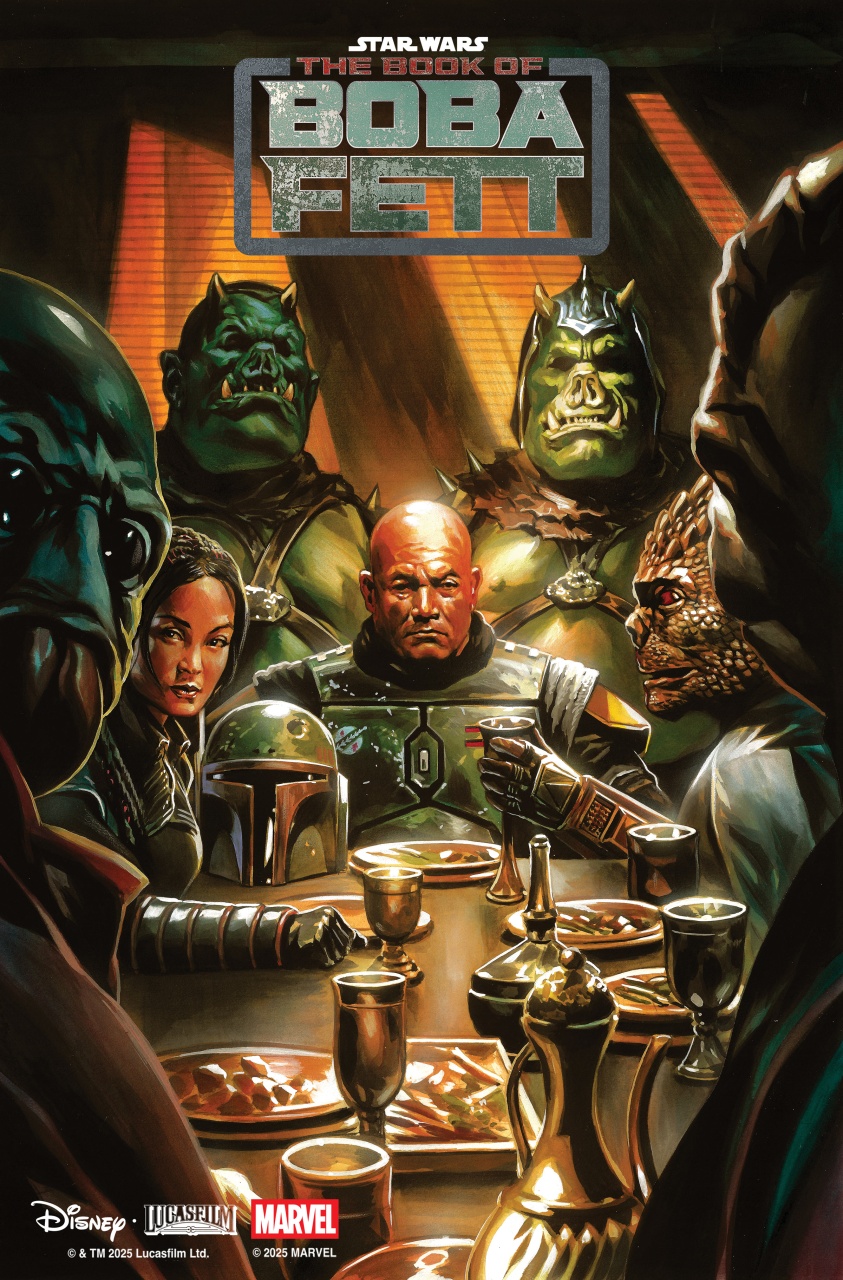
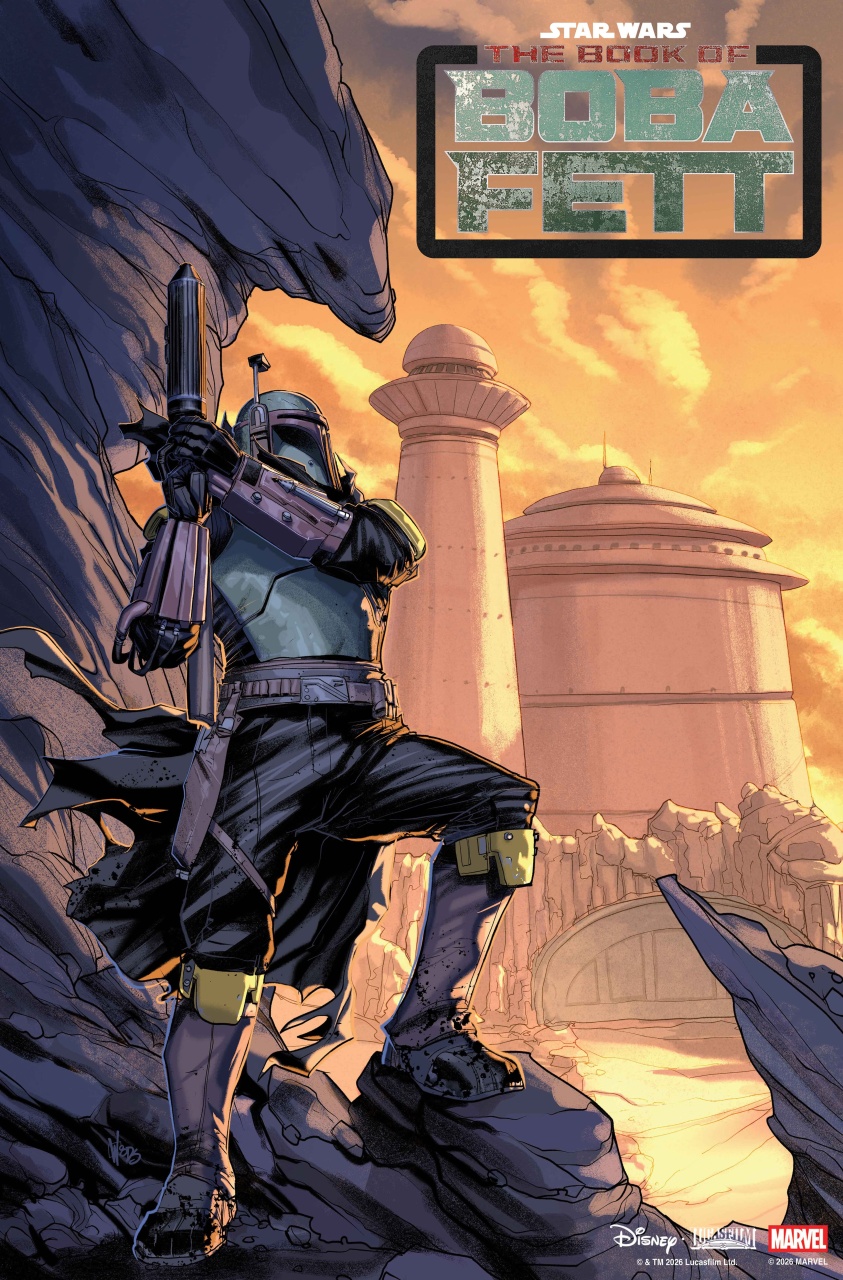
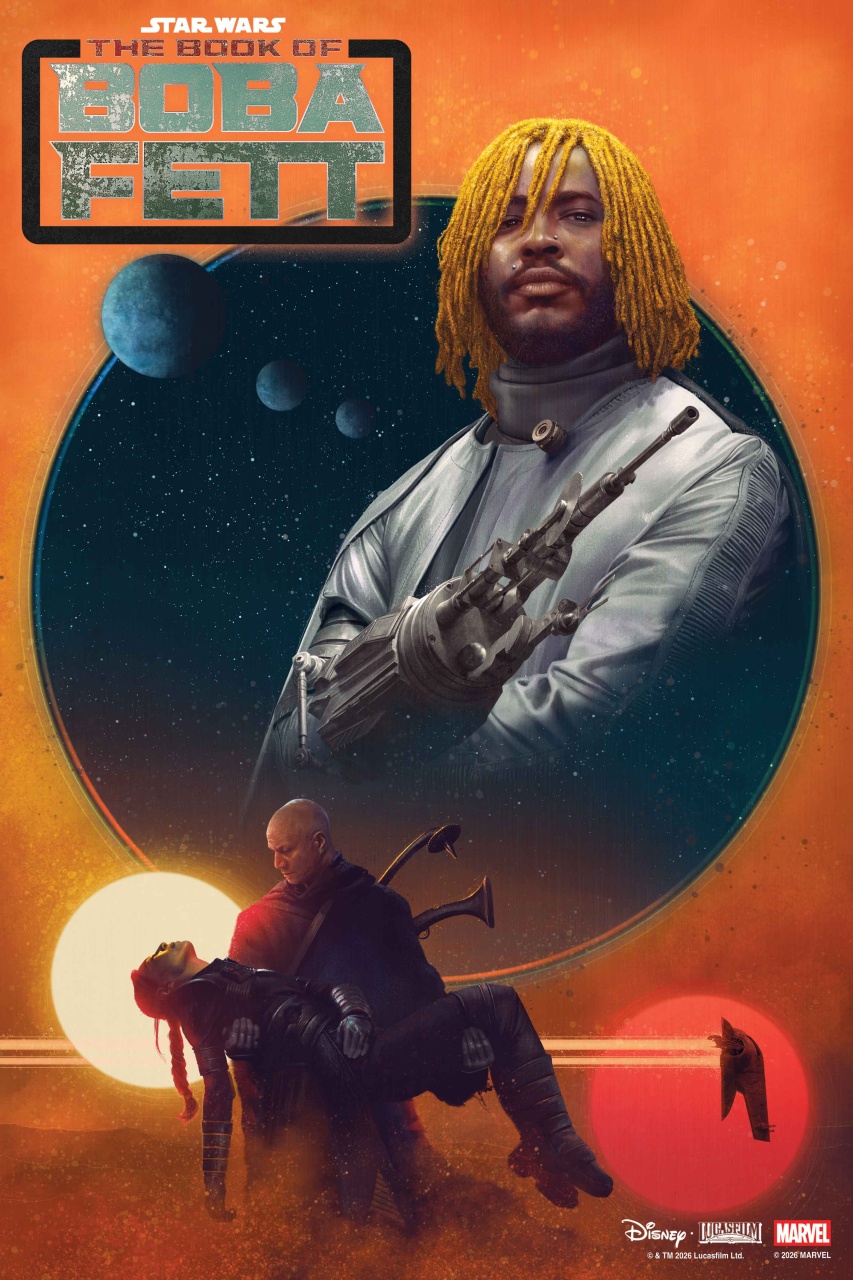
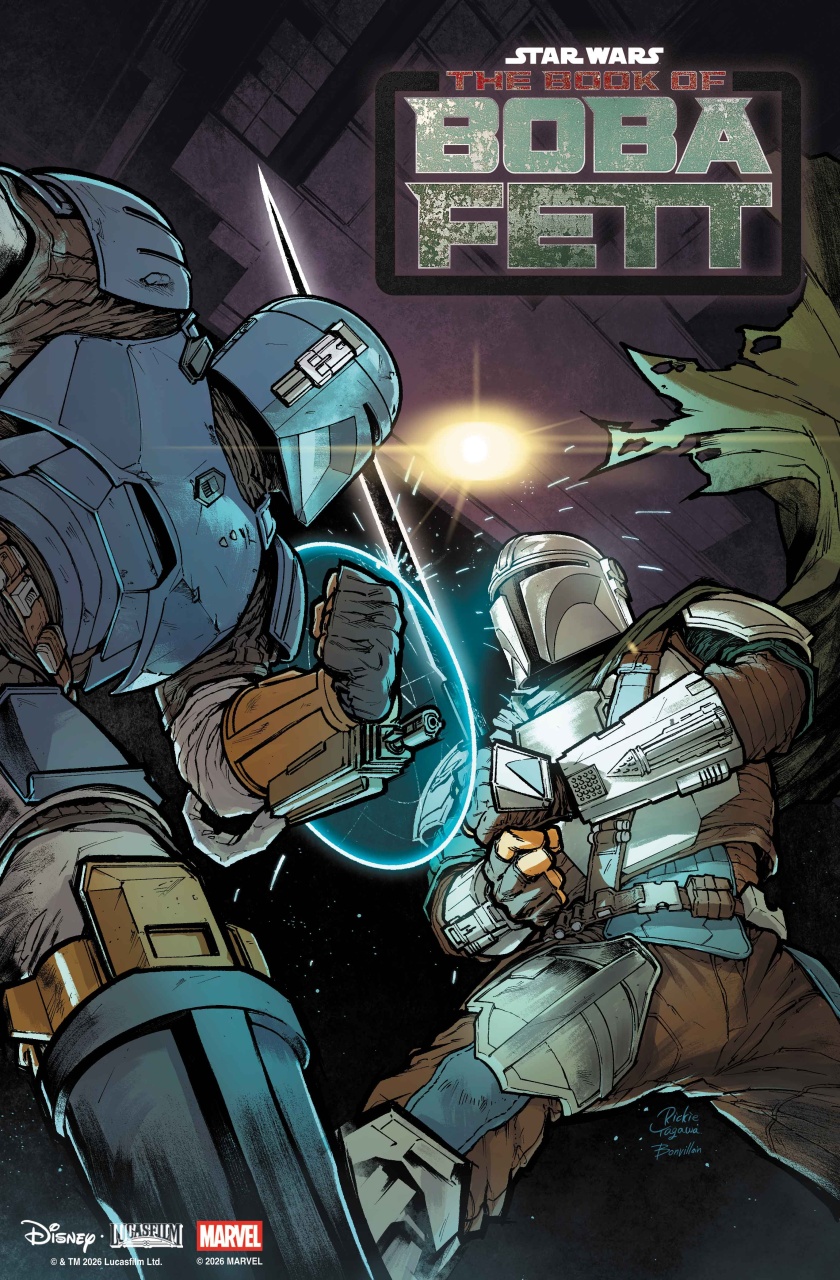
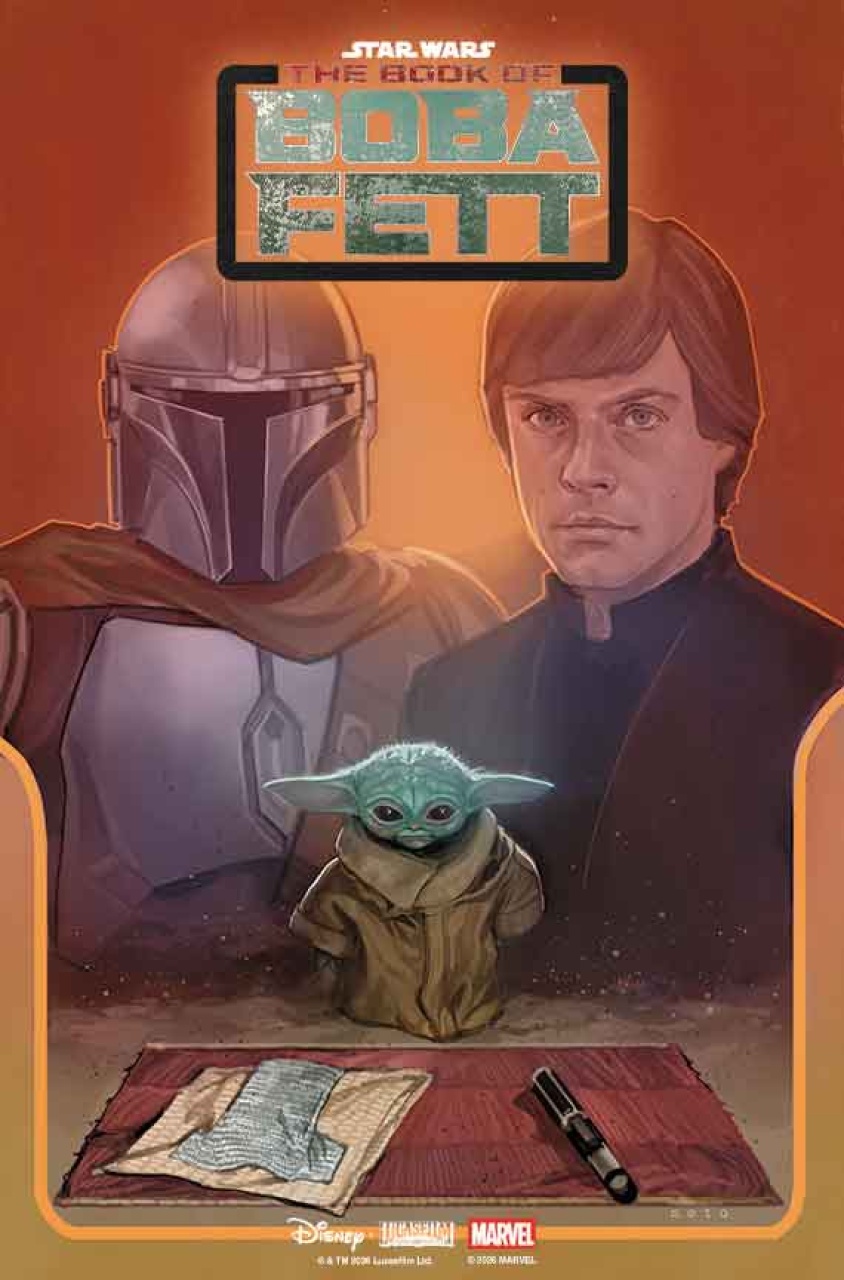
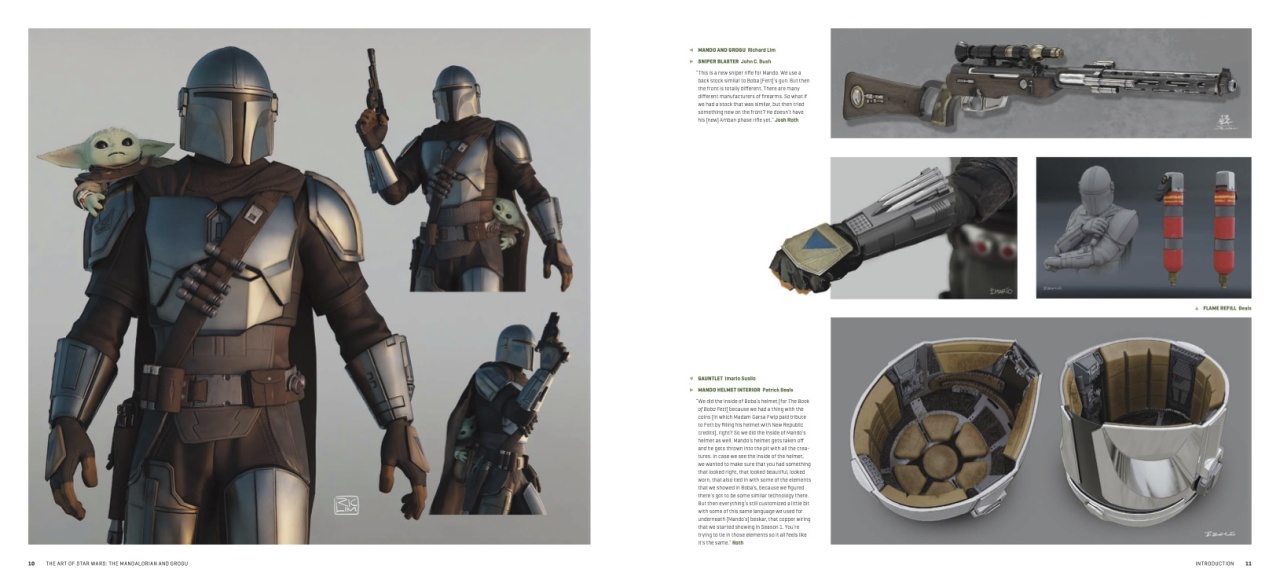
Along with Boba’ certain Book of Boba Fett products never came to be that should have been, like an official DVD/BluRay, an Art book for the season, and a comic book adaptation. There was also never an official cancellation of the show, although one can suppose it’s due to how it’s interconnected to the ongoing storyline of “The Mandalorian.” One also has to wonder how much room is left for stories featuring Fett in the timeline order. Does he survive into and beyond the sequel trilogy era? Does he get more appearances in the past, from his childhood with Jango, his early years as an elite hunter, and so on? Those are questions that one who thinks of Fett wonders about. It’s good to have some mystery left in the character but not while simultaneously there is a similar-ish character getting overexposed doing Fett-ish things. It’s not good luck for “The Mandalorian” either since the more buried Boba gets the less meaningful the borrowed imagery is. The new generation isn’t going to see Mando as the mysterious villain Boba Fett originally was, or a villain with a heart like Jango, since that’s not who Mando is as a character despite the similar look. The Boba Fett look with Mando is applied as more of a symbol of heroism, which changes the original design dynamic completely, considering the design of the Mandalorian helmet was conceived as an Imperial Super/Shock Trooper helmet before it became Boba Fett’s bounty hunter helmet. Sure, Jango Fett had a heart, but it wasn’t a heart of gold, his armor wasn’t meant to symbolize fatherhood even if being a father is important to his storyline (as it’s what convinced him to take the deal with Tyranus to have Kaminoans clone him). It’s a bit of unlucky accidental revisionist history though in regards to how “The Mandalorian” has changed how people absorb the imagery; at least from my perception, as someone who grew up remembering the Mandalorian/Boba Fett helmet being something villainous in its appearance (like the Stormtrooper and Darth Vader helmet) rather the friendly/fatherly image it’s become.

What’s also is unlucky that gets forgotten is that Boba Fett was meant to have a movie of his own years ago directed by James Mangold during the time after “Solo: A Star Wars Story.” (Josh Trank and writer Simon Kinberg were also eventually confirmed to have one too.) Two factors probably got in the way of this becoming reality: one could have been creative differences over the darker tone of the project, and the other was perhaps how “Solo” under-performed in the box office. With no future movie in sight the focus went to streaming allowing for hype around “The Mandalorian,” the first live-action TV Show whose initial success paved the way for two more seasons and a Boba Fett spinoff, the limited series “Obi-Wan Kenobi,” two seasons of “Andor” and “Ahsoka,” and “Skeleton Crew.” One might wonder how history would have played out if we got that Boba Fett film, and how that would have impacted The Mandalorian’s storyline. One can’t deny the Fett Legacy played a part in both the rise and fall of Star Wars streaming. The Mandalorian pilot episode featured allusions to Fett, from carbonite-encased bounties towards the start, to a rifle weapon that resembles the one Fett had in the Holiday Special cartoon (the Amban phase-pulse blaster), to the Mythosaur symbol (like that on Boba’s shoulder armor) being used as a decoration in the Mandalorian covert on Nevarro. The covert housed a workshop where beskar could be forged using a cryo-furnace, a gravity hammer, and some magnetic tongs. Part of the charm of the show is how it mixed Fett Legacy elements with new original elements like a Mandalorian Armorer character, and how it reinvented the Mandalorian Religion to be more of a “Creed” that came with a popular (for awhile) catch phrase, “This is the Way.”

The Mandalorian Creed/Way was problematic though in how it mixed pre-existing ideas with new ones and muddied up the legacy and lore of Fett even more. The Mandalorian Religion was something that was mostly developed and mentioned in the stories of Karen Traviss: her Republic Commando and Imperial Commando novels, the Legacy of the Force novels, and “Boba Fett: A Practical Man,” but the idea of a Mandalorian leader goes as far back to 1997’s “Star Wars: Tales of the Jedi – The Sith War” (comic book) which featured Mandalore the Indomitable, a warlord Mandalorian Crusader who conspired with the Sith. A few years later in 2003 the video game Knights of the Old Republic went on to feature another type of ancient Mandalorian known as Neo-Crusaders. One such Neo-Crusader named Canderous Ordo who became known as Mandalore the Preserver. What is known about Mandalorian religion (that the Taung species created) was that it was once rooted in zealotry and ritual combat, believing waging war was to be divine, as they saw a god of destruction as one who championed for change. Their beliefs matured and became more pragmatic over time but they still believed in the soul, and in order to avoid being soulless one needed to follow central tenets that prioritized family and armor. It was Mandalore the Indomitable that caused Mandalorians to distance themselves from the gods and it was Mandalore the Ultimate (a Taung) who opened the doors for other species to become Mandalorians as long as they followed their central tenets known as the Resol’nare. However, despite being in a soul there was very little moral guidance in Mandalorian culture until the creation of the Supercommando Codex, a moral guide that promoted honor and provided ethical guidelines that every Mandalorian mercenary/soldier should abide by. It was created by the Mandalore Jaster Mereel and would be adopted by True Mandalorians like Jango Fett, as well as the Mandalorian Protectors under Mandalore the Resurrector (aka the clone Spar who was mistaken for Boba Fett). The Mandalorian Creed from “The Mandalorian” is a mix of the Resol’nare, the Supercommando Codex, with some of the ritualistic, religious elements that the Taung believed in, as well a tacked on helmet rule that’s more inspired by how Boba Fett never showed his face in the Original Trilogy (and Expanded Universe stories prior to the Prequel Trilogy). It’s quite unlucky that the Mandalorian history is so complicated; an older Boba (20 years after RotJ) came to be more involved with Mandalore, becoming their leader in the original lore (in “Boba Fett: A Practical Man”), whereas in the alternate modern lore he has looser ties to the culture and community. The original Mandalorian trajectory within Legends was complicated when George Lucas felt strongly enough to say that Boba Fett and Jango Fett weren’t Mandalorians, and that became quite a debate in fandom for many years. I think the whole concept of Mandalorians gets overly complicated when there are multiple definitions of the idea. It’s an unlucky aspect as it makes it difficult for fans to define them well as a group to someone new and unfamiliar with their history that does not understand that while a character like Boba Fett doesn’t identify as a Mandalorian it doesn’t mean he’s irrelevant to the topic, especially when stories of him as a Mandalore exist.

Technically the Taung people from Mandalore were the real Mandalorians, but once they let anybody outside the Taung be Mandalorian it created multiple definitions of the word. Jango Fett and Jaster Mereel didn’t see Death Watch as legit; they had their own vision of Mandos, and Death Watch felt entitled to be Conquerors. The New Mandalorians like Prime Minister Almec made it clear that New Mandalorians rejected both Death Watch and True Mandalorians warriors as legitimate members of society. The New Mandalorians were more pacifistic people that deviated away from violent traditions in attempt to create a peaceful society. The Children of the Watch, Descendants of Death Watch, felt Mandalore lost its way (just as Jaster Mereel believed) and had their followers dedicated to tradition and religion (“The Way”).

Sadly the whole history of Mandalorians is full of bad luck, misfortune, and civil wars, thus how the Sith have been able to manipulate them on occasion. So Mandalorians have been very unlucky in their history, but also unlucky in the sense that the behind-the-scenes history of Mandalorians is confusing, since it’s rooted in the histories of the Fetts more than it’s based off the Taung species and ancient Mandalorian conquerors from the Old Republic. It’s more the perception of Mandalorians as being ideal bounty hunters that make most people love those characters. It’s unlucky that the complex concept of Mandalorians feels overshadowed by the simpler Bounty Hunter concept, but it’s far easier to write a bounty hunter adventure than a Mandalorian tale.

But sometimes it’s not complexity that brings about an unfortunate outcome, but simplicity instead, like that in the form of a happy ending that goes nowhere. The happy ending of “The Book of Boba Fett” is unlucky, for example. The show didn’t really set up a future storyline; well, it did for Din Djarin and Grogu, but not so much for Boba Fett. Sure, it showed that Cobb Vanth was saved and inserted into a bacta pod, but we never see him get out of that bacta pod, and it’s been years since that plot was left unresolved. We never even saw Timothy Olyphant’s character speak to Temuera’s Boba Fett, so it’s hard to even imagine the off screen conversation they’d have. Also, there was bad luck in how Carl Weathers’ character never got an aired scene with Boba Fett, even though the opportunity for one was there in Chapter 14. As a result the audience is left curious if Greef Karga the bounty hunter handler was aware of Fett’s past reputation.

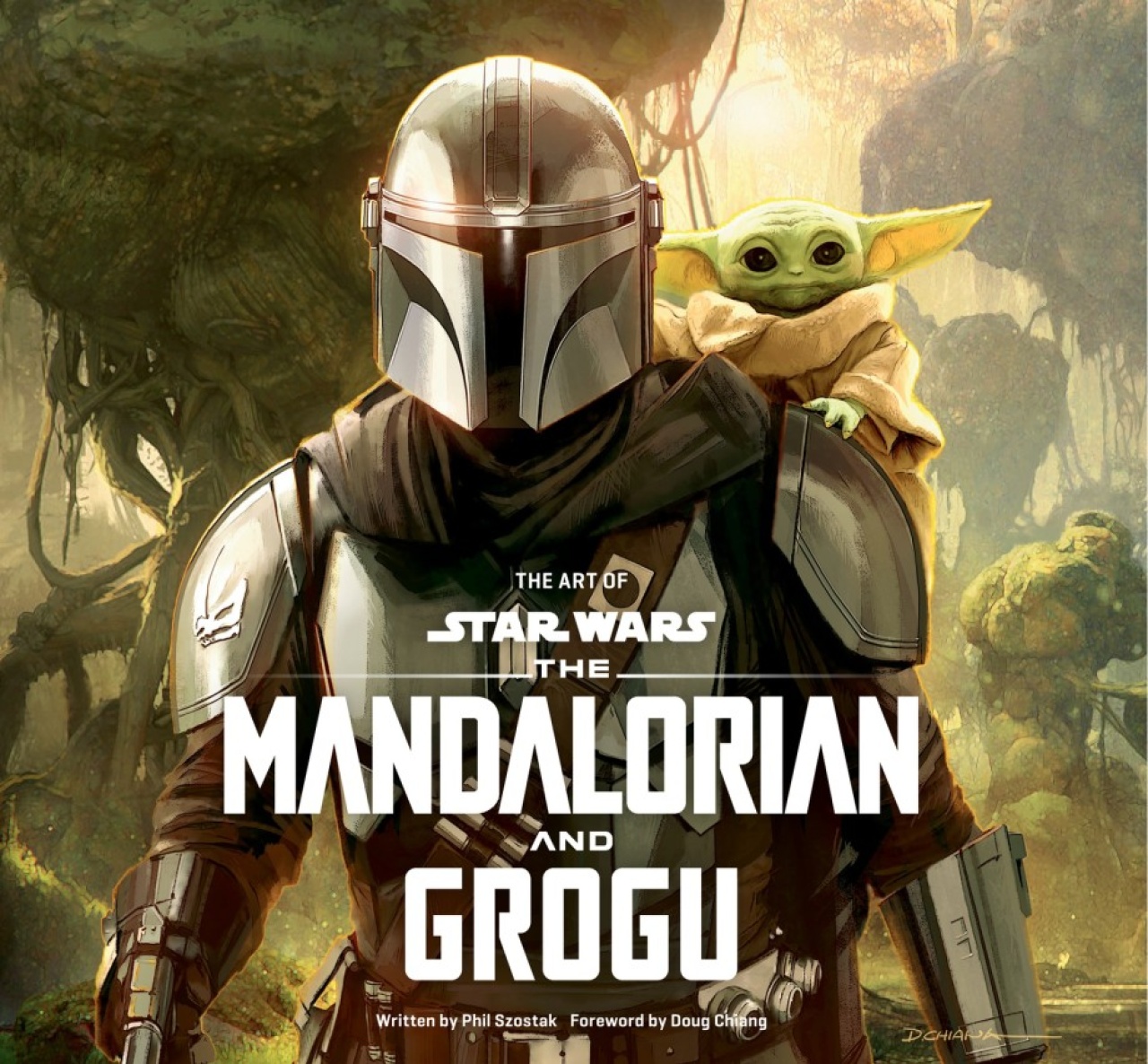
One has to wonder if the missed opportunities are deliberate. Maybe they feel Boba Fett has to maintain some mystery while they simultaneously show us a similar looking character, in Mando/Din, that’s providing action moments that Fett ought to be doing on screen. “The Mandalorian and Grogu” — or TMAG for short — provides a whole film that really ought to be a Boba Fett film. It visually alludes to films Fett was in; borrowing from “The Empire Strikes Back,” “Return of the Jedi,” and “Attack of the Clones.” It continues the Hutt Twins storyline from The Book of Boba Fett, and also features Embo, a silent-and-deadly hat-wearing Kyuzo bounty hunter that was once a member of young Boba Fett’s bounty hunter organization called Krayt’s Claw (cleverly named after Krayt Dragons). Boba Fett and Embo did not have much in the way of interactions but one can’t help but notice the strong-and-silent and mysterious approach of Embo parallels that of the Classic Boba Fett, so essentially Embo is the old school style Boba Fett of TMAG, just as Cad Bane was the same thing for The Book of Boba Fett. However outside of maybe a name reference Boba isn’t part of the movie. While Dave Filoni and Jon Favreau clearly love the legacy of Boba Fett they have a strange way of not giving as much love for the actual character. After all these years a Boba Fett film would have felt deserved, but he’s been pushed aside again, while simultaneously being exploited. We may get cool 4-issue limited series of Jango/Boba Fett to enjoy in the comic book side of things, but if Boba isn’t on the horizon, it feels like his legacy is exploited to boost other characters.

New fans of Star Wars will struggle to see why Boba is so special if he’s continued to be treated this way though, and then a character based off him has less of a chance of success. In my opinion it’s unproductive but others may feel this is a fun approach to honoring the Fett legacy as well, so maybe both can be true, but it’s not exactly the luckiest trajectory. I think one thing is certain, Boba Fett’s history would have played out differently were the property not sold off by George Lucas, and likewise other characters like Luke, Leia, and Han Solo, would have had different histories. That’s the risk of selling a great story off to a more corporate entity that will try to compete with the source material in some ways. Rey was Disney’s Luke, Kylo Ren was Disney’s Darth Vader, Mando is Disney’s Boba, and Grogu is their Baby Yoda (as fans called him during Season 1 and half of Season 2 before Ahsoka Tano figured out his name). It’s an unlucky trend though. You can never fully capture the magic of the original character idea (even when it’s an amazing character like Jango Fett). Sure, they become their own unique character over time, but the original character has the distinction of being first. Part of why the industry does this in modern times is because they believe it’s harder to sell a brand new character and easier to make a semi-original one that exploits the iconography and cultural relevance of a pre-existing classic character. If it’s done out of love it’s fairly harmless a practice, but if its seemingly shameless or nefarious, where the original character is receiving abuse and no effort is made on the business side of things to remedy such a situation, then it’s not so good. And that’s really what made Boba Fett unlucky to begin with, that his creative overlords seem to make sure he can’t advance too far in modern times, just far enough to take advantage of with his dedicated following. As a result people end up missing Boba Fett, and wondering where his weird luck will take him next.

Enjoy this post? Consider posting it on Facebook, Twitter and Reddit or adding a comment.

Latest Poll

Should Boba Fett have been in Season 3 of The Mandalorian?

View Results

Loading ... Loading ...

Fett Fact Check

The Animated Legacy of Boba Fett – Part 2

Published February 2, 2026 • Written by • Filed under Fettpedia

See Part 1

After “Attack of the Clones,” Boba Fett continued to have a complicated history after he first appeared as a young, vengeful character working with his father’s associates. Fett wasn’t originally planned for “The Clone Wars” animated series but, after his first story arc, he was officially involved. His plot for revenge caused much chaos before it finally backfired on him. Bossk ended up with Young Boba in a Republic prison, while Aurra moves on to work with Cad Bane after recovering from her injuries. Meanwhile, the Slave I Firespray ship was left to get repaired, refurbished and used by the pirate and Jango associate, Hondo Ohnaka.

Hondo eventually makes use of the Slave I on the planet Florrum, using it in a battle with General Grievous to save Jedi Initiates and assist Ahsoka, before being forced to retreat in “The Clone Wars” Season 5 Episode 9, entitled “A Necessary Bond.” The Jedi spared Hondo of his past wrongdoings and he held on to the ship until Boba Fett eventually took it back after he spent awhile in jail. That was where Boba most notably helped orchestrate a riot with Bossk’s help as a favor to the hunter Cad Bane, who had been looking out for him on the inside. Bane owed Jango Fett for something in the past — perhaps Jango had mentored Cad Bane or simply helped him on a bounty or got him out of trouble. Bane saw potential in Boba as well, much more than he saw in Bossk, confirmed in the novel “The Clone Wars: Stories of Light and Dark.” He also offered Young Boba a mentorship of sorts as well, as seen in incomplete Bane/Boba Arc and implied by Bane himself in “The Book of Boba Fett.”

Unfortunately much of that story is unknown beyond the helmet dent from the Boba and Bane shootout, just as the history between Jango and Bane is mostly unknown, plus how and when Boba Fett got his Firespray gunship/Slave I from Hondo Ohnaka. There’s a lot of unexplored material that will either never happen or may happen in the future. But it’s why it is debatable to what degree Boba Fett’s legacy in animation is, because beyond the non-canon content which tends to be well received and favorable, the animated canon has not fully developed him and seems more intent in building lore out of his legacy rather than focusing on his life.

Even in Boba Fett’s final episode in “The Clone Wars” (Season 4 Episode 20), we are given more questions than answers. In this episode we see Boba Fett with his own crew of bounty hunters known as Krayt’s Claw, the one that he formed behind the scenes after he left prison. Even elite hunters like Embo are doing business with Fett. Among Boba’s core hunters are Dengar and Bossk, whose first appearances in Star Wars were alongside Boba Fett in “The Empire Strikes Back,” but by that point in the timeline they were no longer in a crew. Alongside them are a droid C-21 Highsinger and the Theelin female bounty hunter Latts Razzi, whom Boba Fett did not stay in contact with after “The Clone Wars” ended. (Boba is not seen with Latts or Highsinger, who reappear in the “Tales of the Underworld” TV series.)

Krayt’s Claw had a headquarters in Tatooine and that’s where they meet Asajj Ventress, the former apprentice of Dooku. Ventress had to defend herself against Oked, a member of Krayt’s Claw, who bothered her in Chalmun’s Spaceport Cantina on Mos Eisley. He was struck down dead. Coincidentally Ventress’ lightsabers originate from Dooku’s former Jedi Padawan in Legends continuity. She helped wipe out the True Mandalorians faction led by Jango Fett. Jango Fett eventually got his chance at revenge when Dooku (as Tyranus) hired Jango to hunt her down, in which he was rewarded with a chance at being cloned. Jango’s decision to have Boba Fett as a son came about after the hunt for Komari Vosa, the original owner of Ventress’ red bladed lightsabers. Ventress would ironically be the Han Solo of the episode “Bounty” on The Clone Wars (Season 4 Episode 20), being offered a job in a Cantina after having to put someone down. Bossk and Latts tell her to join Boba’s syndicate to replace their fallen associate whom she killed. She agrees, not wanting negative attention, and because she needs the money but acts surprised at how young Boba Fett is.

Boba Fett has no problem speaking down to anyone. He truly feels he is the best to operate a hunt and Ventress agrees. They travel to a planet where they need to smuggle a package to the planet’s leader via train, but there are raiders in the way. Kage Warriors attack Krayt’s Claw. Most get knocked out of the train except Boba Fett and Ventress who successfully fought off most of the raiders. However it turns out that the package was a kidnapped young female, being trafficked to a disgusting leader. Despite the revelation, Boba Fett feels committed to the job, even if he may not like it. However, Ventress will not commit and turns the tables on Boba, while saving the remaining Kage Warrior and his relative. Boba Fett proves to be an effective fighter in the episode but he prioritized money over morals and a force-sensitive punished him for it. In a way this episode mirrors the original trilogy, where Boba Fett’s love for the hunt backfires in a situation with a force-sensitive (Luke Skywalker) and it ends in a bitter failure that he has to learn from. It’s a good Boba Fett story within somebody else’s arc. Also noteworthy was Young Boba Fett’s helmet in the “Bounty” episode looks based off early concept design for Boba Fett’s helmet made by Joe Johnston. Fun fact: the character Rako Hardeen on “The Clone Wars” similarly had a helmet based off another of those early designs. Rako was appropriately called the Marksman of Concord Dawn, just to hammer the point home that he is another creation based off Boba Fett’s legacy.

Concord Dawn was an invention that came about from Boba Fett’s lore. New fans of Star Wars fans may know of Concord Dawn from the cartoon series “Rebels,” which featured it as a battle-damaged planet and Mandalorian Colony run by Mandalorian Protectors like Fenn Rau. The whole concept comes from Boba Fett who was a Journeyman Protector of Concord Dawn in his tale from “Tales of the Bounty Hunters.” Fenn Rau was made possible because of that. Likewise the antagonistic Imperial Supercommandos — the Mandalorians loyal to the Empire — are based off Boba Fett’s legacy as well, as George Lucas had originally conceived the armor as Imperial Super Trooper armor. The early prototype Boba Fett armor test footage had the armor white, looking much like what Imperial Supercommandos look like. In the episode of “Protectors of Concord Dawn,” Rex makes an official canon connection to the Mandalorians of Concord Dawn and the Clone Army of the Republic, sharing how Mandos helped train clones on Kamino. This was already established in Legends (aka Expanded Universe) but Rex confirming the lore was nice.

“The Clone Wars” and “Rebels” as series are much better understood if you are familiar with the Legends works that inspired them. For example the faction of Mandalorians known as Death Watch has its lore rooted in Jango Fett lore. Death Watch first appeared in the comic book “Jango Fett: Open Seasons.” They were an evil group of Mandalorians who killed Jango Fett’s family on Concord Dawn during a Mandalorian Civil War simply because they helped Jaster Mereel’s men. Much later in the war, Death Watch killed Jaster Mereel and Jango took over the True Mandalorians. However his reign as leader was short-lived as the “True Mandalorians” were framed by the “Death Watch” for murder and manipulated the Jedi through political deception to war with Jango’s Mandalorians. The Tor Vizsla led clan of Death Watch enjoyed their deception and elimination of their honorable rivals for some time, until Jango Fett could get revenge on Tor. But there was another Vizsla, named Pre Vizsla. Much like Tor, Pre was occupied with conquest and immoral, and after conspiring with the likes of first Dooku and then Darth Maul, he would also lose his head like Jango did. The Death Watch died out much like the True Mandalorians, except they had no honor, which is why the Mandalorian Bo-Katan Kryze left the Death Watch behind despite being a member. New Mandalore politics were complicated. They had abandoned their warrior heritage and it backfired on them when those warriors exiled to Concordia conspired with enemies, which led to New Mandalore’s downfall. While Prime Minister Almec saw Jango Fett as nothing more than a common bounty hunter, it’s men like Jango that Mandalore needed and lacked, which is how Maul was able to take over temporarily. Eventually the Empire would target Mandalore as well, killing millions. It’s clear that Mandalorian Civil Wars made it all the easier for the Empire. For Mandalorians to truly survive and thrive, they would need to unify and live honorably much like guys like Jaster Mereel had intended for the True Mandalorians, rather than having such a divisiveness and drama that came from the Mandalorians in the animated realm.

“Clone Culture” is proof of how much more united the Fett clan was in comparison to other Mandalorians. Clones were very united. It was a brotherhood. Stories like that of the Republic Commando video game featuring Delta Squad showed how effective clones could be as an elite team. A cartoon story like “The Bad Batch” featuring Clone Force 99 also showed how effective clones with a special skill could be as a team. The clone Wrecker exhibits superior strength. The clone Tech exhibits superior intelligence. Crosshair exhibits superior marksmanship/sniper skills. These are all traits that Jango Fett had, so any amplified trait would be on the level of a prodigy. Then there was Omega, who fans refer to as Omega Fett, as she is the only other pure unaltered clone of Jango Fett. Boba Fett is unaware of his sister however, but Clone Force 99 read about him from the Kaminoan data where Boba is described as the “Alpha” clone of Jango Fett. It’s unknown if they ever shared that information with Omega. It’s also unclear if Jango ever knew of her existence. It’s somewhat a parallel of Luke and Leia in Star Wars… they did not know about each other for a long time as well. Perhaps Boba and Omega do meet in the future but for now it seems like they lived separate and different lives despite sharing the same genetic material.

While the animated canon lacks any classic Boba Fett, he still lives on in non-canon, and not just in the world of LEGO Star Wars and cartoons like Robot Chicken, but in the world of “Star Wars: Visions.” The show’s first season took a departure from the norm with Anime-style animation and stories that were non-canon and fresh in its approach and use of the Star Wars universe. However, despite its focus on originality it still had an episode use a few familiar faces, that of Boba Fett, Jabba the Hutt, and Bib Fortuna, in the episode “Tatooine Rhapsody.” While Boba Fett wasn’t meant to be the focus, he steals the spotlight in this episode. We see Boba Fett doing what he does best — bounty hunting. He hunts down a young rebellious Hutt in a rock band with a former Jedi padawan who survived Order 66. After disrupting the Hutt’s rock concert Boba Fett chases the bounty down in the sky with his Slave I ship before shooting his target down and dragging the Hutt to Jabba. Jabba eventually spares him and his music band after they perform their way out of an execution when Jabba’s audience finds their music engaging enough to save them. Even Boba Fett seems to enjoy the music at the end — although the music was the weak point of the episode, to be frank. It was refreshing to see a classic portrayal of Boba Fett, with Temuera Morrison voicing him. It was fortunate that the team who made the cartoon seemed to favor Boba Fett, with one member of the studio admitting in the behind the scenes bonus material that he put more Boba in it than originally was planned.

Eventually, we got even more classic style Fett in animation with another leaked sequence from an unfinished episode of “The Clone Wars,” showing Boba Fett using his jetpack fighting Jedi Anakin Skywalker within the setting of busy city traffic. Unfortunately, it’s an unfinished sequence and likely won’t ever get finished, so it’s bittersweet yet cool to see what-could-have-been.

So, I think we can conclude that the legacy of Boba Fett has indeed have had an impact of animation. He played a big part in vintage and modern Star Wars but in very different ways. Modern Star Wars has used Boba’s legacy, and Jango Fett’s legacy (which is the same thing) to expand the universe and create new characters and yet the character himself seems to have been relegated to a sort of status quo. The stuff that happened to Boba Fett in “The Clone Wars” we could have guessed after watching the Prequel and Original Trilogy. We could have guessed he’d want revenge against the Jedi. We could have guessed he’d end up with his father’s associates. We already knew he would become a bounty hunter. Based off the original version of the Expanded Universe, we also could have guessed that an evil/misguided group of Mandalorians were involved in the Clone Wars. But these stories are still fun regardless, but they also don’t feel like requirements to be a Boba Fett fan.

While Boba Fett’s influence is seemingly everywhere Young Boba Fett is ultimately in a total of 5 episodes (excluding the multiple unfinished episodes he was in) and Adult Boba Fett is spread out between two vintage appearances (“Holiday Special” and “Droids”), one Visions appearance, and the many LEGO/non-SW cartoon appearances, which are funny and great but don’t add to the lore. “Galaxy of Adventures” and Hasbro Star Wars were also interesting animated web micro-series made for the younger audience that featured Boba Fett. In “Galaxy of Adventures,” we see the Skywalker Saga moments remade and thus we get moments from “The Empire Strikes Back” and “Return of the Jedi” that feature Boba Fett — from Darth Vader hiring him and his bounty hunter peers, to his fight with Luke nearby Jabba’s sail barge. But the shorts throw in some extra Fett moments not seen in film but were alluded to, like Fett disintegrating a bounty for example. In the Hasbro Star Wars shorts, there’s a bit more of The Mandalorian/Din Djarin but one of the three shorts featured him and Boba Fett versus Stormtroopers in Mos Espa, which is nice.

Overall, the bad news is that there isn’t much Fett in animation. But the good news is that there is still a lot of potential there, and his influence is still there and never really left. I think while Fett has had quite a film/comic book/novel/action figure/video games legacy, his legacy in animation isn’t as strong because he’s so neglected. I theorize perhaps people enjoy the status quo of Boba Fett being a mystery. Too many Young Boba Fett stories hurt the image he originally had of being villainous. Too many adult Boba Fett stories hurt the image of him being that victim of war who lost his father. “The Clone Wars” cartoons had viewers sympathetic to his situation, up until he was a bounty hunter doing an immoral mission and then he was an unseen character for all the follow-up cartoon series (“The Bad Batch,” “Rebels,” “Tales from the Underworld”). One might as well imagine his vintage cartoon appearances from “Droids” and the “Holiday Special” as canon events in order to fill in that gap between Season 4 of “The Clone Wars” and Boba’s appearance in “The Empire Strikes Back.” Hopefully the future sees a Boba Fett cartoon story that explores Boba in the prime of his career, or a story that explores Jango Fett in his prime. Either way, Fett is due for a return to animation.

Enjoy this post? Consider posting it on Facebook, Twitter and Reddit or adding a comment.

"Boba Fett – Black, White & Red" Discussion with Cujo and Gustavo

Published January 22, 2026Updated • Written by • Filed under Collectibles

Exclusive Interview with Alyssa Wong, Author of “Star Wars: Boba Fett – Black, White & Red #4”

Published January 19, 2026 • Written by • Filed under Collectibles

Alyssa Wong wrote the Boba Fett “Black, White & Red” #4, released at the very end of 2025.

We spoke with the Star Wars comic writer about the final issue:


BFFC: What inspired you to write this particular Boba Fett story?

Boba Fett vs. Raslin Grace showdown! It was great to take a crack at the man, the mystery, the Boba Fett. And I missed Raslin, my charming, horrifying bounty hunter. I wrote her into the last issue of my Doctor Aphra (2020) run and “Tall Tales,” my short story in Star Wars: Revelations #1 (2023). She’s a character who deserves more time to shine, and I love pitting a newbie against a legend. I wanted someone who could go toe-to-toe with Boba Fett on the battlefield. I wanted that spicy sizzle between their different personalities.

I also had Eriadu on the mind, and as they say, where there’s Eriadu, there are Tarkins. I’d gotten to explore them in my work for The High Republic, so I thought, “Why not?” It’s a powder keg of a setting… and a great place for a showdown.

BFFC: What did your writing process for Boba Fett – Black, White & Red #4 look like?

I always start with a simple concept: story idea based loosely around “Things I Think Would be Fun to Write.” For Boba Fett – Black, White & Red #4, I knew I wanted to write a murder mystery with a masked vigilante, bring back Raslin Grace, and return to the Tarkins and Eriadu. We caught a glimpse of what the Tarkins were like in The High Republic era, centuries prior to this story; how did we get from that to the Tarkins in the present day? What role do they play in this story? How does Eriadu’s warlike culture form the landscape of civil unrest under the Empire?

Boba Fett is our Sherlock Holmes. He’s an outsider striding into a boiling storm. His only stake here is solving the mystery so he can get paid. So, with Boba Fett at the center of this story, I ask: “What are the things only Boba Fett can see? Who are the best and worst people he can meet? Who’s his client and why does he take this job? Who is the most interesting antagonist for him? And in general, how do I make his life more difficult?”

The Tarkins have the cash, so they’re the client. Why did they hire him? A young Tarkin has been assassinated. That’s our victim. Does Boba Fett have a personal stake in the Tarkins’ vendetta? Not really… but clearly someone does, so whom? Everyone, it turns out. Who killed the young Tarkin? Someone who represents everyone. Who’s the actual dark horse antagonist for Boba Fett, the person who can meet him on the same level? The bounty hunter Raslin Grace, who ties into the Tarkins due to her Eriaduan high society background.

The more questions you ask, the more your outline grows, and before you know it, you’ve already written your script.

BFFC: You’ve written Boba Fett before in the War of the Bounty Hunters Doctor Aphra crossover. Both of those characters are rogues in their own way – how do you approach writing these kinds of characters?

I find writing rogues much easier than writing heroes. Their struggles are different. My heroes tend to strive toward a societal ideal, while rogues flex around it. Rogues know they’re not good people–or at least, they know they aren’t heroes. Good isn’t always an option for them, and often times, it isn’t one.

You can get so, so emotionally ugly with someone who believes that about themself. Can they be heroic? If so, are they standing in their own way? Or will they choose to double down on their own worst impulses? You can see this with a lot of characters I’ve written: Boba Fett, Doctor Aphra, Driggit Parse. Rogues are survivors. And that feels like a very real place to be.

(Also, I just have more fun with morally-grey to morally-heinous characters.)

BFFC: What was it like bringing bounty hunter Raslin Grace, who famously was hired to track down Aphra, back in this issue?

I love my girl Raslin. David Baldeón designed her when we worked together on “Tall Tales,” Raslin’s first story appearance. David brought the elegance of Grace Kelly (hence “Grace”) to my pitch of “Kraven the Hunter meets gorgeous, merciless high society debutante.” And you know I love writing awful, cruel, powerful women with great senses of humor.

Raslin is a skilled bounty hunter, charming and flirty, with the stone-cold heart of a killer. What sets her apart is that she doesn’t hunt because she needs the money–she does it for the love of the game. That hunger makes her a fun matchup against both Boba Fett and Aphra, even though they’re very different characters. In some ways, Boba Fett is more myth than man, and Aphra is as slippery as an eel. But Raslin is an unstoppable force. She’s human, but I wanted her to be uncannily unkillable. She always comes back. And any obstacles just make the hunt more exciting.

I think I’d like to write her again. We’ll see!


The final issue dropped on December 31st. Ask your local comic shop about it ASAP.


Enjoy this post? Consider posting it on Facebook, Twitter and Reddit or adding a comment.

Review: "Star Wars: Boba Fett – Black, White & Red #4"

Published January 1, 2026Updated • Written by • Filed under Collectibles

A murder mystery leads to a strong finale for this solid Boba Fett miniseries

It is bittersweet, but we have reached the fourth and final issue of Boba Fett – Black, White & Red. This miniseries has seen him take on unique and interesting missions, and Boba Fett – Black, White & Red #4 closes that out and maintains this standard until the very end. I am pleased to report that this makes the entire miniseries solid from start to finish.

This one is called Target: Eriadu. Eriadu is the planet it takes place on. It has mostly appeared in comics and novels, so the name might not be immediately recognizable to most. The plot of this comic is essentially a “murder mystery.” However, to clarify, there isn’t much emphasis placed on actual mystery solving. Instead, it’s mostly a straight-forward and basic hunt, like most bounty hunting missions. In this case, Boba Fett is hired to hunt down whoever murdered Sydna Tarkin. She is the niece of the well-known Grand Moff Tarkin. However, during this era he is still only a Governor. This means that the comic clearly takes place prior to the events of Star Wars Episode IV: A New Hope. I like this little context clue, but I wish a year had been specified in the comic. One of my few, small complaints about this series is that the year the stories take place in isn’t specified. You can get an idea through context clues, like the above example, but I prefer a bit more precision. However, the positive side of this is that future stories can neatly fit in alongside this comic series, provided that they don’t contradict each other.

I suppose it shouldn’t be much of a surprise that Tarkin doesn’t really react sentimentally to the murder of his neice. From his very first appearance in the original movie, it is obvious how cold-blooded he is. However, to extend that coldness to his own family is…impressive, albeit in a negative way. Perhaps he is estranged from his extended family or something.

Either way, it’s Sydna’s mother who is the client, and wishes to seek justice using Boba Fett’s expertise. She has, of course, come to the right place. Boba Fett only takes assignments which meets his harsh sense of justice. However, he dedicates himself to those few with fanatical skill. It is also his discretion that Mrs.Tarkin. Imperial justice is slow and Governor Tarkin has turned his back on the family. Whoever murdered her baby girl must suffer, but discreetly.

The main gyst of this mission is essentially a three-way conflict between Boba Fett, Sydna’s killer, and Raslin Grace. Raslin is a bounty hunter who has actually appeared in other Canon comics before, such as Doctor Aphra. As a matter of fact, Alyssa Wong, who is the author of this issue, also wrote most if not all of the Doctor Aphra series that began in 2020, including Doctor Aphra #12 which featured Boba Fett. She also wrote the issue that Raslin Gace debuted in: “Tall Tales.” This story was released in Revelations #1 (2023). Wong has inserted an original character of theirs into this Boba story that they also crafted, and it has worked pretty damn well. It is the mark of a good writer when they are able to interweave both an original creation of theirs and a legacy character seemlessly. Raslin Grace is mostly a sniper but is deadly with her blades in close combat as well.

As for the killer, everyone refers to her as “The Shadow of Bri-Phrang.” Bri-Phrang is the city this takes place in, and as far as I know this is the first appearance of this character. Not much information is given on her. It’s simply clear that the Shadow is a woman and that she hates the Tarkins. She is essentially a stealth assassin who mainly uses the aforementioned catspaw dagger.

Both Raslin Grace and the Shadow have unique, interesting load outs. Their armor and weapons, while not on par to Boba’s, are enough for them to be a threat and wage this little war. They also look cool; they are masked enigma’s similar to Boba Fett himself. I could easily see both of these characters being brought to life by female cosplayers in the near future, especially if they’re looking to build unique characters that have never been done before. For example, the Shadow has a dagger that looks remarkably similar to the Valyrian steel dagger from Game of Thrones.

The motivations of the characters, as well as the reason for this murder, are also interesting. For starters, many people in the city of Bri-Phrang have a bone to pick with the “old families” of Eriadu, most notably the Tarkins and the Graces. If the other Tarkins are cruel in a way similar to Governor Tarkin, I can see why they wouldn’t be popular. So the majority of the locals who Boba encounters consider the Shadow of Bri-Phrang a hero for taking out Sydna Tarkin. Hence, the Shadow is the physical embodiment of this motivation. She was impervious to Sydna’s attempt to bribe her, so clearly this was a personal vendetta that she has in common with the locals.

Funny enough, Raslin Grace is somewhere in the middle between Boba Fett and the Shadow in their motivations. While the Shadow is motivated by this grudge, Boba is simply motivated by the usual: credits and success as a bounty hunter. Sure, the core of that is his dedication to Jango Fett’s legacy, but that isn’t touched upon this issue. Raslin Grace herself is a hunter too, but doesn’t really need the money given her family connections. She hunts mainly for the thrill of it, and aims to take out both Boba Fett and the Shadow simply because they are worthy opponents. So it’s truly ironic for someone of noble lineage — especially from one of the families hated in Bri-Phrang — to be mixing it up with the likes of Boba and the Shadow. She is a mix of what Boba is, and what the Shadow hates. This makes their three-way, Good Bad and Ugly style confrontation even more juicy.

As I mentioned, this concludes the series with another solid entry. I’m not sure where I would rank it compared to issue #1 and #2: they were all in the ballpark of good, solid Boba Fett stories. I can, however, say with absolute certainty that Issue 3 stole the show in spades. So my current ranking for this series is #3 and then some sort of tie between #1, #2, and this one — #4. Perhaps later I can rank them more definitively. But it’s really hard when all the issues were so good. It’s a nice problem to have, and I commend all four writers for portraying Boba Fett faithfully, well, and giving him additional awesome missions under his bounty hunting belt. If there’s anything that Issue 4 stands out in, it’s probably how cool Raslin Grace looks when she throws down. The Shadow looks cool when she fights too, but we saw more of Raslin and she has more weapons.

So it’s with a heavy heart that I accept the end of this series. I highly recommend all four issues, and you don’t even have to read them in order since they’re all self-contained. All four deserve to be read and remembered.

The Pros

  • Epic fight with cool characters
  • Interesting lore on the Tarkins

The Cons

  • Issue would benefit from fleshing out the lore/backstory

Rating

4 / 5


Enjoy this post? Consider posting it on Facebook, Twitter and Reddit or adding a comment.

Best of 2025

Published December 31, 2025 • Written by • Filed under About BFFC

This year we surpassed 224,000 followers when counting our website’s memberships alongside our Facebook, Instagram, Twitter, YouTube, Tumblr, Bluesky, and Threads.

Here’s a recap of our most popular content from January 1 to today, December 31.

Facebook | Instagram | BFFC News | YouTube | Twitter

If all social platforms were awesome, we could compare all things on the same metric, but unfortunately some stats we can get with ease are based on impressions/views and others are based on likes, the latter of which of course are harder to earn. We’ve noted that alongside each data set below.


Facebook

Here are our top 10 posts based on all of the year’s content, which clocked in a whopping 2,816,390 engagements (which Facebook boils together as Reactions, Comments and Shares) on Facebook, where we currently have over 112,360 fans — bumped up when they converted the page “like” count to just the “follower” count:

#10: Boba Fett Voiced by Jason Wingreen
11,580 engagements since 10/9


#9: Boba Fett’s Animated Debut
13,180 engagements since 2/28


#8: Head nod to the daimyo, Temuera Morrison
15,086 engagements since 4/19


#7: Boba Fett in “Robot Chicken” (2007)
15,805 engagements since 6/17


#6: Happy birthday Danny Trejo!
15,989 engagements since 5/16


#5: Boba Fett in “Jedi: Survivor”
18,484 engagements since 4/28


#4: Boba Fett in “The Empire Strikes Back”
19,767 engagements since 5/9


#3: Happy Anniversary AOTC
21,710 engagements since 5/16


#2: Boba Fett in “The Empire Strikes Back”
28,452 engagements since 5/21


#1: Hayden Christensen’s Favorite Star Wars Character
38,083 engagements since 5/6

Stats pulled from Meta Business Suite (aka business.facebook.com) > Content > Export (button at the top) > select your Facebook page > select Lifetime, Post, and Creation Date > select January 1 to present (or “this year”) … which actually works this time!


Instagram

Out of the 197,028 total likes across all of our 2025 posts, here were our top 10 posts based on likes this year on Instagram, which has remained consistent at just over 38,900 followers:


#10: Some say #LifeDay – we call it #BobaFett day
1,883 likes since 11/17


#9: This television ad for Kenner’s Slave I toy from “The Empire Strikes Back” aired in 1981
1,985 likes since 2/7


#8: “I need equipment.” – #BobaFett
2,127 likes since 2/3


#7: Custom “teen beat” #BobaFett by @johnny_osage_ave
2,210 likes since 4/23


#6: New t-shirt available on the Disney Store website
2,271 likes since 4/29


#5: An Exclusive first look (full turn) at the Boba Fett Fine Art Bust by @collectpcs…
2,424 likes since 7/25


#4: #BobaFett will soon be on a can (and bottle) of Coke starting July 7
2,910 likes since 6/27


#3: Official pre-viz of #TheCloneWars #BobaFett vs. Anakin Skywalker
3,351 likes since 4/19


#2: Spotted at a gym in Seattle by a BFFC fan
7,506 likes since 6/14


#1: Throwback to #BobaFett voiced by Temuera Morrison in #StarWars Battlefront
8,284 likes since 5/22

Stats pulled from Meta Business Suite (aka business.facebook.com) > Content > Export (button at the top) > select your Instagram page > select Post > select “this year” … which also actually works this time!


BFFC News

Our News section has added more contributors and variety of contributions. From the 22 articles we published in 2025, these articles caught the most views.


#10: How Jango Fett’s Motivation Evolved from George Lucas to “Legends” to Present
203 unique views since 4/3, written by Mosh Babilonia


#9: Everything Boba Fett From Toy Fair New York 2025
228 unique views since 3/5, written by Chelsey B. Coombs


#8: Tribute to Vance Lorenzini
286 unique views since 9/8, written by Aaron Proctor


#7: Review: “Star Wars: Boba Fett – Black, White & Red #1”
325 unique views since 9/17, written by Gustavo Perez


#6: How LucasArts Made Boba Fett a Video Game Icon
374 unique views since 5/11, written by Mosh Babilonia


#5: Star Wars Celebration Japan 2025: Guide for Boba Fett Fans
457 unique views since 4/10, written by Aaron Proctor


#4: SDCC 2025: Guide for Boba Fett Fans
459 unique views since 7/10, written by Aaron Proctor


#3: How Boba Fett’s Backstory Evolved from George Lucas to “Legends” to Present
580 unique views since 3/2, written by Mosh Babilonia


#2: 2025 Black Friday / Cyber Monday Star Wars Sales Featuring Boba Fett
787 unique views since 11/25, written by Aaron Proctor


#1: Star Wars Day 2025: Guide for Boba Fett Fans
932 unique views since 4/30, written by Aaron Proctor

Stats pulled from our Google Analytics (GA4), using Engagement > Pages and screens > filtering by /news/, and then remove any non-2025 matches.


YouTube

We just hit 7,810 subscribers now on YouTube, which has 202 videos now. Only 9 videos there this year so here’s the full set in reverse popularity order:

#9: BFFC Turns 29
108 views since 7/4, by Aaron Proctor

#8: SDCC 2025: Our Exclusive Interview with Premium Collectibles Studio
135 views since 7/27, by Aaron Proctor

#7: Attakus “The Book of Boba Fett” Boba Fett 1/5 Scale Statuette
215 views since 1/8, by Thorsten Heiss

#6: Unboxing Gentle Giant’s Jumbo “The Book of Boba Fett” Boba Fett with Removable Helmet and Coin
223 views since 3/17, by Aaron Proctor

#5: Exclusive Interview with Michael Hirsh and Clive Smith on Fett’s Animated Debut, Ewoks, and Droids
224 views since 4/17, by Chelsey B. Coombs

#4: SDCC 2025: Denuo Novo
374 views since 7/25, by Aaron Proctor

#3: Star Wars Celebration Japan 2025: Our Exclusive Interview with Hasbro
668 views since 4/22, by Chelsey B. Coombs

#2: SDCC 2025: Our Exclusive Interview with Hasbro
1,203 views since 7/27, by Aaron Proctor and Chelsey B. Coombs

#1: NYCC 2025: Our Exclusive Interview with Hasbro
2,638 views since 10/19, by Chelsey B. Coombs


Twitter

Since Elon has still blocked the free access to analytics.twitter.com, we can no longer report on our “best of” here like in years prior.


What were your highlights in BFFC coverage this year? Let us know in the comments so we can do more of that — as you wish.

Curious what made the cut in prior years? See 2024, 2023, 2022, 2021, and 2020. (Our news coverage also goes all the way back to 1998.)

Enjoy this post? Consider posting it on Facebook, Twitter and Reddit or adding a comment.

The Animated Legacy of Boba Fett – Part 1

Published December 7, 2025Updated • Written by • Filed under Fettpedia

Despite his initially limited screen time, many know that Boba Fett is a film icon — and many also know of his legacy in video games and “Legends” lore from comics and novels. Boba Fett is a well-respected character in those media fields. However, when it comes to animation, one has to think: is Boba Fett as great a character in animation and what is his legacy there?

Even though it may seem so, it’s not a simple “yes,” especially if you only think about the non-canon, playful parody Star Wars animated content by LEGO and Robot Chicken. So, why would a great character like Boba Fett not be excellent in animation? What could have gone wrong? Or are things happening the way they should? We have to look back at history to really answer that.

Image
ZoomMore Info

In 1978, Boba Fett had an animated debut in the short cartoon — later known as “The Story of the Faithful Wookiee” — in the Star Wars Holiday Special that aired between the first two Star Wars movies. Along with Darth Vader, Boba were the first Star Wars cartoon villains ever. Boba was also the first Star Wars character to debut in animation before showing up theatrically in live-action. However, Fett was originally conceived for film, not animation. Not that many people saw the one airing of the “Holiday Special” until it had circulated among the fan communities on bootleg VHS and YouTube, much to the dislike of creator George Lucas, who generally disliked the larger television special.

Image
ZoomMore Info

In 1985, animated Boba would return in the “Droids” cartoon starring C-3PO and R2-D2, working for a gangster named Fromm (who also had a bounty on himself from Jabba). In a different episode, the “Droids” series also saw the animated debut of Boba’s bounty hunter rival IG-88, showing that Star Wars animation was willing to explore the lesser-known bounty hunters too.

Sadly, that was the end of classic Boba Fett in animation — just two episodes, both entertaining and teasing at the possibility of more Boba Fett cartoon appearances that never came back. The focus for animated Star Wars content shifted to Ewoks in the mid-1980s, before drying up in the 1990s. Work went towards updating the Original Trilogy for the “Special Editions” and working on the Prequel Trilogy instead, leaving no room for any cartoons during the decade.

It wasn’t until “Attack of the Clones” in 2002 with The Clone Wars era that Star Wars animation had an opportunity to return. It started with the 2D micro-series by Genndy Tartakovsky that ran in between the releases of Episode II and III (2003-2005) on Cartoon Network. There are a couple notable Fett-related aspects in the original Clone Wars cartoons. The most obvious is the character Durge, a fierce Gen’Dai who is a Separatist Commander on the show with Mandalorian symbols on his armor similar to that of Boba Fett. Durge’s mentor was a Mandalorian, so he wears the symbol in his mentor’s honor. But he also hates Mandalorians, as Durge was tortured by a group of them long before The Clone Wars (in retaliation for their slain Mandalore), so the symbol is misleading, as Durge truly despised Mandalorians. Durge’s hatred of Mandalorians was so great it extended to all clones, all who genetically came from a Mandalorian — Jango Fett — and thus why Durge was so willing to participate in a war against clones.

Like Boba Fett, Durge himself was also a bounty hunter. In the novel “Boba Fett: Hunted” by Elizabeth Hand (2003) the two hunters crossed paths as enemies, both doing a job for Jabba the Hutt. It was only natural that they cross paths, as the whole point of Durge as a character was to give the Jedi a bounty hunter type of animated “Clone Wars” villain that was formidable, much like Jango Fett was portrayed in “Attack of the Clones” against Obi-Wan Kenobi. Before Jango versus Kenobi on Kamino, there were no on-screen fights between an experienced Jedi and a non-Jedi character, so that sequence alone opened up many possibilities going forward.

The 2nd most Fett-ish thing about the initial “Clone Wars” animated series was the clone trooper named Fordo, a unique Clone Trooper with a red-framed Phase I clone trooper helmet visor reminiscent of Boba Fett’s T-visor. Fordo’s Phase II helmet had painted “Jaig eyes,” which is a symbol that comes from Mandalorian culture. (The word Jaig itself is Mando’a, the language of Mandalorians, meaning “Shriek-Hawk,” the name of a creature that only the skilled could hunt, and thus as a symbol was reserved for brave warriors.) How Fordo acquired the Jaig eyes was a story no longer available on the official StarWars.com website, but he did achieve the Jaig eyes legitimately even if no explanation is given on the cartoon itself.

Image
ZoomMore Info

Behind the scenes, the symbol originated from early production concept art by Joe Johnston and paint explorations for Boba Fett’s helmet. As a result, Fordo had a lot of presence and his frenetic action scenes were cool, showcasing his heroism. That was something that the clone troopers of the prequel films did as well but in a more collective level without too much individuality beyond Commander Cody in Episode III, who interacted with Kenobi multiple times prior to Order 66. Filmgoers got their first glimpse of a named clone trooper that the audience could care about, but it wasn’t until animation that we really got to see clone troopers stand out as individuals. Among faceless clone soldiers, Fordo was one that stood out clearly much like how Boba Fett and his armor stood out more than standard Stormtrooper armor did in the Original Trilogy. What was unique about the clones in the original Clone Wars cartoon was they were a unique variant type of elite clone trooper known as ARC Troopers (Advanced Recon Commando). In the “Republic” comic books during that era the stories of the Alpha-generation ARC Troopers were expanded on, showing they were under Jango Fett’s personal tutelage, passing Mandalorian customs down to clones. They were considered “Jango’s Legacy” almost as much as Boba Fett was.

Another clone would go on to get Jaig eyes on his helmet, but in canon, and that is Captain Rex. Captain Rex, much like Fordo, stood out even more because he went on to have many interactions with main characters like Anakin Skywalker, Ahsoka, and Kenobi. He became a fan favorite who would go on to appear in several series beyond The Clone Wars like “Rebels” and “Ahsoka” despite not having been introduced in either “Attack of the Clones” or “Revenge of the Sith.” The Jaig eyes detail not only symbolized heroism, but showed a clear distinction between the depersonalized Imperial culture and the individuality-infused culture of Mandalorians — and even the individuality of Fett himself, a man who didn’t see him as a tool for the Empire, who believed in the power of choice. While Boba Fett’s final helmet design did not include Jaig eyes, there are plenty of design choices that gave his look personality, like the Jaster Mereel sigil symbol on his chest armor.

Image
ZoomMore Info

While “Clone Wars” was great and a well respected micro-series and companion to the Prequel Trilogy, another animated iteration of that era of events between Episode II and III was born afterwards. With an updated, more modern 3D animation look “The Clone Wars” (2008) was sure to impress visually. But before Boba Fett could appear the Fett storyline continued indirectly through the clone troopers of Jango Fett. One notable example of this was in the Season 1 episode “The Hidden Enemy.” It featuring a clone named Slick who seemingly betrays his brothers for money in a deal with a Sith Acolyte (Ventress) where he provided the enemy with information on the Jedi as a spy/saboteur. When his brothers catch him, Slick states clearly that he doesn’t have a problem with his brothers though. He said his act of rebellion was against the Jedi that he deemed as incompetent, seeing them as slave masters using the clones as slave soldiers in war.

This was an early example in canon of a clone trooper having “gone Jango,” as Dave Filoni described it behind-the-scenes. It’s where an (altered) clone unexpectedly shows personality traits of their genetic father. In this case it would be the love of money and the love of freedom, as it was freedom that Slick truly desired. On the other hand, with Boba being unaltered as a clone, he was expected to be like his father. Jango had to struggle through many hardships and knew what it was like to be a slave, as seen in the comic “Jango Fett: Open Seasons.” There is a tragic irony to how part of his legacy is an army that serves as slave soldiers and cannon fodder to the Jedi — at least before they became the mind controlled slayers of Jedi when Order 66 was activated. Despite clones being made to be more obedient the need for freedom was still there, although hidden. Despite being experts in their field, Kaminoans struggled to eliminate that need for freedom from a cloning process that involved a degree of mind control, which shows the strength of Jango Fett’s character.

Boba Fett grew up with a need for freedom as well, which was good, of course. However, he did not get freedom easily. He had to fight for it, overcoming his burning desire for revenge, which held him back from more professional life goals. After seeing his father die from a vicious lightsaber attack at the onset of the Clone Wars on Geonosis, all he could feel was anger and hatred for the Jedi Knight who killed his father. He also felt sadness for the loss of his father, while also feeling no connection towards anyone else, so he turned to who he thought he could trust: his father’s associates like Aurra Sing.

Aurra first appeared in “The Phantom Menace” as a background character — conceived from a sketch referred to as “Babe Fett” by Doug Chiang — but she transitioned to a more notable character in Star Wars animation years later, first appearing in cartoon form at the end of Season 1 where she worked with Cad Bane in the episode called “Hostage Crisis.” She returned in Boba Fett’s Season 2 story arc, in a story that actually took place prior to Sing’s Season 1 appearance.

Image
ZoomMore Info

“Death Trap” was the 20th episode of “The Clone Wars” where we see Boba Fett in his quest for revenge. He infiltrates the clone youth brigade and acts as one of the clone cadets named “Lucky,” making an impression and finding his way around a Jedi cruiser where he attempts to plant an explosive to kill Mace Windu, the Jedi who killed Jango Fett. Boba’s bomb ends up accidentally killing a trooper instead and Fett resorts to sabotaging the Jedi Cruiser ship, killing more clone troopers in the process by causing the cruiser to crash towards the nearby planet.

Before the crash, Boba escapes with some cadets who did not realize he was a spy. Their escape pod is caught by Jango Fett’s ship Slave I, being flown by Aurra Sing and Bossk the bounty hunter. As part of the plan, they come to retrieve Boba, but Boba expresses some concern for the young clone cadets before abandoning them to an uncertain fate. Jax, the young clone cadet, believed that Boba Fett being a clone would eventually come to realize he was wrong for leaving them behind. Unfortunately it was Aurra Sing, Boba Fett’s mentor at the time, calling the shots at the time, guiding Boba through his personal darkness by having him embrace the darkness. Aurra wanted Boba to get his revenge, but she wanted him to be ruthless towards 6 year-old clones too, showing no regard for their lives. Perhaps young Boba Fett did not realize how ruthless his father had to be in business.

Perhaps Boba should have known better to trust Aurra Sing, as a few episodes later in a 3-episode “The Clone Wars” arc she shows her true colors when she’d rather save herself than save Boba Fett. It goes down in a violent encounter with Jedis Plo Koon and Ahsoka Tano that ends with the Slave I, badly in need of a repair. Much like with other mentors Boba Fett had, it was short-lived and bittersweet. Aurra was one of the few mother-like figures to Fett, even if their time together was short and chaotic. But it provides a fascinating example of a character that is better off with no mother at all than a mother like Aurra Sing. Aurra Sing is a very dangerous woman after all.

In the episode “Lethal Trackdown,” the pirate Hondo Ohnaka at least reminded young Boba Fett that his father Jango was an honorable man, which was important for Boba to hear. He was so clouded in his quest for revenge against the Jedi that he forgot to think that maybe Jango did not want Boba ruining his life to get payback. And the consequence was jail. After all, he crashed a Jedi cruiser ship, killed multiple clone troopers, and attempted to kill several Jedi generals, and would have been successful were it not for the Jedi being luckier than “Lucky.” But Boba understood what he did was wrong, and expressed sorrow for the harm he’d had caused. Hondo was kind to reach out when nobody else would. It’s like what a social worker can do for troubled youth without a proper family, lead them in the right path when everybody else has given up on the kid.

Boba Fett expressed his anger to Mace Windu, yelling out that he would never forgive him for murdering his father. Windu, in a disappointed tone, replies that Boba is going to have to. Most would reasonably say that Windu sounded cold and unsympathetic to Fett, and understandably so. However, there is wisdom in the simplicity of Windu’s statement. Boba Fett gains nothing by not forgiving Windu, nor does Windu lose anything by being unforgiven, so it’s wasted hate, which is both unproductive and tragic. But Boba truly meant it, and he really did not forgive the Jedi.

Once Windu died at the end of “Attack of the Clones,” there was nothing Boba Fett could really do about the revenge anyway. Perhaps by that point in the war Boba had moved on from revenge. He did not feel bad for what happened to the Jedi when their own clone army betrayed them. Boba’s revenge came in indirect form, as the clone army had ruined the Jedi. Supreme Chancellor Palpatine, whose deceptions led to Boba Fett’s existence, had killed Mace Windu. Anakin Skywalker, who was present at Jango Fett’s death, lost his soul to Darth Sidious. Obi-Wan Kenobi, who discovered the Fetts and clones at Kamino, causing them to leave their home, became a tragic figure, losing his apprentice to the dark side and losing his friend Padme to premature death right as she gave birth to twins. Just about everyone who was there that day Jango Fett died was cursed to a tragic fate.

The Jedi Council had only themselves to blame in the end of the war. In the Season 6 episode of “The Clone Wars” entitled “The Lost One,” the Jedi come to realize something they could not puzzle together. In “Attack of the Clones”, it’s the mystery around Sifo-Dyas’ death, the clone army, and the identity of Tyranus, a man that Jango Fett mentioned to Obi-Wan Kenobi as being the man that recruited Fett. It turns out that Sifo-Dyas was killed on a trip to the planet Oba Diah by the criminal Pykes who were native to that planet, under orders from Count Dooku. One of the Pykes who knew that the man named Tyranus was also the man named Dooku reveals that truth to Kenobi and Anakin when Sifo-Dyas’ death is investigated. Despite realizing that Dooku had hijacked the clone army project from Sifo-Dyas and also realizing he had employed Jango Fett to attempt an assassination on Senator Padme, the Jedi Council still went forward in their war using clones that had been provided to them by their enemy — and clones of a man who wore Mandalorian armor too.
Mandalorians were the enemies of the Jedi and yet the Jedi trusted what was essentially an army of Mandalorian clones that Count Dooku designed in a project he stole from a Jedi he murdered while parading around with a Sith-like name — Tyranus. In all their wisdom the Jedi could not see the obvious, or rather, they chose to ignore the truth, because it was more convenient to do so. Coincidentally Boba Fett would eventually war with the Pyke Syndicate many years later, with absolutely no knowledge of the Pykes having helped Dooku hijack the clone project which led to Boba’s birth. Things kind of went full circle in that regard, unbeknownst to Fett.

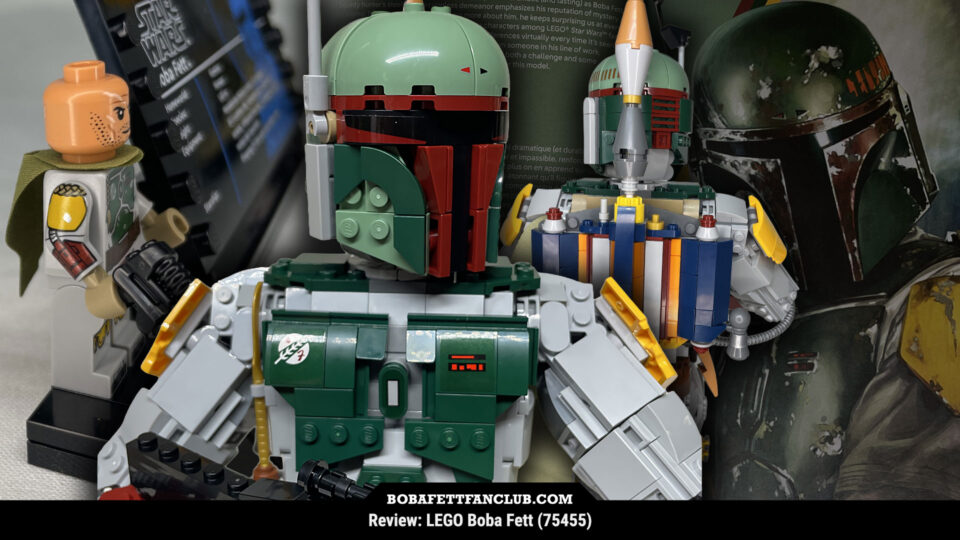
From just a few select episodes we can see that Boba Fett has made an impact in Star Wars animation, both directly and indirectly, as his presence is felt even in episodes that do not include him. Perhaps you’re not that convinced yet, so we can continue this analysis of Star Wars animation from the perspective of a Boba Fett fan another time, but for now we can go and revisit vintage Star Wars like “The Clone Wars” to see that original generation of Jango Alpha-ARC Clones, or we can watch modern Star Wars like “The Clone Wars” that continued and expanded on the Fett storyline from “Attack of the Clones.”

Continued in Part 2

Enjoy this post? Consider posting it on Facebook, Twitter and Reddit or adding a comment.

Review: "Star Wars: Boba Fett – Black, White & Red #3"

Published November 26, 2025 • Written by • Filed under Collectibles

Old fashioned bounty hunting with a blaster, flamethrower, whipcord, and even boot spikes make for a great Boba piece

I’ve been following the “Boba Fett – Black, White & Red” miniseries from the very beginning. The first two issues were both great, noteworthy entries in Boba’s pantheon of amazing adventures in comics. He’s always been an MVP in this particular medium, both in Legends and in Canon. As good as the first two issues were, however… I think this one absolutely takes the cake.

The story in #3 resonates with me to my very core, and hits home when it comes to the very reasons I became a Boba Fett fan in the first place. It’s about the integrity and value of keeping your word, the power and pain of nursing a grudge in the face of injustice, and good old fashioned bounty hunting.

This one is called “Meeting of the Minds.” It’s actually a pretty literal statement, not some metaphor about intellectual debates. The beginning starts with Boba doing what he does best: disintegrating his adversaries. Boba’s arsenal, like last issue, wreaks absolute havoc and it’s an absolute shame this isn’t a scene in live-action. His blaster, the flamethrower, the whipcord — even his boot spikes — inflict damage in this fight! He uses the latter to kick and lacerate the shins of an enemy. I vibe strongly with that panel because I too used to kick shins when I was a little kid, but it looks a lot cooler when Boba does it. Heck, anything looks cooler with him. Another amazing shot was Boba tying up an enemy with his whipcord, then pulling him in to use as a shield to intercept blaster fire. This is the skill set of the best bounty hunter in the galaxy; bravo to both the writer and illustrator for portraying this so well.

Boba is going through all this trouble in order to capture an information broker. He is seeking information on a particular bounty, an old one that went “dormant” years ago. In this case, dormant means the bounty is no longer active. That is precisely the reason that this broker asks Boba, “Why is this so important to you?”

This comic takes place both “Now” during which Boba is in his prime seeking this information, and “Then,” during which Boba is still young and using a very important outfit from his past. If you have watched “Star Wars: The Clone Wars,” you might recall that in Season 4 Boba Fett had an interesting outfit that wasn’t yet his green Mandalorian armor. It was this mask and suit comprised of mostly dark grey and a wine red color. The mask in particular was very interesting, but kind of hard to describe. It’s essentially the top half of a welding faceplate with the bottom half of some sort of respirator. It honestly looks really cool and it’s a pity we don’t have more merchandise of it, or additional appearances. That is, until now: it is this outfit that a young Boba- presumably around 12 or so- is wearing in this flashback.

Here’s the basis gist: the son of some fishmongers was unjustly killed over a game of Chance Cubes. This is the same form of gambling we saw Qui-Gon Jinn indulging in during Star Wars Episode 1: The Phantom Menace. The murderer responsible is this large, brute-like alien named Corm Vargon. He is also a religious zealot and associated with an extremist caste of the B’omarr monks; this will be a relevant detail later in the comic. For those who might not know or need a refresher, B’omarr monks are infamous because they willingly remove their brains from their bodies and put them in these spider-like droids instead, so that they may ponder the mysteries of the galaxy forever. Some of them can still be spotted scuttling about in Jabba’s Palace, which was formerly a B’omarr monastery.

It is obvious that Corm Vargon has no remorse whatsoever for the injustice he has done. But according to Boba, they have scrounged together enough of their meager earnings to hire him and attempt to exact justice. I found this motive to be compelling, sympathetic, and I became very invested in seeing this through. Not only is this one of Boba’s early bounties in his career, but it’s a good cause. And as Boba Fett once said in Tales of the Bounty Hunters, “I bow to no one and give service only for cause.”

Unfortunately, things do not go in Boba’s favor. Despite his amazing skill and his father’s training, he is no much for this foe. Speaking of which, Corm Vargon apparently knew Jango Fett, and used his legacy to taunt Boba. He said that although Jango was a great man, Boba was far beneath him and not living up to his legacy. I’m paraphrasing, but he said something to that effect and I’m sure that wounded Boba deep down.

Long story short, Boba is now attempting to avenge this past incident. During the “Now” era, Boba is clearly in his prime, so I presume this takes place roughly around the events of the Original Trilogy. This would mean that, give or take, about twenty years have passed since Boba Fett failed this bounty. Now, despite how many years have passed, Boba still wants to exact justice.

This is exactly what I find so compelling and gripping about this comic. Let’s break it down and think about the ramifications of this. For starters, Boba must still feel a tremendous amount of guilt. We can’t deny that Boba Fett grows up to be a ruthless enforcer during his adulthood. But remember, he accepted this bounty when he was still a child — one that still had youthful optimism and a more black and white sense of justice. I have no doubt that, as a kid who still hasn’t been corrupted by the ruthlessness of bounty hunting, that he would feel some sort of personal stake in avenging the fishmonger’s son. It is a reverse situation to one he can relate very strongly to: during this era, Mace is likely still alive. Being hellbent on avenging Jango’s death, Boba would see a parallel of this struggle in the grieving eyes of the fishmongers, trying to avenge their son.

He must also feel a lot of anger. This Corm Vargon trash got away with using his father’s name to insult him. There are very few things that cut deeper than that for Boba. And being so young when this happened, with the pain of his father’s death still somewhat fresh, I’m sure that amplifies the effect. This has now become a revenge mission for Boba himself, too.

Lastly, it’s Boba’s code of always completing the bounty missions he undertakes, no matter what. This is what I meant earlier when I mentioned the idea of keeping your worth. Once Boba takes on a job, he completes it. No matter what. And everyone in the entire galaxy knows that. That’s what it means to be the best; to adhere to high standards that most other bounty hunters wouldn’t. It makes sense of course, for Boba certainly isn’t most other bounty hunters. He’s the bounty hunter- an imperial even says that verbatim in the last issue.

I highly recommend reading this issue. The outcome of this mission is worth witnessing, even if it’s slightly bittersweet. But the good far, far outweighs the bad. I have read just about every comic Boba Fett has ever been in. This is one of my absolute favorites. It’s definitely in my Top 10, possibly even my Top 5 (I’d have to think about it). The writer, Ethan Sacks, has written for both Jango and Boba in the past. From what I’ve seen in his work, he understands the Fetts very well. It is this understanding that allows him to write solid pieces for them. In particular, I applaud the use of what I call the “Interim Suit” Boba had in “The Clone Wars.” Those of you reading, if you have a better nickname for that outfit I’d be happy to hear it. If I recall correctly, this is barely the second ever appearance of that outfit, which is saying something, given that the episode it debuted in originally aired in 2012 — now 13 years ago.

I also commend the core plot of this story. Despite the comic being short, it establishes a conflict that cuts deep for Boba and makes it easy for readers to get invested. The fact that Boba would still have the integrity to pursue this bounty, despite the money reward no longer being offered… it demonstrates the code that sets Boba apart from other hunters. He has carried the anger and guilt of this incident for so long, and yet is still hellbent on keeping his word and completing his mission. That relentlessness and honor are what made me a Boba Fett fan. Throw that in with the cool armor and weapons, and you’ve got yourself a character that has endured as a fan favorite for decades.

I’ll comment briefly on the art style. Using only three colors, particularly black white and red, gives these comics the vibe of something gritty like the Sin City movies. I think it absolutely complements the type of story being told. In fact, using too much color would probably detract from the grittiness.

I could go on and on about this issue, so I should stop here. I can borderline guarantee that you’ll enjoy this issue if you’re a Boba Fett fan. The final battle by itself is so good, carries a nasty but entertaining surprise, and is such a reward for Boba fans who want to see him shine. Throw in the story leading up to it, and you’ve got a comic that is not only a great Boba piece, but a great comic overall.

The Pros

  • Amazing, compelling story
  • Deep cut in Boba Fett’s history
  • Great action scenes with Boba
  • Great visuals that complement both the action and the plot

The Cons

  • None

Rating

5 / 5


Enjoy this post? Consider posting it on Facebook, Twitter and Reddit or adding a comment.

2025 Black Friday / Cyber Monday Star Wars Sales Featuring Boba Fett

Published November 25, 2025Updated • Written by • Filed under Collectibles

It’s time for the 12th annual Black Friday / Cyber Monday sale breakdown, focused all around Boba Fett and co.

Shopping for yourself or a friend/fan/lover? This round-up can help. We also have a separate holiday guide and holiday ornaments list.

Updates: Danny Haas, Jason W. Christman


Jump to: Toys and Figures | Video Games | Print | Apparel and Accessories | Books | Other


Toys and Figures

Amazon

There are many items are on sale on Amazon.com’s Star Wars store, which rounds up their major items — mostly apparel but some toys as well. You can also easily narrow down the results to just Fett items, including:

* And the helmet silhouette one is even cheaper on Walmart — see above.

LEGO

Get the LEGO UCS Jango Fett’s Firespray-Class Starship (75409) for $32 off, only at Walmart online.

The LEGO Jango Fett helmet is 20% off at Amazon and Target.

The LEGO Jango Fett’s Starship (75433) is also discounted right now — 20% off on Amazon and Target.

Entertainment Earth

Several Fett items are on sale on their site. Their pre-Black Friday sale is tiered for in-stock items: spend $100 to save $10, spend $150 to save $20, spend $200 to save $30, or spend $250 to save $40, plus free shipping. Discount applied automatically at checkout. Nice to see the Monogram helmet coin bank in their list.

Sideshow Collectibles

Starting 11/10 through 12/28, they have a randomly selected free Sixth Scale Figure with a qualifying purchase — spend $300 and pick from two, or spend $450 and choose from four on their site. They also have $5 to $10 shipping on some Fett items.

Disney Store

No Fett items on sale,


Video Games

Star Wars Jedi: Survivor

Xbox Store has a Black Friday discount, between 75% and 85% off.

Star Wars Outlaws

The Xbox Store discount is 70% off.


Print

Acme Archives

Starting 11/20 and going until 12/2 at noon Pacific, get 25% off on their site. Discount is automatically applied at checkout. Not stackable and cannot be used with other discount codes. New additions include “Hunter For Hire” by Joe Hogan and new pins by Danny Hass.

Jason W. Christman

The artist with officially licensed prints is signing all orders and doing free U.S. shipping until the end of the year via his website. “Perfect Hibernation” features Boba Fett in the Cloud City carbon freezing chamber scene, plus he’s in “Jabba’s Palace,” shown below in the version via Acme Archives back in 2022. He’s also selling prints of “Cargo Hold,” originally released in 2012 via Acme.

Danny Haas

Danny Haas — whose Fett pins we just featured in our Acme Archives section above — also has a shop with a different Boba Fett piece on his website. He’s doing a free Ahsoka piece with every purchase right now for a limited time.

Image


Apparel and Accessories

Cotton Bureau

Wednesday, 11/26 to Monday 12/1: get free shipping for all our on demand “BFFC” shirts and stickers. Use code THANKYOU25 at checkout.

BFFC Designs

RSVLTS

They’re doing up to 60% off for Black Friday on their site. You can also get free shipping if you sign up for their mailing list, which will send you a code to use at checkout. Sale includes their recently re-stocked “No Good To Me Dead” BorlandFlex Flannel Shirt.

Heroes & Villains

Starting 11/24, get 30% off on their site. Deal includes one of their Boba Fett backpacks (now $84) and their Boba Fett Mandalore performance hoodie (now $63), plus more.

Denuo Novo

Starting 11/21 until 12/2 at 5pm (timezone TBD), get 15% off sitewide plus 2x Rewards Points. The deal includes their Fett jetpack kit.


Books

Check back later.


Other

Regal Robot

Their Boba Fett Prototype Armor Skull Mini Sculpture is currently 50% off on their site. It’s based on his pre-production armor’s shoulder symbol and we got to do a first look reveal video of it.


More

Are we missing something cool? Let us know in the comments.

Enjoy this post? Consider posting it on Facebook, Twitter and Reddit or adding a comment.

Exclusive Interview with Ethan Sacks, Author of “Star Wars: Boba Fett – Black, White & Red #3”

Published November 24, 2025 • Written by • Filed under Collectibles

Ethan Sacks helms issue #3 of Boba Fett’s “Black, White & Red” anthology, out this Wednesday, November 26th.

We asked the veteran Fett writer all about the latest issue of the four-part miniseries in advance:


BFFC: Tell us about your use of such deep cut characters like the B’omarr Monks and Djas Puhr.

Ethan Sacks: Once editor Mark Paniccia approached me with an offer for another chance to write Boba Fett, a character who I fell in love with during my run on Bounty Hunters a few years back, and in this cool black, white, and red (and lotsa gray, literally and figuratively) format, the B’omarr monks just popped into my mind. I mean they are black, white, and red. It’s right there! But those skittery exo-skeletons and long-lived brains have creeped me out since I first saw them on the movie screen in Return of the Jedi as a 10-year-old. What makes someone put their brain in a jar willingly to live forever? Plus I’ve always had a fascination with spiders and the idea of an infestation of those critters is an idea I’ve wanted to play with for a long time.

I got the single best note I’ve ever gotten from Lucasfilm when I included a reference photo of an infestation of Huntsman spiders: “New nightmare unlocked.” I will treasure that one forever.

As for Djas Phur, that is credit to editor Mikey Basso, who is an encyclopedia of Star Wars lore. But once he brought it up, I thought his species (Djas’s species, not Mikey’s human types) would make a formidable foe for Fett with those honed reflexes and fighting skills.

BFFC: What was it like writing for a different era of Boba Fett we usually don’t see?

To me, Boba Fett has been defined by the profound loss of his father at a young age. He spent much of his life trying to live up to a massive legacy. And he had to learn on the fly. It’s a cold galaxy for an orphan trying to make it in the bounty hunter trade. He eventually rose to eclipse even Jango, but it took a lot of hard knocks to get there. I relished the chance to tell a story set in BOTH of those eras: the dichotomy between the impulsive kid trying to cut his teeth, and the grown-up badass who breaks teeth.

BFFC: How does the more limited – but vivid – black/white/red color palette affect your storytelling?

I knew we had the pieces to tell a good story with that format, but having the great Juan Jose Ryp, an artist whose work I’ve admired for years, is what made it come together so well. His stunning art and color choices made this tale creepy as hell. There are parts that seem downright nightmarish. This has been a dream project all around!

BFFC: What inspired you to write this particular Boba Fett story?

I was intrigued by the idea of the bounty that got away. Exploring a failure that happened in Boba Fett’s past, before he was fully formed as the badass we know, that left an itch that he needs to scratch, a blemish on an otherwise near perfect record? Is there something more important to this legendary bounty hunter than the credits? I love trying to get inside the head under that helmet. Plus… did I mention how creeped out I get by those B’omarr monks?


The third issue comes out this Wednesday, November 26, 2025. Be sure to ask your local comic book retailer about any or all of the variant covers, too.


Enjoy this post? Consider posting it on Facebook, Twitter and Reddit or adding a comment.

About Our Boba Fett News Coverage

Breaking news, fact checking, exclusive interviews, featured fans, and much more reportage about everything Boba Fett. Looking for all our news coverage? See our news archive since 1996.

View articles tagged by exclusive, review, or guide.

Our Spoiler Policy

We cover the news. If something is public and significant, we're likely going to cover it. If something is private or leaked, as a courtesy we will avoid sharing plot and/or details out in the open like in headlines or featured images. We'll put it behind a link — not in a headline or thumbnail — so you know before you know.

Our Attribution Policy

We cite our public sources, often tracking down the root of big stories, and double verify our private sources. If you're using our content as a source, please cite us by name and/or link.

Contact BFFC

Got a news tip? Use our contact form or DM us on social media (Facebook, Instagram, Twitter).