Account

Review: "Star Wars: The Book of Boba Fett #6"
Marvel’s The Book of Boba Fett #6 makes Boba’s past a problem for his future
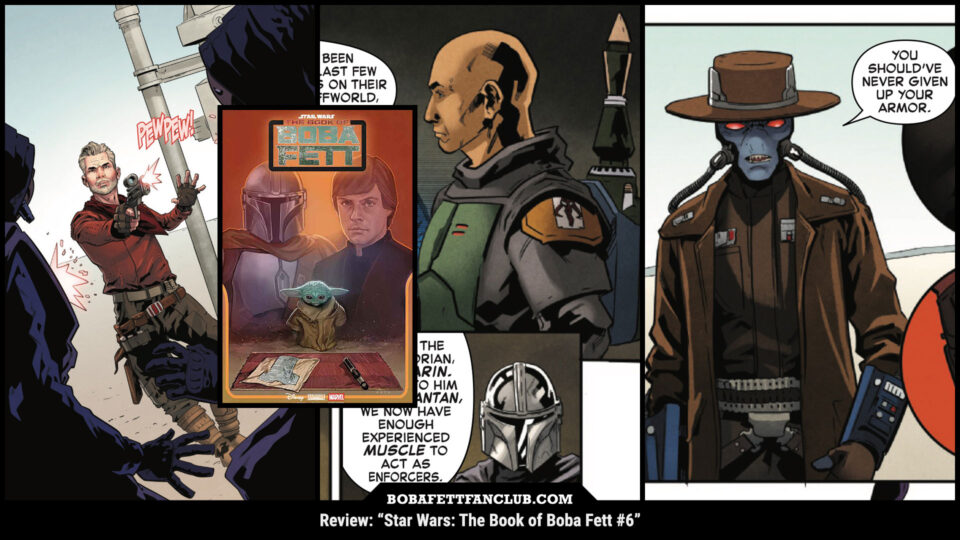
For the second issue in a row, Marvel’s “The Book of Boba Fett” spends remarkably little time with Boba Fett. That remains frustrating, but issue #6 does something interesting with the character even in his absence. When Cad Bane arrives on Tatooine, he reminds us that Boba’s old reputation hasn’t gone anywhere, regardless of how much the man himself may have changed.
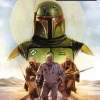
Rodney Barnes returns as writer, alongside artist Will Sliney, colorist Rachelle Rosenberg, and letterer VC’s Joe Caramagna. Phil Noto provides the main cover. Adapting “From the Desert Comes a Stranger,” the issue splits its attention between Din Djarin’s visit to Grogu, Luke Skywalker’s efforts to rebuild the Jedi Order, and the growing conflict with the Pykes on Tatooine.
The reputation Boba can’t leave behind
When Cad Bane confronts Cobb Vanth in Freetown, he warns the marshal against helping Boba Fett, describing him as a cold-blooded killer who worked for the Empire.
The thing is, Bane isn’t exactly wrong.
For someone who has spent most of his life as a Boba Fett fan, that is an interesting thing to consider. The ruthless bounty hunter Bane describes is largely the same character I grew up admiring. Boba’s reputation was built on being dangerous, efficient, and willing to work for some of the worst people in the galaxy. It was part of what made him so compelling in the original trilogy.
But now that same reputation is being used against him.
Boba has spent much of the television series trying to move beyond his life as a hired gun, building something of his own and surrounding himself with people who follow him out of loyalty rather than fear. Unfortunately, deciding to change doesn’t erase everything he did before. His reputation may still serve him when he needs to intimidate an opponent, but it becomes a problem when he needs others to trust him.
Cad Bane represents much of what Boba is trying to leave behind. He’s another professional killer working for a powerful criminal organization, using violence and intimidation to enforce its interests. When Cobb Vanth refuses to allow the spice trade into Freetown, Bane’s response makes it clear how the Pykes intend to deal with anyone who stands in their way.
I like this complication for Boba’s story. He hasn’t suddenly become a saint, nor would I particularly want him to. He’s still trying to establish himself as a crime lord, after all. But he is attempting to do things differently, and there are people in the galaxy who have every reason to doubt his sincerity.
His past isn’t going to disappear simply because he’s decided he wants a different future.
A different story, with some familiar faces
Much of the rest of the issue belongs to Luke Skywalker, Grogu, and Din Djarin. I enjoyed these sequences when they originally aired, and there is plenty to appreciate in the comic as well.
Seeing Luke training Grogu, particularly the glimpses of his memories of the Jedi Temple during Order 66, gives us an interesting look at the beginnings of Luke’s new Jedi Order. The training sequences are entertaining, and I like the mixture of humor and more serious moments as Grogu begins to develop his abilities.
The choice Luke eventually presents to Grogu is especially interesting. He offers him Yoda’s lightsaber or the Mandalorian armor Din brought as a gift. Grogu can continue his Jedi training or return to Din, but Luke insists that he cannot have both.
There is some irony in Luke, who once abandoned his own training on Dagobah against Yoda’s warnings to help his friends, now asking Grogu to choose between his attachment to Din and his future as a Jedi. Perhaps Luke has learned something from his own experiences, but it is still a decision that seems at odds with the Luke we knew from the original trilogy.
It’s a worthwhile story, particularly after the previous issue explored Din losing his place among the Mandalorians. Din and Grogu are both being asked to reconcile their responsibilities to a larger tradition with the personal relationships that have become important to them.
But once again, this material feels much more at home in “The Mandalorian.”
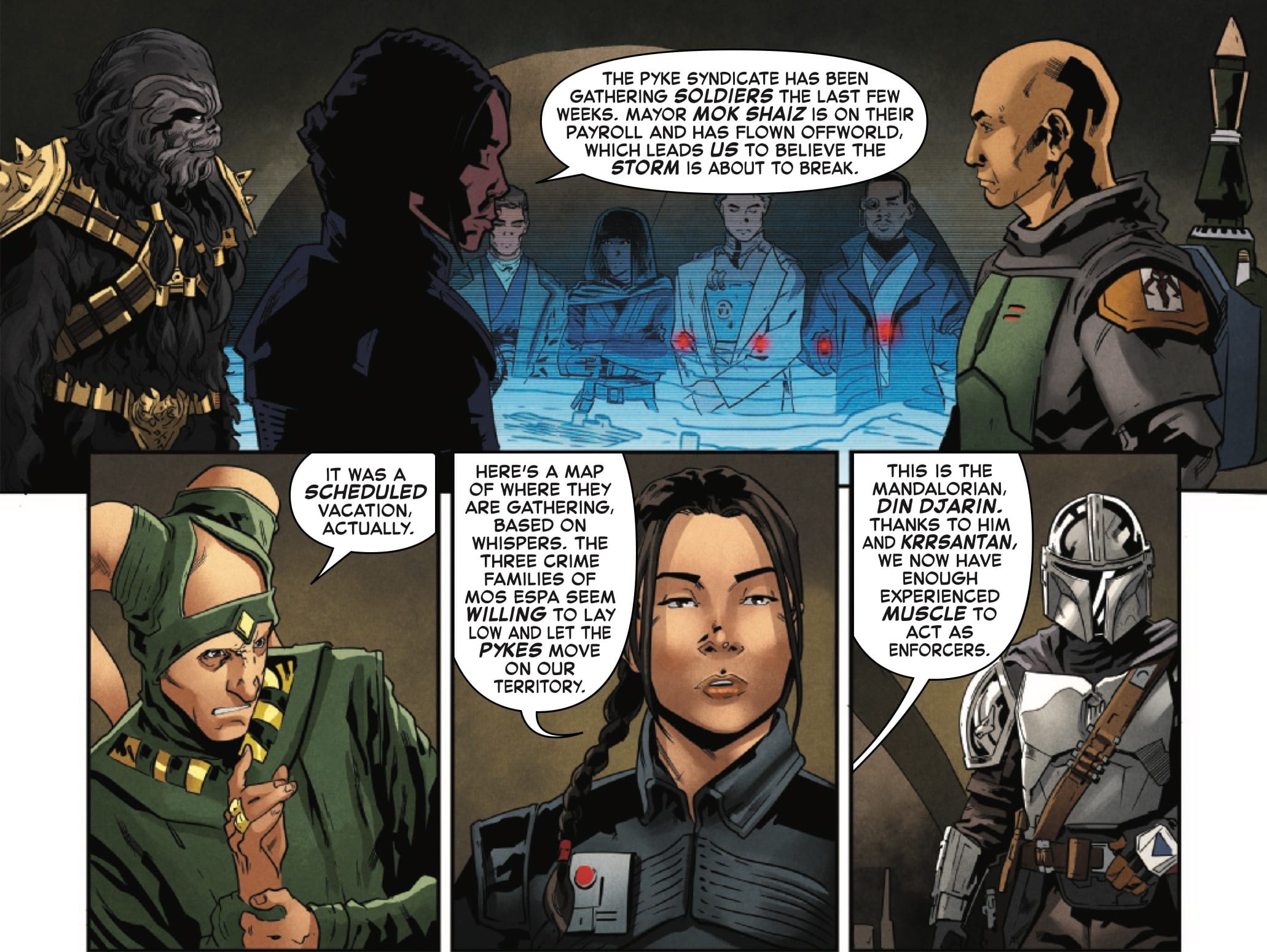
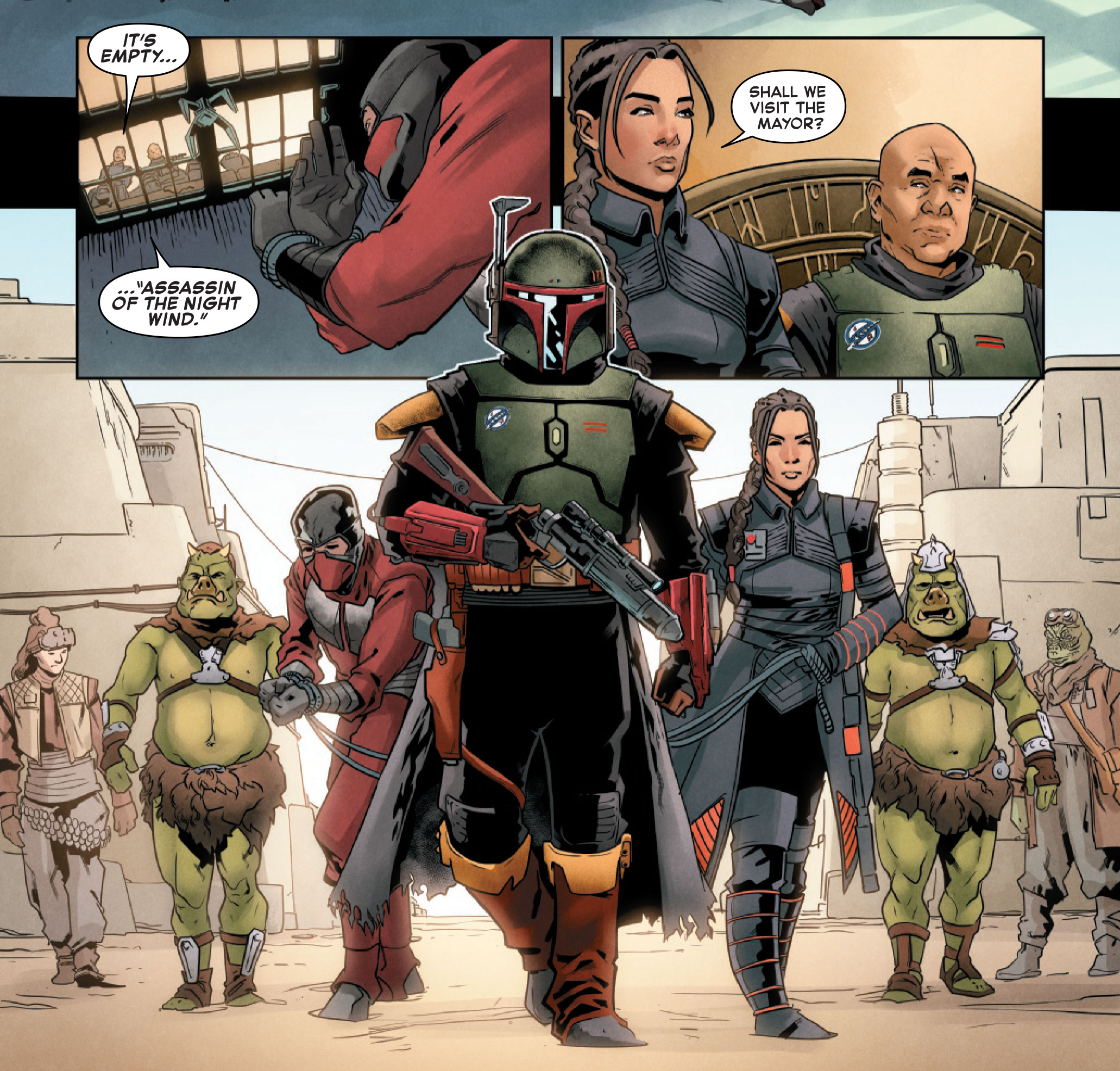
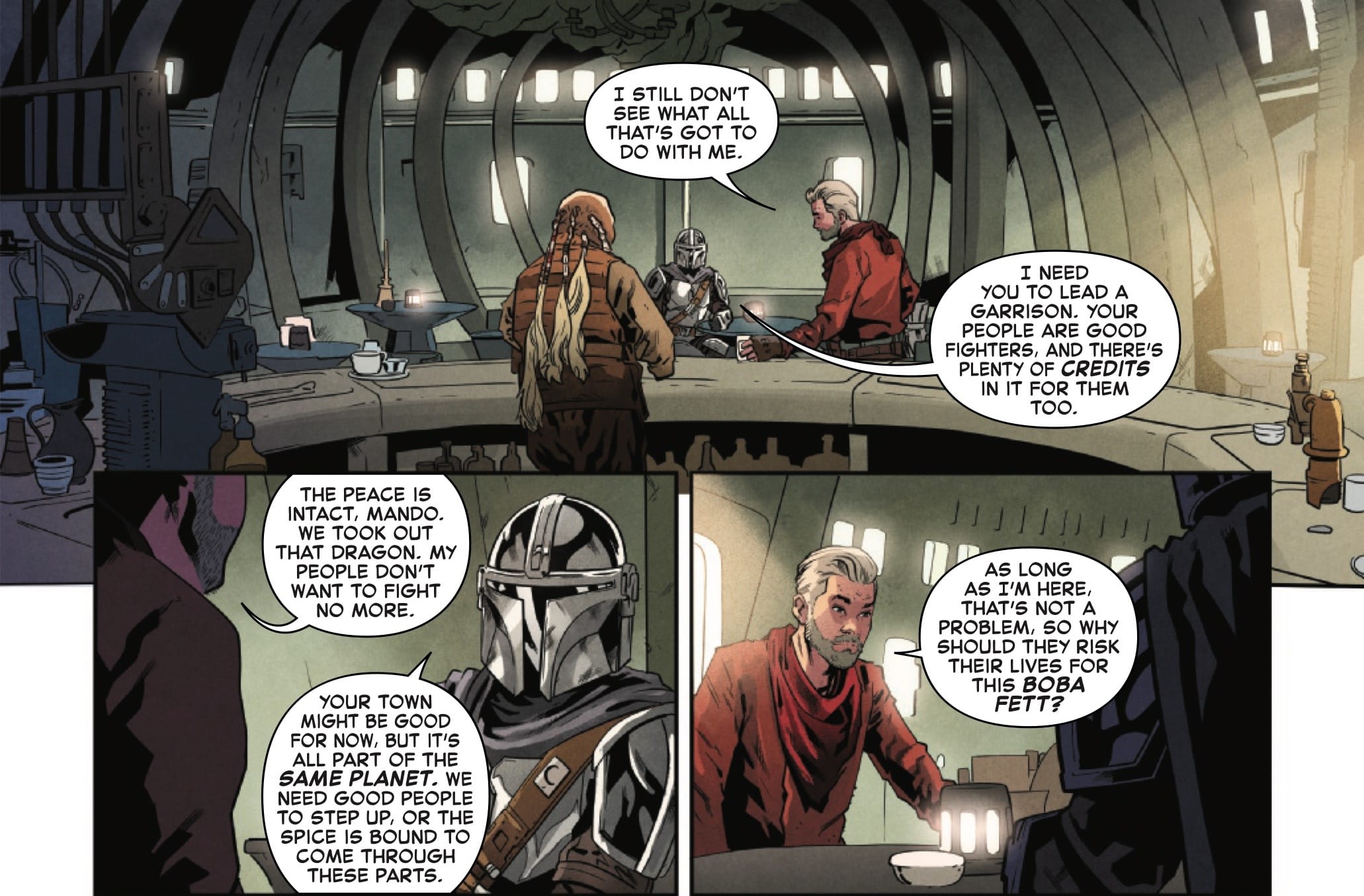
Boba himself receives only a page in which he and his allies discuss the approaching Pyke threat and their need for additional fighters. Din agrees to help recruit people from Freetown, and the story moves on. With the war approaching and Boba’s leadership about to face its greatest test, I would have liked to spend more time with him.
As with issue #5, this is primarily a criticism of the television series rather than the comic. Barnes and Sliney are faithfully adapting the material, including the decisions about where the original episode spent its time. Unfortunately, those choices still don’t work particularly well for me in a story with Boba Fett’s name on it.
A Western showdown and some excellent artwork
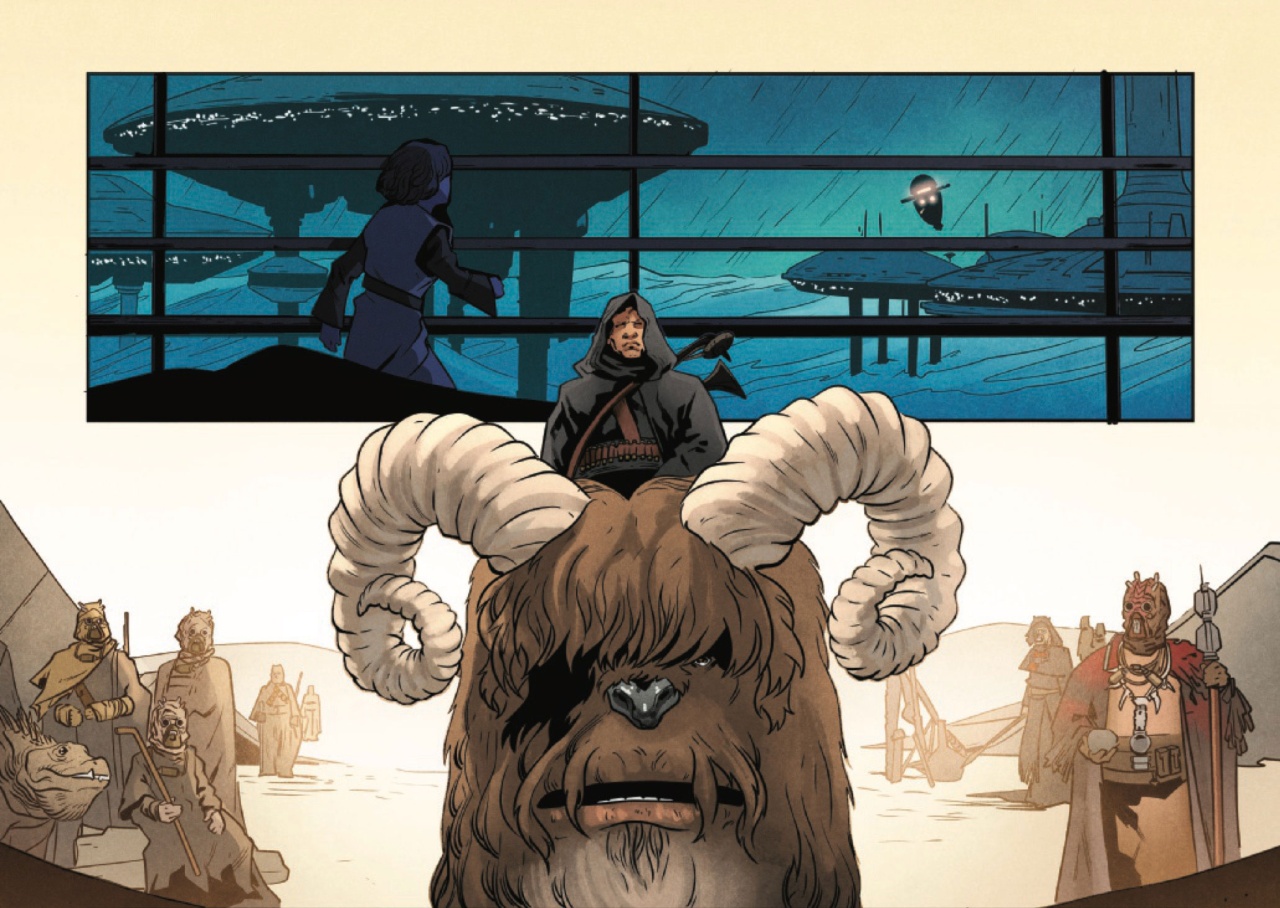
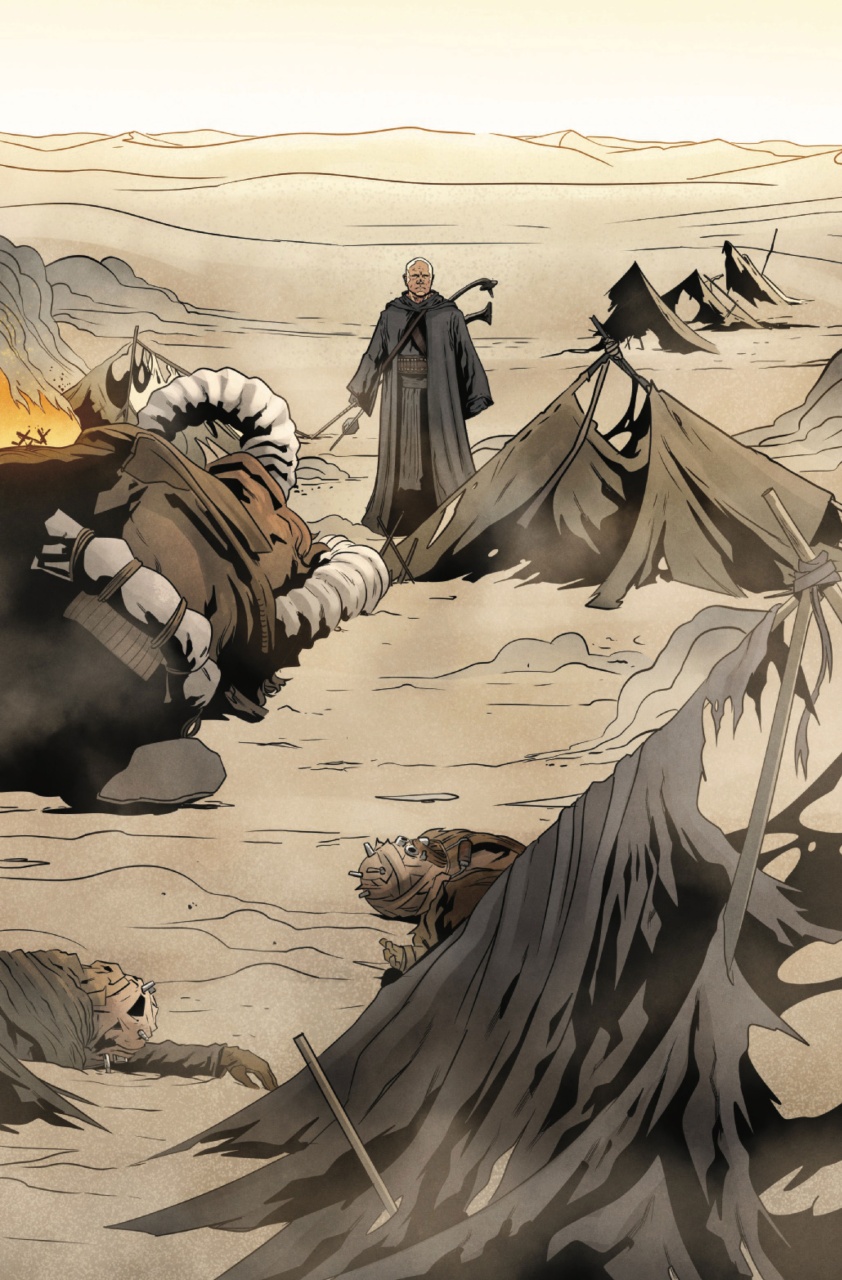
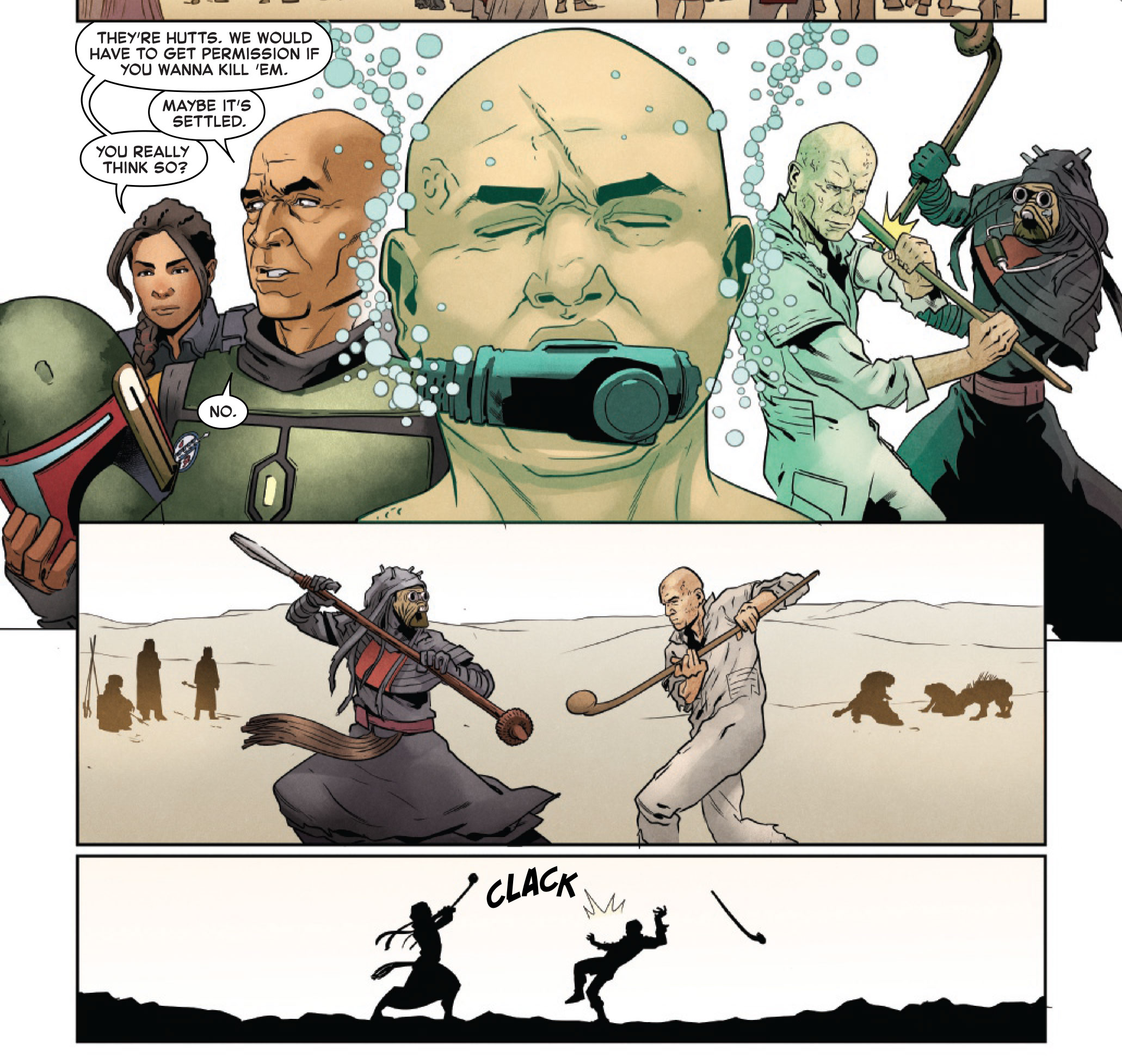
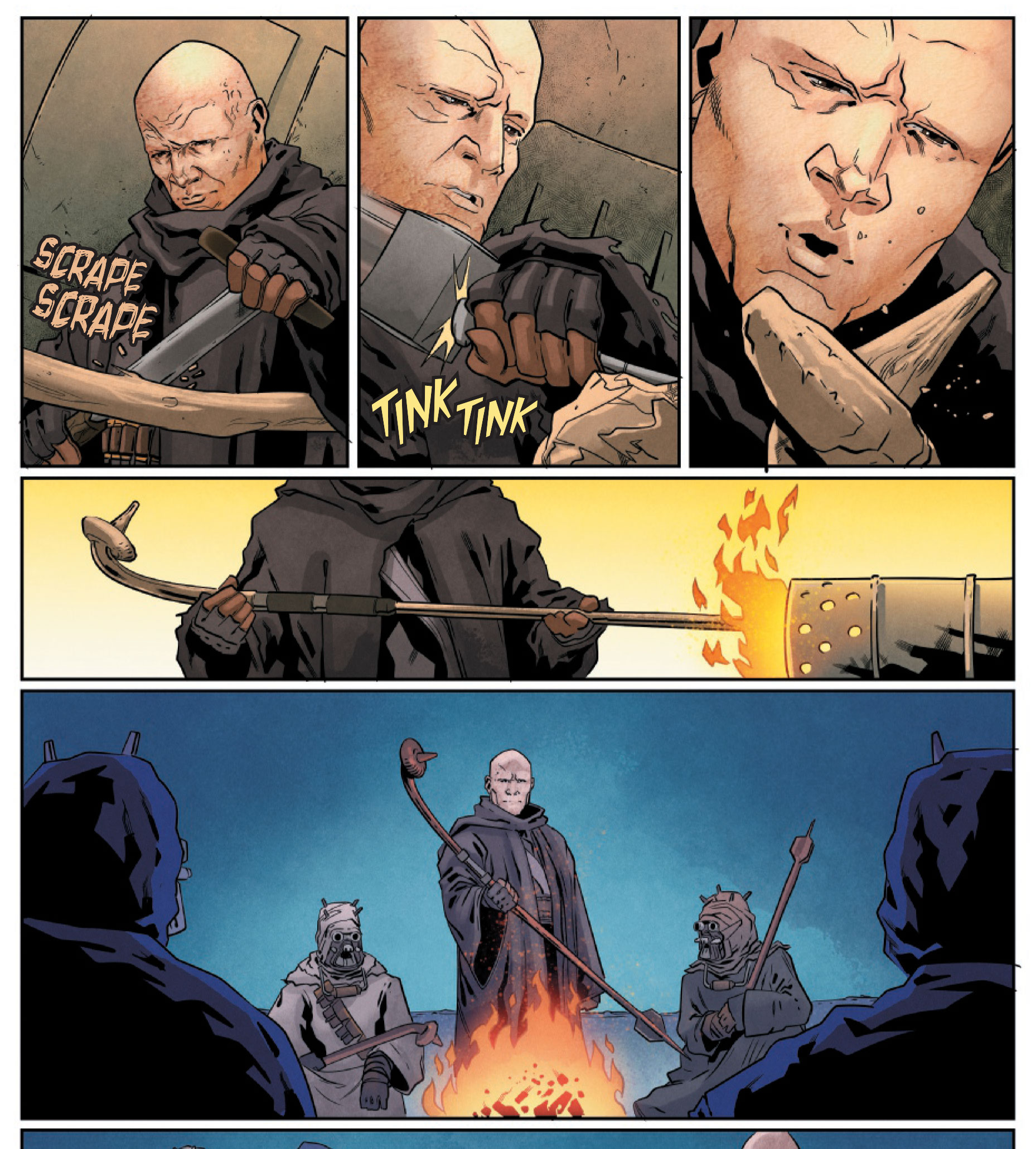
Visually, this is another strong issue. Sliney and Rosenberg do an excellent job distinguishing the green, peaceful landscapes surrounding Luke’s new Jedi academy from the harsh, nearly colorless expanses of Tatooine.
The training sequences have a relaxed, almost playful quality, particularly when Grogu is learning to jump and use the Force. Sliney makes good use of wide compositions to establish the environment, then moves into smaller panels to follow Grogu’s movements. The brief return to Order 66 provides a sharp contrast, replacing the peaceful setting with blaster fire, lightsabers, and the chaos of the Jedi Temple attack.
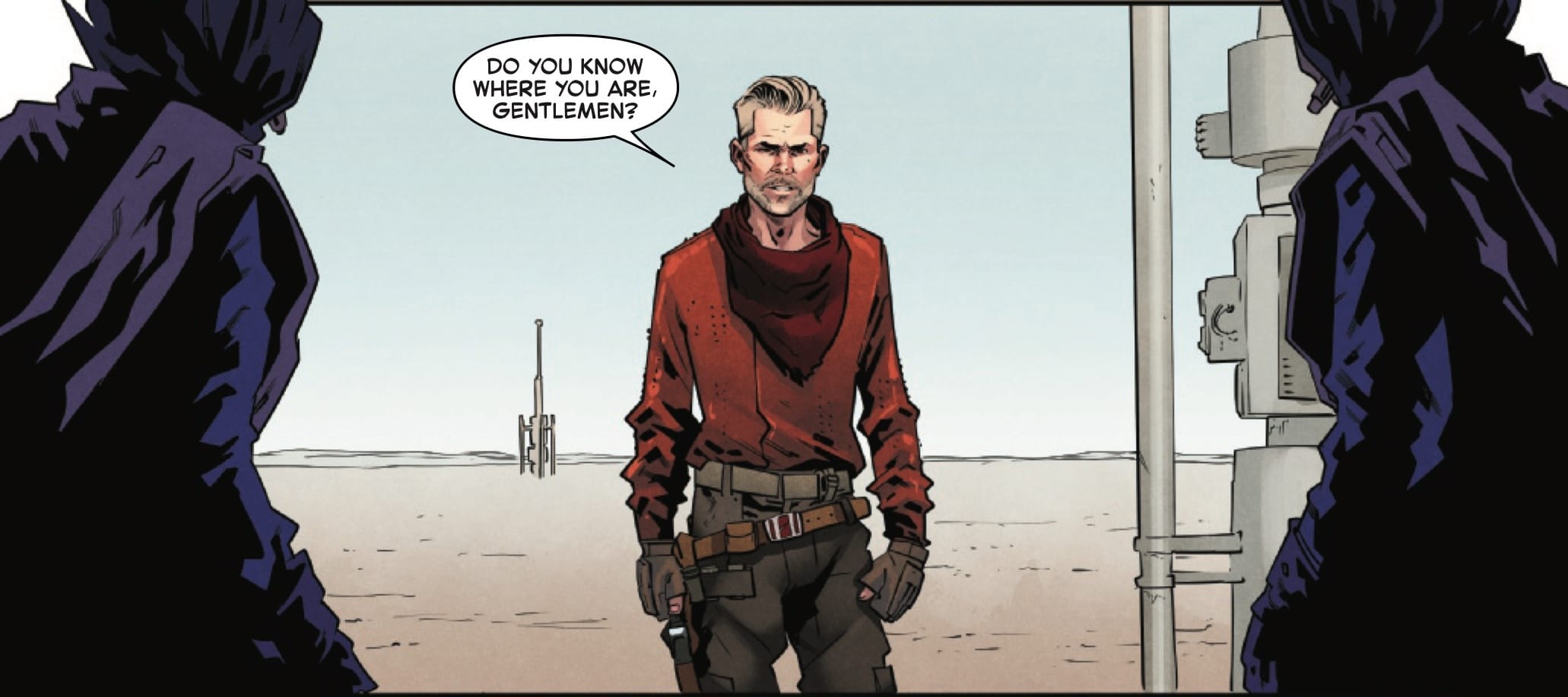
For me, the confrontation between Cobb Vanth and Cad Bane is the visual highlight of the issue. The broad, nearly empty street, the two figures facing one another across the distance, and the close views of their faces and hands all lean heavily into the language of a classic Western gunfight.
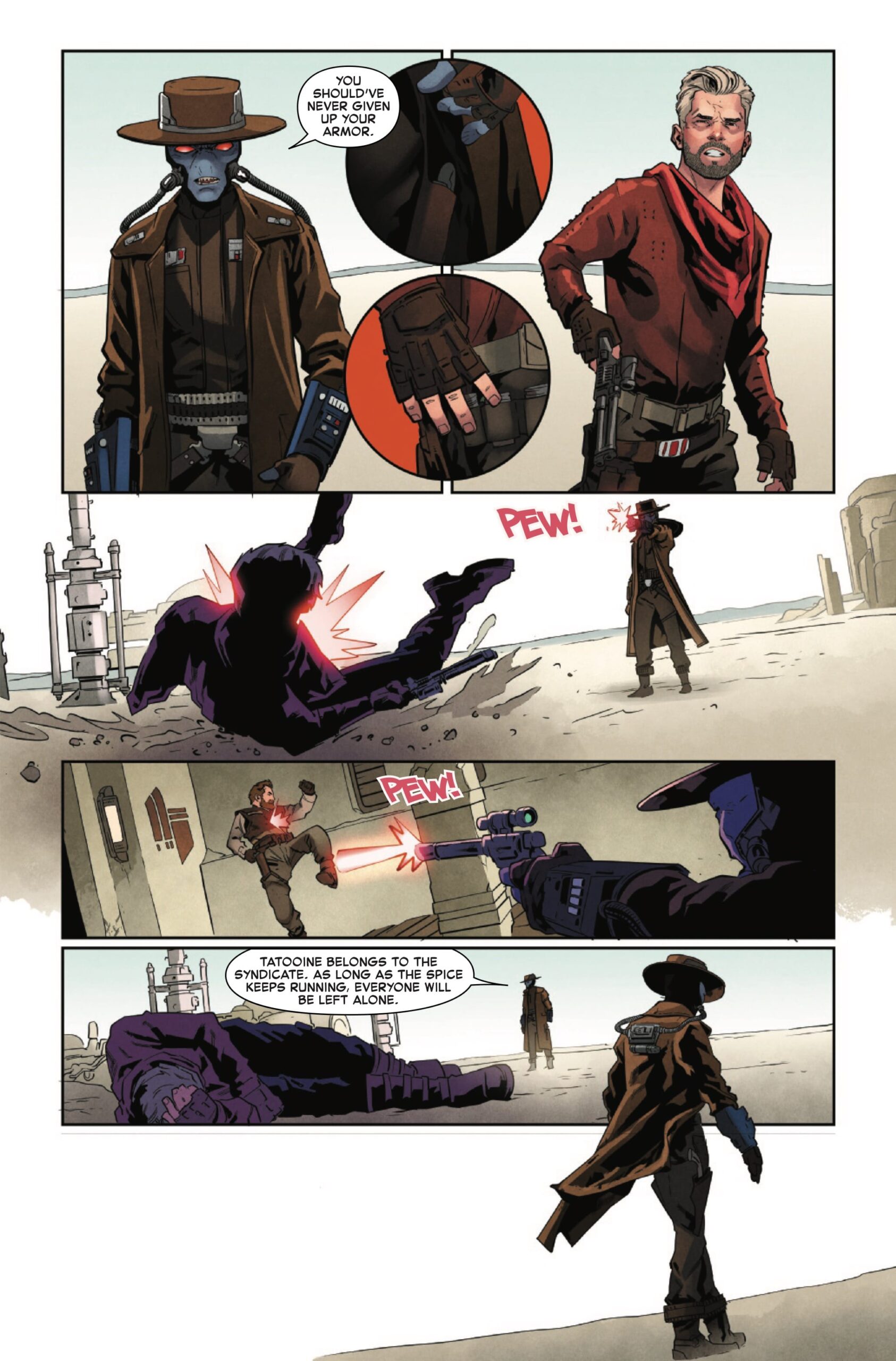
Sliney allows the confrontation to build slowly before the shooting starts. Cad Bane’s distinctive appearance, wide-brimmed hat, and glowing red eyes make him particularly effective on the page. He is another character who, like the Boba Fett of the original trilogy, benefits from saying very little and letting his presence do much of the work.
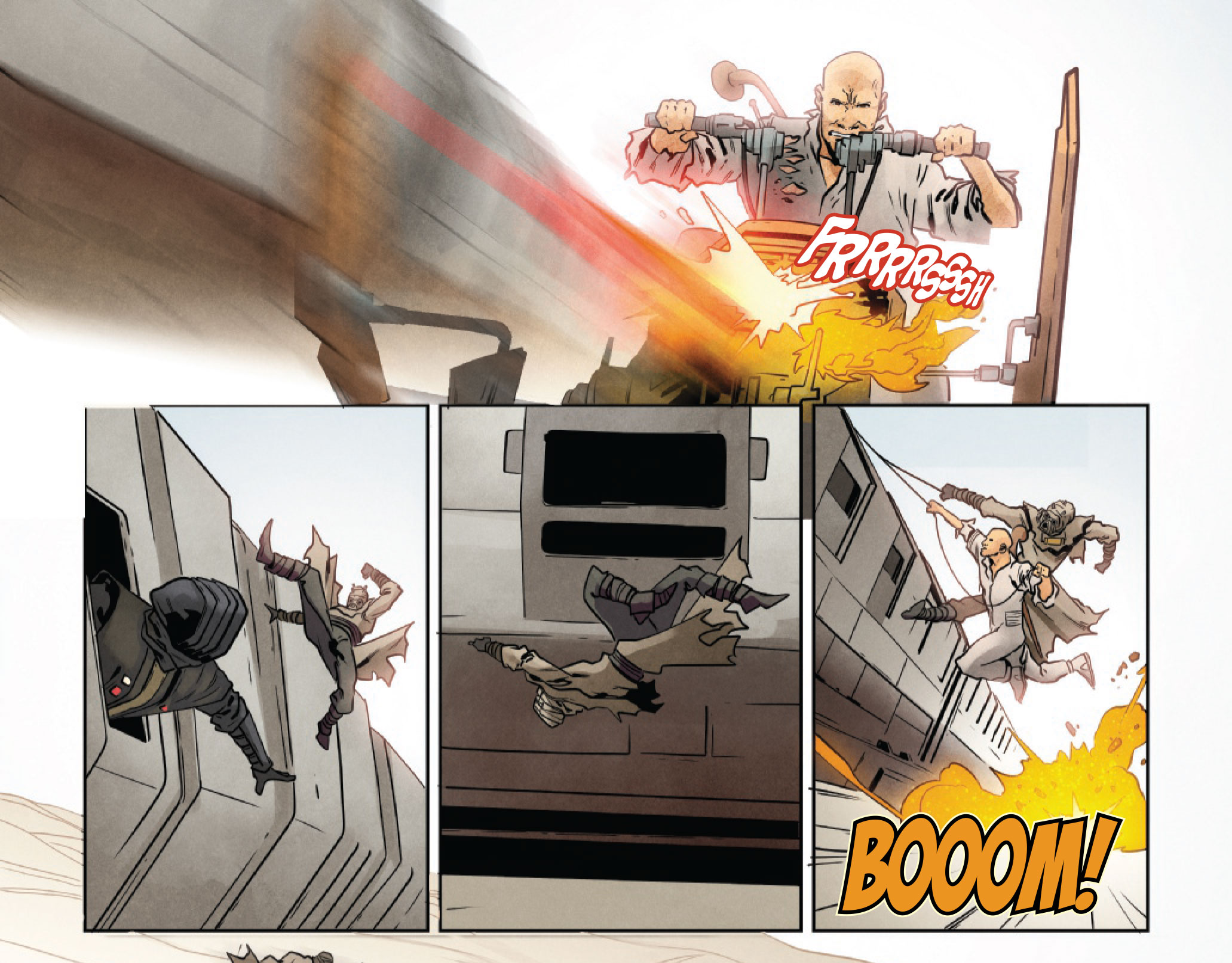
The attack on the Sanctuary provides the issue’s most dramatic image. Sliney devotes an entire page to the explosion, with Rosenberg’s fiery colors and Caramagna’s enormous lettering filling the space. It is a sudden, violent reminder that the Pykes are no longer simply preparing for a conflict. Innocent people are already dying, and the war has begun.
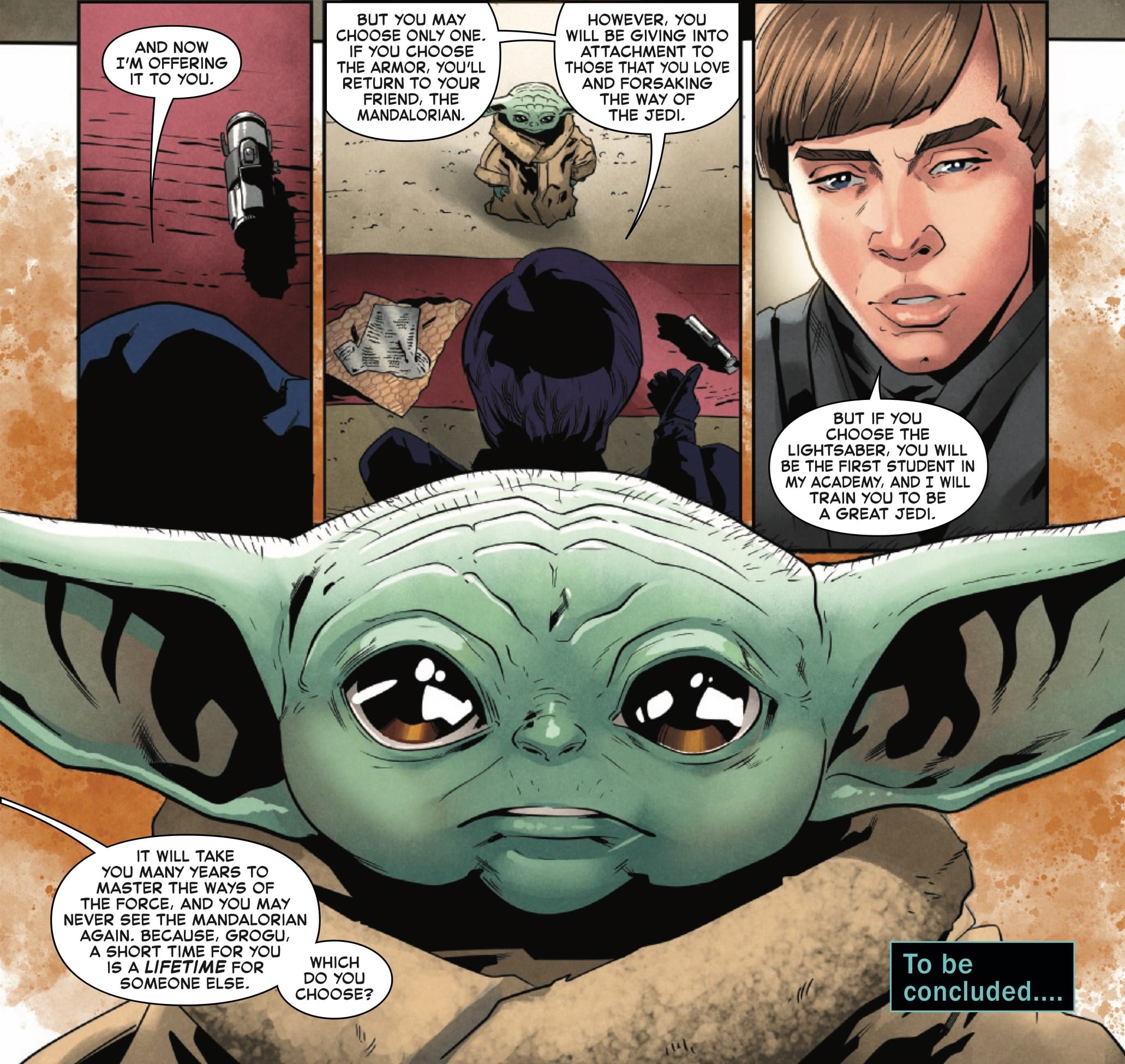
That makes the decision to end the issue on Grogu’s choice feel particularly strange. We’ve just watched the conflict surrounding Boba erupt into open violence, but the final cliffhanger returns to Luke and Grogu.
Both stories are compelling, but I still don’t think they belong together this close to the conclusion of “The Book of Boba Fett.”
The past isn’t finished with Boba Fett
“The Book of Boba Fett” #6 is another excellent-looking comic. The action is strong, the Western-style confrontation with Cad Bane is particularly effective, and I enjoyed revisiting Luke and Grogu’s story. The artwork continues to be one of the adaptation’s greatest strengths.
What I appreciate most, though, is the reminder that Boba can’t simply walk away from the reputation he spent a lifetime building. Cad Bane knows exactly who Boba Fett used to be, and he has no reason to believe the man has changed. That gives Boba’s attempts to establish a different kind of life an obstacle that can’t necessarily be solved with a blaster.
Unfortunately, we’re now six issues into a seven-issue adaptation, and Boba has spent much of the last two watching his own story unfold from the sidelines. The comic faithfully recreates the television series’ most awkward detours, and even the excellent artwork can’t entirely compensate for that.
With one issue remaining, I’m looking forward to finally seeing Boba confront the consequences of both his past and the choices he’s made since escaping the Sarlacc. Cad Bane has reminded us who Boba Fett used to be. Now I’d like to spend some time with the person he’s trying to become.