


 Account

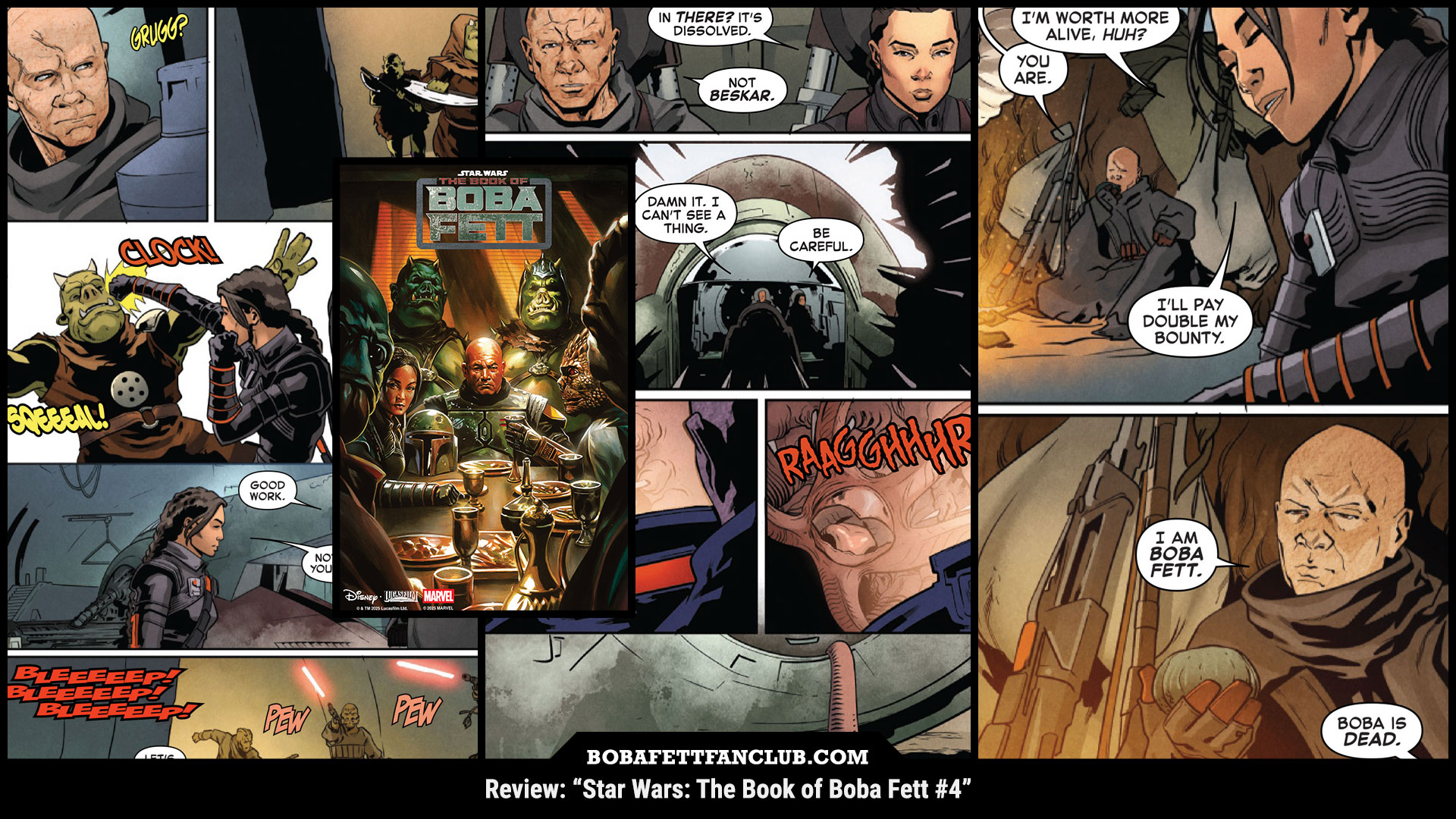
Review: "Star Wars: The Book of Boba Fett #4"
Marvel’s The Book of Boba Fett #4 finds its strength in Boba and Fennec
After watching Boba Fett lose his adopted Tusken family in issue #3, I found it interesting that issue #4 begins with him choosing to save someone else who has been left for dead. The person he rescues is Fennec Shand, another accomplished bounty hunter who has spent much of her life working alone. Their developing partnership gives this chapter its most interesting material, particularly as Boba begins putting his ideas about loyalty and belonging into words.
Rodney Barnes returns as writer, alongside artist Will Sliney, colorist Rachelle Rosenberg, and letterer VC’s Joe Caramagna. Felipe Massafera provides the main cover. Adapting “The Gathering Storm,” the issue remains closely tied to the television episode, but offers some worthwhile moments between two characters who are accustomed to depending on nobody but themselves.
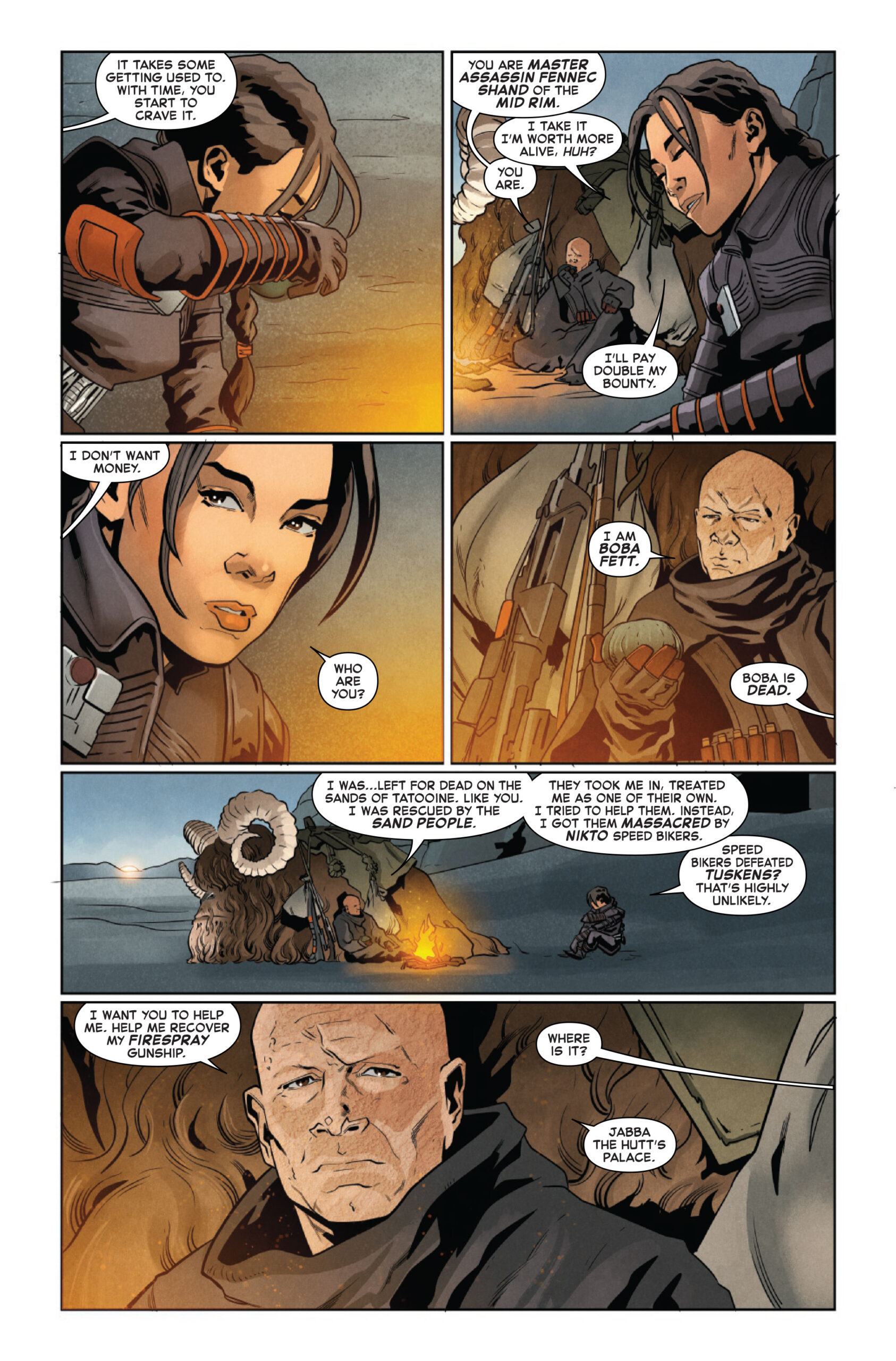
Two bounty hunters, two different outlooks
Fennec’s first reaction to being rescued is suspicion. She assumes Boba wants money or expects something in return, and she is not entirely wrong. He needs her help recovering his Slave I from Jabba’s palace. But their arrangement gradually becomes something more interesting than one professional hiring another.
Their escape from the palace makes that clear. Fennec is not simply following Boba’s orders. She solves problems he cannot, covers him when things go wrong, and plays an essential role in getting them both out alive. Afterward, Boba casually remarks that next time they should stick to the plan. Fennec immediately catches the implication: “Next time?”
I like that little exchange. Neither has agreed to a lasting partnership, but Boba is already thinking about working together again, extending his circle.
The more substantial conversation comes later, when Boba explains that he is tired of risking his life for employers who make bad decisions. He wants to stop working for other people’s interests and build something of his own. Fennec, who values her independence, is skeptical. When she suggests that living with the Tuskens has made him soft, Boba tells her that living with the Tuskens has, in fact, made him stronger, because there is only so far someone can go without a tribe.
Coming immediately after the loss we explored in issue #3, that exchange carries more weight for me now. Boba has spent most of his life building a reputation as someone who needs nobody. He has also spent much of that life working for people who considered him expendable, a commodity. The Tuskens offered him something different, and losing them has not made him abandon the idea of finding it again.
I appreciate that Fennec does not immediately embrace his philosophy. She has survived by remaining independent, and she is not particularly interested in surrendering that freedom at this point. Their different outlooks make the beginnings of their partnership more believable.
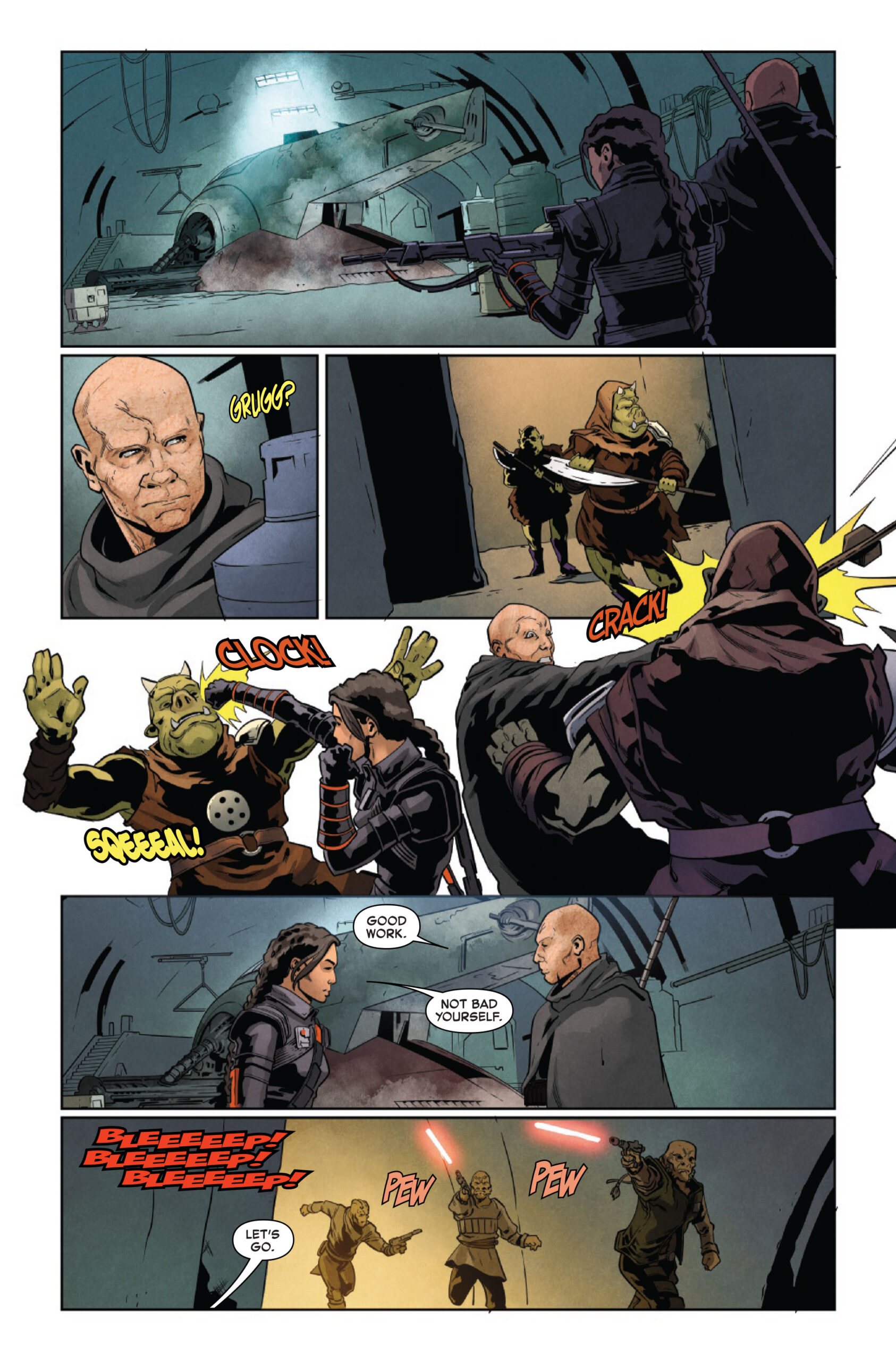
Action, artwork, and a little humor
Sliney handles the palace infiltration and escape well. There is a surprising amount of humor in Boba’s encounter with the kitchen droids, particularly the frantic little rat-catcher droid. It is not the intimidating Boba Fett of the original trilogy, but the sequence gives the action some variety before the shooting starts.
The escape itself is particularly effective. Sliney uses a series of narrow vertical panels to follow Fennec’s split-second actions as the situation becomes increasingly desperate, then opens up the compositions as the ship breaks free. It gives the events a clear rhythm without making it difficult to follow everything that’s going on.
Rosenberg’s colors also help separate the different parts of the story. The cool, industrial tones of the palace contrast with the warm firelight of Boba and Fennec’s conversations in the desert. Caramagna’s lettering adds plenty of energy to the gunfire, explosions, and destruction, while leaving the quieter exchanges room to breathe.
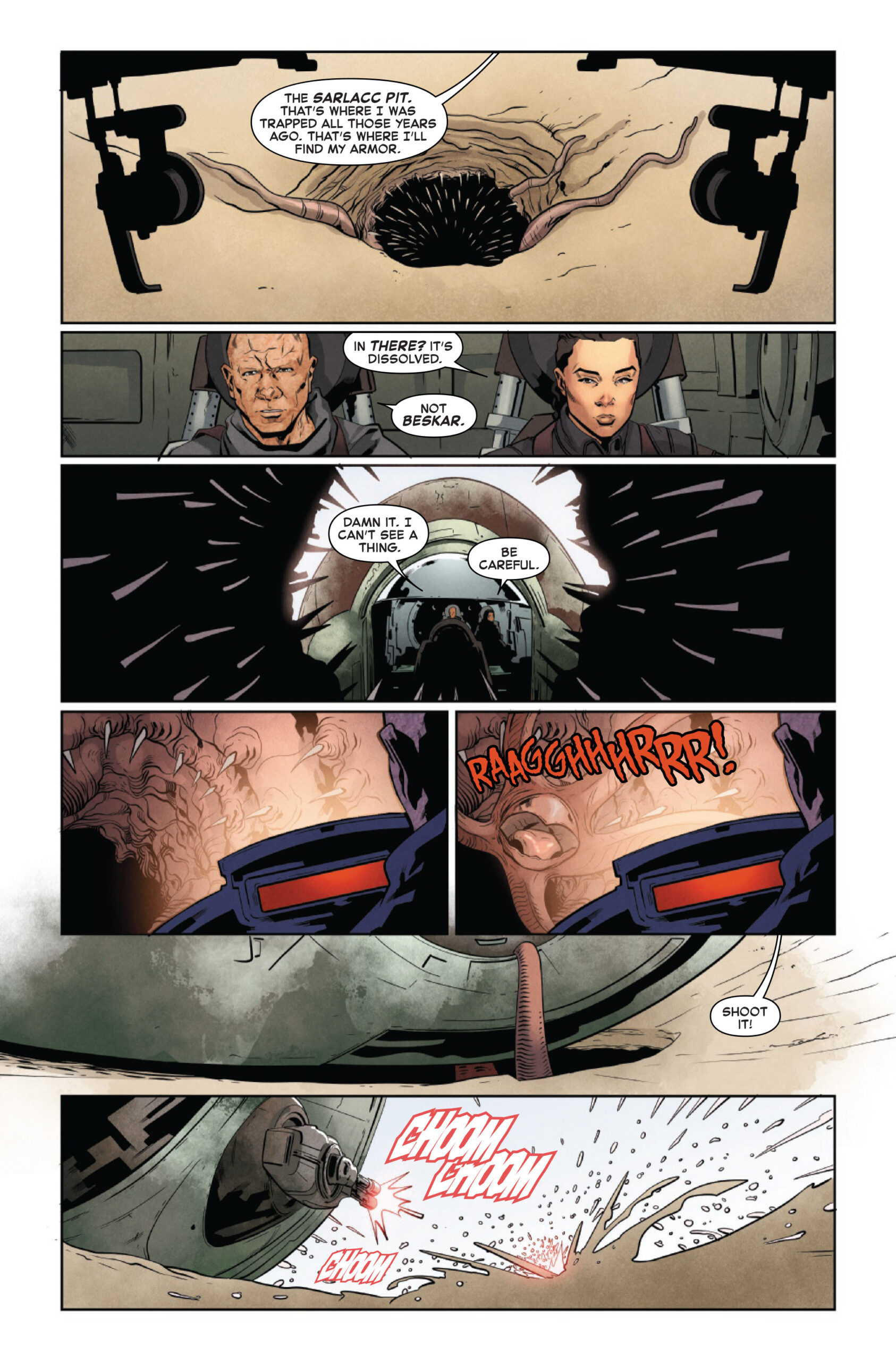
The attack on the speeder bikers and the return to the Sarlacc provide more opportunities for spectacle, and the comic moves through both efficiently. These are familiar scenes, but the layouts make them enjoyable to revisit.
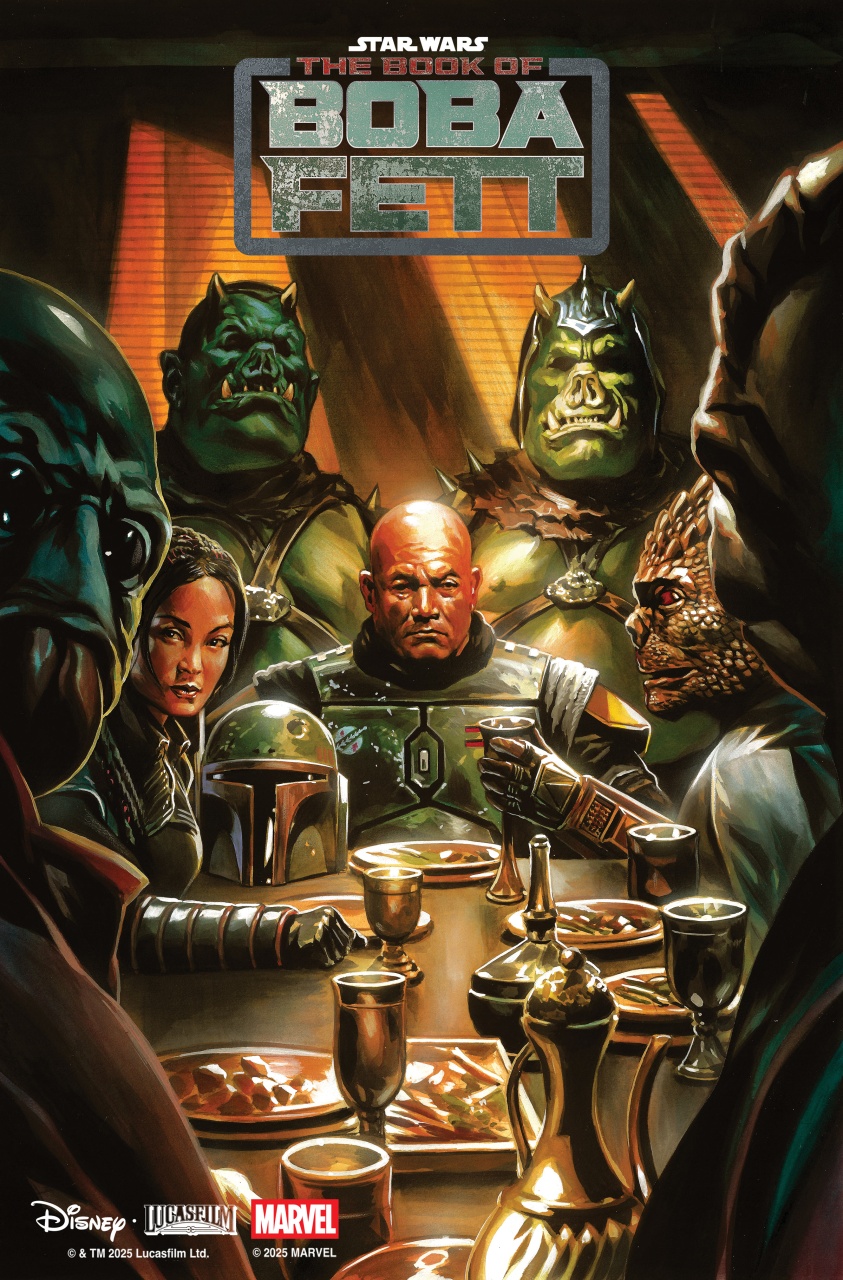
Massafera’s cover deserves mention as well. Boba sits surrounded by the various criminal interests of Mos Espa, looking every bit the crime lord he intends to become. It is a striking image, and I like the underworld atmosphere it establishes. I would have enjoyed seeing more of those competing personalities and interests explored in the story itself, rather than having most of the political maneuvering confined to the final pages.

Building a tribe is harder than hiring one
The closing scenes bring Boba’s ideas about loyalty into sharper focus. Krrsantan, recently released from captivity, is still getting into trouble, and Boba recognizes an opportunity to bring another formidable fighter into his organization. Meanwhile, his meeting with Mos Espa’s crime families produces an agreement to remain neutral rather than any genuine commitment to his leadership.
There is an interesting tension here. Boba has told Fennec that he wants something more than the transactional relationships that defined his bounty-hunting career. Yet he is still assembling much of his organization through money, negotiated arrangements, and promises of mutual benefit.
That is not necessarily a contradiction. Boba is practical enough to understand that he needs resources and muscle if he intends to challenge the Pykes. But there is a difference between having people on the payroll and having people who genuinely believe in what you are trying to build.
The Tuskens did not take to Boba because he paid them. His place among them had to be earned, and that experience shapes what he wants from the people around him now, and how he goes about it.
The Book of Boba Fett #4 is another polished, entertaining adaptation, and I particularly enjoyed the growing relationship between Boba and Fennec. Their conversations give Boba’s changing outlook a clearer voice, even if the comic still rarely ventures beyond what we saw on television. After the emotional impact of issue #3, this installment feels more like a return to the adaptation’s established formula, which is slightly disappointing.
What stays with me is the distinction between loyalty and employment. Boba has spent a lifetime knowing how to hire dangerous people, and he certainly knows how to be one himself. What he is trying to learn now is how to build something that lasts beyond the next paycheck. His decision to save Fennec is the first step into that larger world.
Rating


About the Author, Joe Carlson
BFFC Member #5936







Comments