


 Account
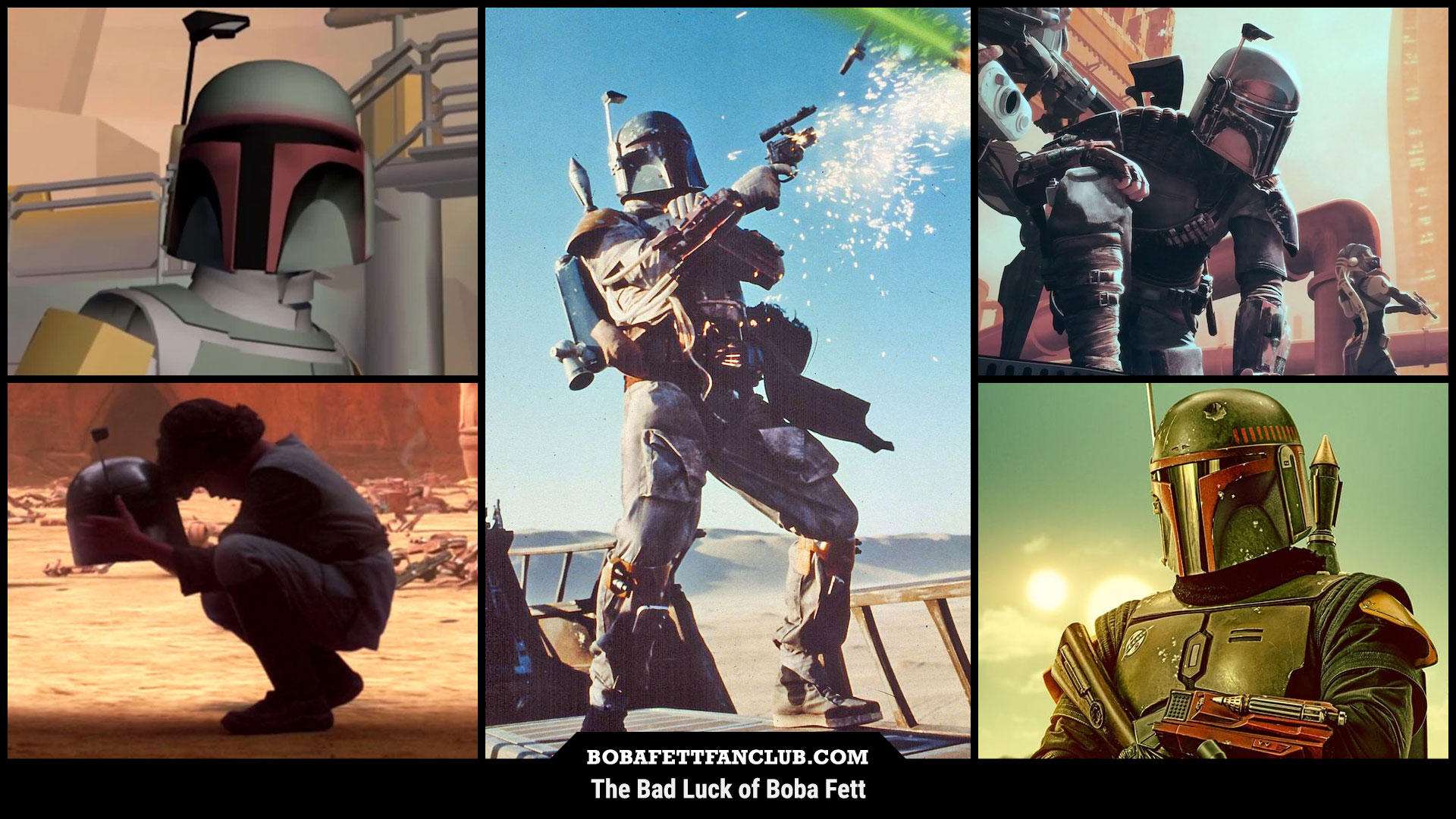
The Bad Luck of Boba Fett
What’s bad luck? It’s misfortune that leads towards failure. Bad luck isn’t prejudicial either — it can happen to the best of us. As great as Boba Fett is, considered among the best bounty hunters in the Star Wars galaxy, and certainly the best within the framework of the Original Trilogy lore, he has had his share of misfortunes that led to failure. In this article I explore all the bad luck that plagued his otherwise envious legacy.
It would be dishonest for any fan of the Fett men to not admit Boba’s defeat in “Return of the Jedi” wasn’t comical, just as a general moviegoer. It was meant to be, of course, except for anyone who wanted to see more out of the character and felt he didn’t deserve a gruesome fate in the belly of a creature that slowly ate its victims alive in a cavernous acidic belly with tentacles nearby to hold down any food that attempted escaping the mouth. As a movie fan I know it is an effective technique to kill villainous characters in humorous and gruesome ways, but did Boba deserve it?
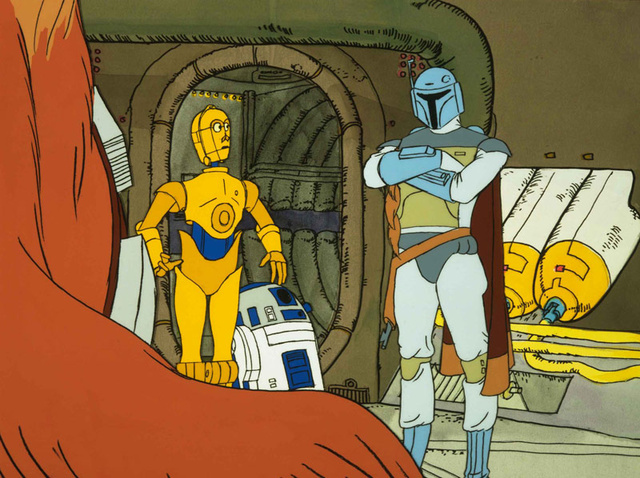
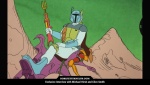
To understand that moment best we have to go before the release of “The Empire Strikes Back.” Boba Fett’s bad luck began with how he was introduced, on the “Star Wars Holiday Special,” which aired in November 1978 on the CBS network. There was nothing wrong with his appearance but the production as a whole was below the standards of a Star Wars movie. The Holiday Special as a whole was never given an official release but the animated segment Boba Fett first appeared in is now a separate independently available title in the Vintage category of Disney+ Star Wars (“The Story of the Faithful Wookiee”) but it was originally released within that infamous 98 minute TV movie that was preserved by fans who circulated bootlegs of the recording much to the dislike of George Lucas. Eventually it would get shared over the Internet becoming a more global sensation. George was not a fan of the Holiday Special but there was nothing he could do about it.
Most Star Wars fans agree that the Boba Fett animated segment of the Holiday Special is one of the saving graces of the production, more than the return of some of the original film’s cast, or the celebrity musical segments (who doesn’t love Bea Arthur singing in a Cantina though?). But for a character as high quality as Fett to have The Holiday Special as his “First Appearance” was embarrassing, but at least in a unique way. The only other character that had a “first appearance” as unlucky is Quan-Chi from the “Mortal Kombat” universe, who first appeared in a forgettable kids cartoon called “Defenders of the Realm” before becoming an iconic figure in that famous fighting game series. Boba Fett’s 1978 television appearance would prove to be a blessing, although had he not become a popular character it probably would not have mattered. Without the animated segment the Holiday Special is nothing much more than an advertisement for a Wookiee holiday called Life Day that’s sort of the Thanksgiving of Star Wars with a focus on family. Boba Fett overcame his initial hit of bad luck, but it was the first example of it, thus noteworthy to this story.
The following year in 1979 bad luck struck again when the Kenner toy company had planned to give out rocket-firing Boba Fett action figures in a mail-away promotion but then pulled the feature due to it being a possible choking hazard. A few prototypes survived and were auctioned off for a lot of money, as high as $1,342,000 in a 2024 auction, something nobody back then could have seen coming. The irony is not lost that what was meant to be a free Boba Fett toy turned into one of the most expensive toy collectibles ever. Boba Fett survives bad luck yet again, but at the expense of those fans that should have got those figures back in ’79 in anticipation for “The Empire Strikes Back.”
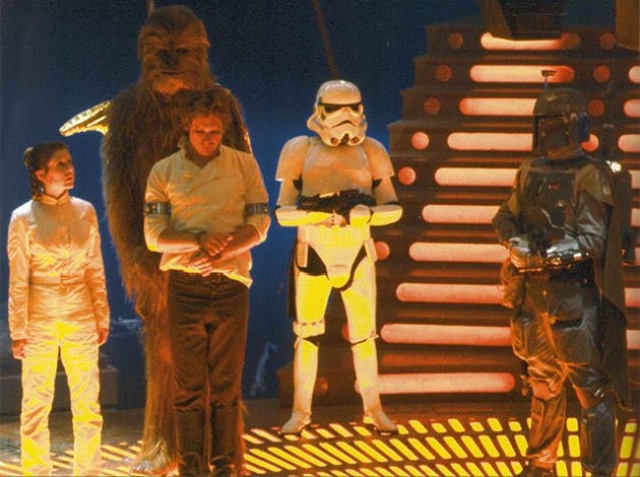
“The Empire Strikes Back” was the first official sequel to Star Wars, an epic film that perfectly blends sci-fi action and fantasy that starts with on an ice planet that becomes a battlefield that has the forces of good departing their base and the forces of evil pursuing them. The story then leads to a swamp planet for one character and a city in the clouds for the others. It ends with the heroes uncertain about their fates rather than a traditional style of ending. The protagonist Luke Skywalker discovers an unpleasant truth about his father, the twisted Darth Vader, while a city administrator Lando Calrissian betrays and fails to save his smuggler-turned-hero friend Han Solo, who gets taken away by the bounty hunter (Boba Fett) who accomplishes two jobs at once, proving his worth as an asset to both the Empire and Underworld.
While Han Solo gets hurt bad by Boba Fett, especially given Vader doesn’t mind torturing him prior to Fett delivering him to Jabba, it’s really Princess Leia, Lando, and Chewbacca who Boba hurt the most in the film, as they are who love Han Solo the most. We see Leia’s moment of heartbreak in losing Han right after she admits her feelings for him before Vader orders Han encased in carbonite. We see Leia’s look of sadness upon seeing Boba Fett (“the bounty hunter”) fly away in his starship (Slave I) with her boyfriend in the cargo hold; it’s one of the most memorable in the Skywalker Saga. Sadly one scene that was filmed for the movie where Boba Fett’s name is said out loud in a conversation between Luke and Leia was deleted, which was unlucky in the sense that he never got a proper name introduction in The Empire Strikes Back, although maybe it was for the best since then it would leave people curious as to how Lando knew his name, since Boba didn’t seem like the type to give out personal information.
Jeremy Bulloch, who played Boba Fett, also expressed that what made Boba Fett very special was the “mystery” around him, as said in an interview from the “Bucket Head” webisode made for Episode II: AOTC. Jeremy was very much right in that, that the initial intrigue is the mystery of the character, and not knowing much about him. In the same interview from “Bucket Head” he also mentioned how his son thought it was funny how his character Boba could look cool despite being a guy with a bucket for a head. So the mixture of mystery and looking simultaneously cool and silly are what give birth to the Boba Fett effect, something unique to him that other Mandalorian characters could never truly have because they are made from his image rather than completely original character ideas.
Right before “Return of the Jedi” (originally titled “Revenge of the Jedi”) released many theorized what the role of Boba Fett would be. Some hypotheses/theories were published in magazines (like in “Fantastic Films”, April 1982) with ideas such as Boba Fett working undercover for Lando to save Han from Jabba. Some people wondered if Boba was a Skywalker himself and others wondered if he was maybe a female character under the armor. The most accurate theory was that Luke would have to come save Han Solo and fight off Boba Fett, but even that accurate prediction could not have seen Boba Fett humiliated and a victim of blind luck when a vibro-ax Han Solo held hit Boba’s jetpack when Solo panicked on hearing (from Chewbacca) of Fett’s presence around him on the damaged skiff. Fett was one second away from shooting down Luke Skywalker after his whipcord attack was countered by friendly fire. Fett’s damaged jetpack launched him towards a hard Sail Barge wall that bounced him towards the sand pit and through the Sarlacc’s mouth where he’s heard screaming in the agony of defeat.
Boba Fett sadly had no dialogue in the film. He mostly spoke through body language. He doesn’t move during the performance in Jabba’s court, so clearly not much of a dancer. Whether he joined in the laughter of mocking Han Solo frozen in carbonite, or the laughter that came from the Rancor eating a victim, is a complete unknown. Boba Fett seemingly stayed silent, only moving when necessary, and keeping his interactions with others as limited as possible.
Fett’s defeat sequence showcased the first live-action Star Wars example of a jetpack in use, the first use of the whipcord launcher (which became a signature weapon of many Mandalorians), and the first use of the Dur-24 wrist laser (which he uses right before his fall). For such a cool character it was tough to see him knocked out of the film before the halfway point, along with Jabba the Hutt, because of how good “The Empire Strikes Back” was in handling the setup to that storyline (although the true beginning of the Jabba/bounty hunters storyline was Greedo’s death scene from the first film). To go from a storyline of a gangster and his bounty hunters and minions to one of teddy bear looking creatures beating up Stormtroopers was an unexpected trajectory. That kind of summed up Star Wars in the 1980s, there was a lot of variety.
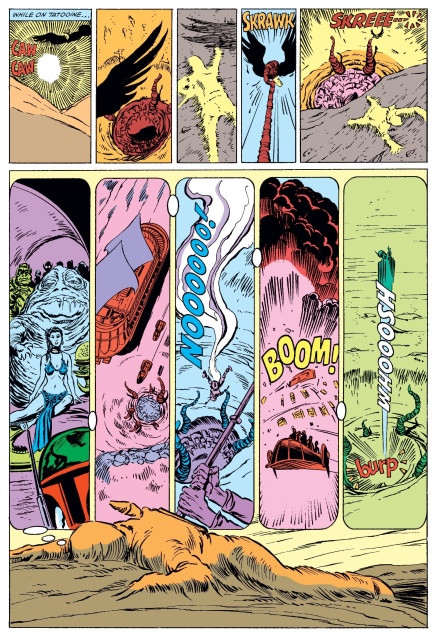
But Fett got unlucky twice in 1983, as he didn’t just fall down the Sarlacc pit once, but twice, falling into the Sarlacc again in the story “Jawas of Doom” for Marvel Star Wars #81. In the opening of the story Boba Fett is spit out of the creature and left for dead on the sandy surface in an unconscious state. Jawas find him but mistake him for a droid, and they load him into their Sandcrawler. R2-D2 was also in the Sandcrawler, with Han Solo and Princess Leia in pursuit of recovering it, finding themselves in conflict with Jawas and attracting the attention of local Tusken Raiders. Boba Fett unfortunately had amnesia from the Sarlacc experience and in his awakened confused state he was unprepared for the situation, refusing help from Solo (exiting the Sandcrawler) when he recovered enough of his memory to remember who he was. He prioritized attacking Han instead of accepting help, and took another trip into the Sarlacc pit, but this time within an entire Sandcrawler too. (Note: the Sarlacc had no beak in its mouth design then.) It was lucky that the idea of Boba Fett surviving the Sarlacc existed months after the movie but unlucky that the idea ends with him back in the pit, making it seem like an unavoidable fate at the time.
Despite the bad luck falling into the pit twice Fett stories continued to be made, like his appearance on the DROIDS animated series, exploring his earlier bounty hunting days for one episode, but we would not get another Sarlacc-Fett follow-up until 1992 in the famous Star Wars: DARK EMPIRE storyline where Boba Fett with Dengar explains to Han Solo and Leia that the Sarlacc found him to be “somewhat indigestible”. Outside that line there was no explanation to his survival. Boba also had a new starship, named Slave II, in the story, but its existence is short-lived after suffering serious damage (and later getting stolen while Boba went back to his original ship). His bad luck continued in Dark Empire and Dark Empire II in the sense that Han Solo and also Chewbacca (who stole one of his helmets in the storyline) continued to be a problem for him despite his reputation as a successful bounty hunter.
Speaking of Slave II, there was a Slave III and Slave IV as well. While Slave III never really got a story Slave IV first appeared in one of the most famous Fett Legends stories called “The Last One Standing: The Tale of Boba Fett” (from Tales of the Bounty Hunter) which gave him an origin story as a Journeyman Protector of Concord Dawn (around 12 BBY) who gets sentenced for the crime of murder against a corrupt Journeyman Protector. Later in the story it goes forward to the present in 19 ABY where Boba Fett is in the Slave IV hunting down a Devaronian war criminal. The Guild contacts him on Han Solo’s whereabouts and he confronts Solo him in an ultimate standoff scenario.
Slave IV would reappear in the “Young Jedi Knights” series in multiple stories which originally featured Boba Fett in them before lore changed with the Prequels and that version of Boba was revised and made his estranged daughter Ailyn Vel. Ailyn Vel had Mandalorian armor that she took from the Jango Fett clone known as Spar who she mistook as Boba Fett (and who was a character originally conceived as Boba Fett in Marvel’s Star Wars issue 68, 1982). She then found Slave IV, which Boba left behind after the death of Mandalorian Fenn Shysa (the man who encouraged Boba to take up the position of Mandalore in the Revised Original Lore-turned-“Legends”). Also as far as the final design of the Slave IV, it’s the same type of vessel design as Jaster Mereel’s ship that Jango Fett also flew (in the “Bounty Hunters” game). The point is the ship history of the Fetts is a bit complicated, even though his main ship Slave I is iconic for its appearances in two Star Wars films. But to make things even unluckier the official name of Slave I was decided (not by fans) to be controversial around 2021 and officially revised — mostly on merchandise — to “Boba Fett’s Starship” which is a generic description rather than a real name. The fans, correctly so, have for the most part chosen to ignore the renaming. If we go by corporate sensitivity the Slave II would be renamed Boba Fett’s Second Starship. Where’s the fun in that?
Aside from giving us the Slave IV, the author Daniel Keys Moran also did a great job in giving Fett a pre-prequels origin and expanding the rivalry he had with Han Solo with “The Last One Standing” tale, but unfortunately his story of Boba Fett’s survival and escape from death “A Barve Like That” (Tales from Jabba’s Palace, December 1995) was unlucky, in the sense it was compromised in the creative sense, resulting in not using his real name for the story credit (thus J.D. Montgomery, the phantom writer, was credited). Daniel envisioned “the nightmare of a strong man dying a slow death across years, losing his sense of who he was piece by piece” and “a final shot at life long after he’d accepted the inevitability of death.” In his interview with BFFC (see part 1 and part 2), he added “I wanted to send Boba Fett to Hell” but instead his idea was vetoed as Fett could only stay in the pit a few days, and the Sarlacc was not allowed to be a sentient creature as Moran intended, so instead J.D. wrote in an alien entity into the story as a substitute that Fett fought with on a psychological level while he used a jetpack explosion and his concussion grenades to climb out of the pit (where he was found by Dengar, as explained in Dengar’s tale from “Tales of the Bounty Hunters”).
Clearly those who wrote Star Wars novels and comics liked the idea of Boba Fett being available to use post-Sarlacc rather than unavailable. It was no surprise fans welcomed the idea of more Fett, but it was curious that George Lucas seemed to be confused about his degree of popularity back then, like in 1997 when he said Boba “seems like a powerful character, except he gets killed”, acknowledging “people who write the books, and everything, and the comics say ‘we can’t kill him, we gotta bring him back, we can’t let him die!’ In regards to Boba Fett’s death, Lucas said in 2004’s DVD commentary of “Return of the Jedi” that “it makes it even more of a misstep that we wouldn’t make more out of the event of his defeat, because most people don’t believe he died anyway. I’d contemplated putting in that extra shot in where he climbs out of the hole, but y’know I figure that’s… it doesn’t quite fit, in the end.”
Clearly despite his EU survival story being approved by Lucasfilm as legitimate lore he didn’t regard the expanded universe as much as fans. Regardless he still realized the flaw of that scene from “Return of the Jedi;” that many didn’t believe he died, we weren’t buying the death regardless of how funny or disappointing we thought it was. By the unwritten rules of storytelling it either should have been more epic and convincing based off how he was portrayed in the previous film and also on how cool and battle-ready he looked. Either that or it should have looked as if his survival was implied, rather than accidentally implied based off being the only one to fall in the pit with armor that could keep him alive long enough to find a way out. But one has to consider that, as a superhero serial-inspired film and conclusion to the Trilogy, “Return of the Jedi” has to hammer the point home that villainy has consequences, so Jabba dies, many of his minions die, the Emperor seems to die with the second Death Star (prior to him somehow returning), many Stormtroopers die on Endor, and Darth Vader dies as well, although he ends his life on a heroic note.
While the idea of Boba Fett surviving was great, seeing it in “Return of the Jedi” wouldn’t make much sense unless it was setting up a future storyline, but that was George’s last film for many years until he opted to do the prequel films as opposed to starting with the sequel trilogy as some may have preferred) so leaving Fett’s film fate up to imagination for so long was fine in that sense but even George warmed up to the idea of Fett’s survival by the final years of his ownership of Star Wars, around 2012 at Star Was Celebration VI where George Lucas opined in a hot-mic recording where he’s heard validating how the rest of the world felt, that Boba Fett didn’t die, describing him as a “survivor”, just as the comic book and short story writers felt about it, and the many Boba Fett fans. I think one can compare his years of avoiding an official position though as similar to how producer/writer/director David Chase of “The Sopranos” avoided confirming if Tony Soprano lived or died in the finale of the series, because by not being so absolute about it the whole situation becomes more fun for the audience, giving them something to debate. Just like Jeremy Bulloch said about the mystery of Boba Fett being what made him very special it can be said that the mystery of a character’s fate has an intrigue to it as well.
Sadly Disney decided to put Boba Fett fans through a worse scenario in regards to wondering of Fett’s survival since all the original EU lore stories fell under the umbrella of a manufactured category called “Legends”, with only George Lucas’ stories, and The Clone Wars animated series, to work with as a foundation for an alternate canon, a separate lore from the previous one that the audience is left to decide is good enough. Unfortunately in the decade plus of alternate lore there haven’t been as many universal hits like there were in the past, and while Boba Fett has been portrayed well enough in the past decade of alternate canon he’s rarely used with any regularity and his Sarlacc survival wasn’t as certain at first under Disney’s ownership.
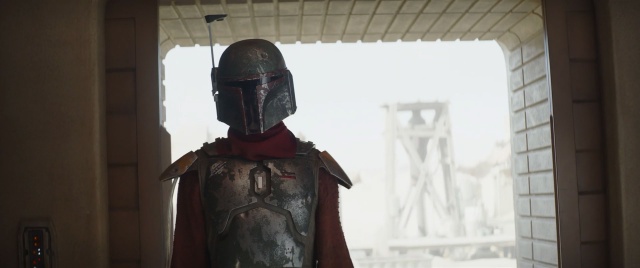
In the Disney era it was writer Chuck Wendig who would be the first to set up the survival story of Boba Fett, but indirectly, following up Boba Fett’s “all-too-familiar Mandalorian armor” in ‘The Aftermath Trilogy’ of novels (2015-2017), but given Boba wasn’t named it was unclear if it was his armor, before clarification by the author on social media. The armor officially survives the injured Sarlacc having been taken by Jawas and sold to Cobb Vanth of Freetown who uses the armor to protect his town. Boba Fett was unlucky again, as his fate was left unknown, and his armor given away to a new but seemingly unimportant character named Cobb Vanth. But Boba Fett’s return would get teased a few years later, in December 2019’s episode of “The Mandalorian” (“The Gunslinger”) before he officially returned in “The Mandalorian” Season 2 (2020) seeking a return of his armor from Vanth.
As a result Cobb Vanth lost the armor he should never have had to begin with – not that he’s a bad character, but if it wasn’t okay that Jodo Kast posed as Boba Fett, then it shouldn’t be okay when anyone else does it. One could joke that Disney Star Wars was fixing a problem that Disney Star Wars created by making sure Cobb Vanth gave up the armor. But it’s story complications like that which made it tougher for Jon Favreau to create a simpler Boba Fett story, instead of one that has the obstacle of explaining Fett’s survival in a way that respects George Lucas’ vision of a flawed survivor (flawed in the sense he worked for bad people), a vision that respects the fans of the original Sarlacc survival story, also one that can incorporate Cobb Vanth in a way that strips him away of his/Boba’s armor but doesn’t make him look bad either, since Vanth was developed to be a heroic character, and if Favreau is writing Fett as a heroic character, it wouldn’t look right if Fett simply killed him. Instead he went a more creative direction where Fett tracks down a Mandalorian who had it because he didn’t like seeing Cobb Vanth wearing stolen Mandalorian armor (just like how Boba Fett fans didn’t care for Vanth wearing it either) but Vanth proves his worth and Boba saves his life as a thank you.
But it would be unfair to criticize only Disney’s unlucky complication of Fett lore without considering the complications the Prequel Trilogy. Given George liked the character of Boba Fett he sought to make another one with Jango Fett, the father of Boba. Originally, as said in commentary for “Attack of the Clones,” George Lucas’ original plan for young Boba Fett was he was a regular clone trooper that at some point left the army to do his own thing, but then later George thought to make Boba the unaltered clone son of Jango in order to make Jango seem like a complex villain that had a heart, caring for his clone son throughout his journey as a bounty hunter living on Kamino working on behalf of the Separatists led by Dooku under the influence of the Sith, while simultaneously being the clone template for the army the Jedi would inherit (and later be betrayed by). George Lucas made Jango Fett a formidable villain for “Attack of the Clones” showing off more of what Boba Fett’s suit and starship (Slave I) can do having Jango fight Jedi on the ground and in outer space. He even saves Dooku (who he knew as Tyranus) from Jedi Master Coleman Trebor, blasting him off a balcony in the gladiator arena on Geonosis, although he loses his life during the battle, because his unlucky end is necessary for Boba’s new beginning, as he gets the motivation to follow the way of his father. George Lucas gives Boba Fett almost a Batman type of origin story in “Attack of The Clones” in the sense their motivation to do what they do comes from tragedy and the loss of a parent. This was not the original motivation of Boba Fett, as he was originally a more mysterious character, so this added revelation made him a little less mysterious in terms of why he was motivated to be a great bounty hunter, which was unlucky, but on the flip side it created an additional mystery of why Jango Fett wanted a clone son at all.
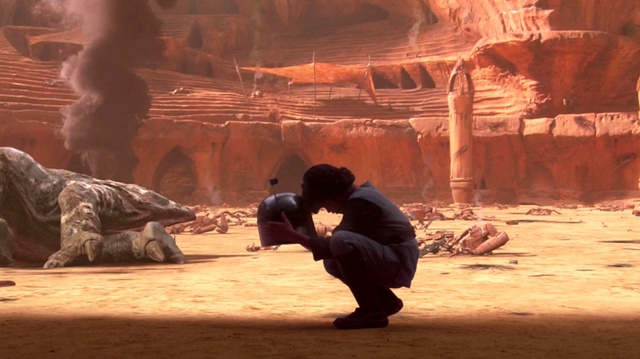
The revelation of Boba being a clone of Jango Fett caused revisions to his pre-existing lore, which was unlucky in the sense of convoluting his history, but Jango Fett himself was luckier, with Jango’s lore thriving within comic book stories like Open Seasons, video games like Bounty Hunter, and also novels that would also showcase other clones or the young version of Boba Fett who later had his story expanded upon as well, having his story continued in The Clone Wars cartoon series where he made a modest 5 appearances (1 of the 5 being a Cameo appearance) which seems unlucky considering how many seasons TCW had. Boba Fett was meant to have more appearances on The Clone Wars in story arcs involving Cad Bane and their duel, Krayt’s Claw and Tyranus/Dooku, and Anakin Skywalker, where he fights Boba who finally wears his Mandalorian armor on the series, but they were never finished and only a few unfinished scenes have been shared for the public to see.
As unlucky as it was to not get those TCW Boba Fett episodes at least unfinished clips give us an idea of what they would have been like although it’s unlucky that even in all the series that spun off The Clone Wars there has been no Boba Fett appearances since. Oddly enough he was not used or seemingly considered for The Bad Batch series, which takes the young Boba Fett concept of “Attack of the Clones” and reimagines it, creating a female counterpart who saw her brothers as family and someone who saw her home of Kamino get destroyed, inspiring her to fight the Empire and years later join the Rebel Alliance as a fighter pilot; while her Bad Batch brothers know of Boba Fett’s existence they never meet him nor mention him to Omega (or if they did, it was off-screen, which could be said of the possibility of Fennec Shand mentioning Omega to Fett years later). Omega is sort of the lucky version of Boba Fett in the sense she had a more positive life after losing her home, being able to settle down peacefully awhile and grow up with other clones of Jango Fett after fighting the Empire back when they still had Clone Commandos in their ranks. Boba was not lucky enough to have a proper family substitute after Jango’s death in the years he was still growing and thus he had nothing to lose in working for the Empire. Had he grown up like Omega with a proper support system he likely could have found himself being a Rebel fighter pilot too but as he was unluckier in life he became a cold-blooded bounty hunter instead.
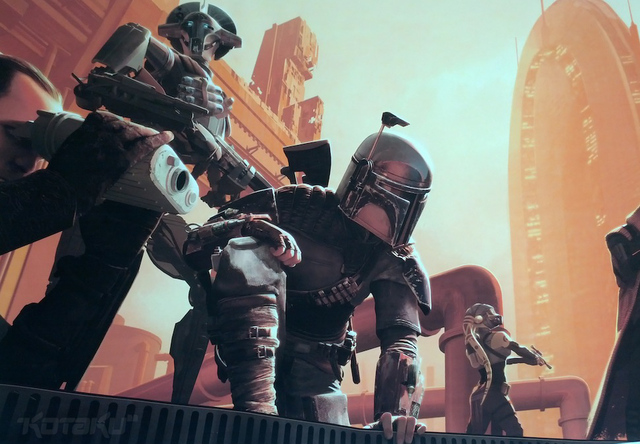
Also unlucky was the cancellation of Star Wars 1313, where the player would take on the role of an armored young Boba Fett sporting a redesign that could have been seen as a spiritual successor to the ‘Bounty Hunter’ Jango Fett game. George Lucas’ Star Wars Underworld live-action TV Show likewise also got cancelled; a series that could have expanded upon the early life of bounty hunter Boba Fett, and then we could have seen George Lucas really expand on the new vision he had for Fett then. Young Boba Fett may have been the unluckiest version of the character when you think about it; he never really got enough time to shine, which maybe was a deliberate move in order to preserve the mystery of the character, but one that robs fans of seeing his early adventures and how he came to rise to fame in his profession (since simply being the son of Jango isn’t enough in the competitive cutthroat world of bounty hunters). He also missed out appearing in Revenge of the Sith, as George Lucas had considered the idea of Boba joining in on Order 66 to confront Mace Windu before he ultimately rejected that story idea and changed it so that Palpatine kills Mace Windu. For whatever reason, young Boba Fett has almost no luck at all, despite the nickname “Lucky” that he used in his first appearance on The Clone Wars when he indeed did make an attempt to assassinate Mace Windu, coming ever so close, but being stopped by the usual suspect; you guessed it, bad luck again, and then it was followed up with Aurra Sing proving to be the worst substitute mother figure in Star Wars, leaving Boba to get arrested by the Jedi.
But when the acclaimed Season 2 of “The Mandalorian” aired about a decade later from young Boba’s adventures it seemed like the Boba Fett blues were finally over, that the classic Fett was back in business. He was alive, not dead. He got his armor back. His armor was confirmed to be Beskar too, ending a debate if it was made of the alternative Durasteel; one of those unlucky debates that the character really didn’t need back then, since we weren’t sure if he was dead/alive at that point. On top of stopping dumb debates that don’t benefit the character “The Mandalorian” series got his ship back too, with Boba Fett’s (Slave I) Firespray starship making its return in “The Mandalorian” Chapters 14-16 and then “The Book of Boba Fett” Chapter 4 (and other episodes where it got a cameo). He got to engage in some cool fight scenes too, wiping out Stormtroopers with ease, so things were looking up, and on top of that, a show with his name attached to it was announced in a post-credits scene showing Fett take Jabba’s throne away from Bib Fortuna. This was probably the pinnacle of Fett under new ownership, the height of Disney Boba Fett. Who knew it would be followed by more bad luck though? Jeremy Bulloch, who played Boba Fett in “Empire Strikes Back” and “Return of the Jedi,” died around the same time “The Mandalorian” Season 2 ended and “The Book of Boba Fett” was announced. His death was a big blow to the many who appreciated him, and then the next round of bad luck came in “The Book of Boba Fett” then arriving about a year later with mixed reactions, with negative reactions being louder than the positive ones. Fans of Boba Fett were unlucky to find him missing in nearly 2 of the 7 episodes, with the other episodes being controversial for not having Boba wear his helmet enough, making him too talkative, and having him retired from bounty hunting, which was the core of his character previously.
Also, the action packed Boba Fett characterization of “The Mandalorian” Season 2 was somehow not really seen on “The Book of Boba Fett” up until the finale, although there were hints of it in some of the other chapters, like Chapter 2 where we see how much damage Boba Fett can do without armor (in the flashback scenes where he is a member of a Tusken tribe), and Chapter 1 featured Boba in a couple of battles, and Chapter 4 showed him shoot down a biker gang from the sky, but Chapter 3 failed to showcase him properly, with Krrsantan attacking him while he slept. A scene of Boba Fett fighting a Wookiee sounds great until you realize Boba has no armor in the scene. While it’s an entertaining scene showcasing Krrsantan’s strength and Boba’s ability to take a punch for it to be the only real action scene Fett got in the episode really shows a disconnect with what fans want and expect. Likewise a cameo in Chapter 6 where his only contribution in the episode is nodding his head (“Return of the Jedi” style, but without a helmet on) shows a lack of effort. What was once a mysterious gesture originally was turned into a callback to “Return of the Jedi,” as if Boba’s cameo is only there to remind the audience he was in that movie. It’s an unlucky tribute. “The Mandalorian” series has paid tribute to Fett’s legacy in cool ways before in each season but having Boba Fett nod as his only interaction in an episode was an absolutely bizarre, and likewise it was unlucky how it followed Chapter 5 which had no Boba Fett in the episode at all outside of being mentioned in the final scene. Temuera Morrison despite his great performances in Star Wars was unlucky in being robbed of about 2 episodes in a 7 episode season, and not getting a call to come back for anything since (outside of voicework like Jedi: Survivor’s Boba Fett, the clone troopers in Season 3 of “The Mandalorian,” and voicing Captain Rex in “Ahsoka”).
Along with Boba’ certain Book of Boba Fett products never came to be that should have been, like an official DVD/BluRay, an Art book for the season, and a comic book adaptation. There was also never an official cancellation of the show, although one can suppose it’s due to how it’s interconnected to the ongoing storyline of “The Mandalorian.” One also has to wonder how much room is left for stories featuring Fett in the timeline order. Does he survive into and beyond the sequel trilogy era? Does he get more appearances in the past, from his childhood with Jango, his early years as an elite hunter, and so on? Those are questions that one who thinks of Fett wonders about. It’s good to have some mystery left in the character but not while simultaneously there is a similar-ish character getting overexposed doing Fett-ish things. It’s not good luck for “The Mandalorian” either since the more buried Boba gets the less meaningful the borrowed imagery is. The new generation isn’t going to see Mando as the mysterious villain Boba Fett originally was, or a villain with a heart like Jango, since that’s not who Mando is as a character despite the similar look. The Boba Fett look with Mando is applied as more of a symbol of heroism, which changes the original design dynamic completely, considering the design of the Mandalorian helmet was conceived as an Imperial Super/Shock Trooper helmet before it became Boba Fett’s bounty hunter helmet. Sure, Jango Fett had a heart, but it wasn’t a heart of gold, his armor wasn’t meant to symbolize fatherhood even if being a father is important to his storyline (as it’s what convinced him to take the deal with Tyranus to have Kaminoans clone him). It’s a bit of unlucky accidental revisionist history though in regards to how “The Mandalorian” has changed how people absorb the imagery; at least from my perception, as someone who grew up remembering the Mandalorian/Boba Fett helmet being something villainous in its appearance (like the Stormtrooper and Darth Vader helmet) rather the friendly/fatherly image it’s become.
What’s also is unlucky that gets forgotten is that Boba Fett was meant to have a movie of his own years ago directed by James Mangold during the time after “Solo: A Star Wars Story.” (Josh Trank and writer Simon Kinberg were also eventually confirmed to have one too.) Two factors probably got in the way of this becoming reality: one could have been creative differences over the darker tone of the project, and the other was perhaps how “Solo” under-performed in the box office. With no future movie in sight the focus went to streaming allowing for hype around “The Mandalorian,” the first live-action TV Show whose initial success paved the way for two more seasons and a Boba Fett spinoff, the limited series “Obi-Wan Kenobi,” two seasons of “Andor” and “Ahsoka,” and “Skeleton Crew.” One might wonder how history would have played out if we got that Boba Fett film, and how that would have impacted The Mandalorian’s storyline. One can’t deny the Fett Legacy played a part in both the rise and fall of Star Wars streaming. The Mandalorian pilot episode featured allusions to Fett, from carbonite-encased bounties towards the start, to a rifle weapon that resembles the one Fett had in the Holiday Special cartoon (the Amban phase-pulse blaster), to the Mythosaur symbol (like that on Boba’s shoulder armor) being used as a decoration in the Mandalorian covert on Nevarro. The covert housed a workshop where beskar could be forged using a cryo-furnace, a gravity hammer, and some magnetic tongs. Part of the charm of the show is how it mixed Fett Legacy elements with new original elements like a Mandalorian Armorer character, and how it reinvented the Mandalorian Religion to be more of a “Creed” that came with a popular (for awhile) catch phrase, “This is the Way.”
The Mandalorian Creed/Way was problematic though in how it mixed pre-existing ideas with new ones and muddied up the legacy and lore of Fett even more. The Mandalorian Religion was something that was mostly developed and mentioned in the stories of Karen Traviss: her Republic Commando and Imperial Commando novels, the Legacy of the Force novels, and “Boba Fett: A Practical Man,” but the idea of a Mandalorian leader goes as far back to 1997’s “Star Wars: Tales of the Jedi – The Sith War” (comic book) which featured Mandalore the Indomitable, a warlord Mandalorian Crusader who conspired with the Sith. A few years later in 2003 the video game Knights of the Old Republic went on to feature another type of ancient Mandalorian known as Neo-Crusaders. One such Neo-Crusader named Canderous Ordo who became known as Mandalore the Preserver. What is known about Mandalorian religion (that the Taung species created) was that it was once rooted in zealotry and ritual combat, believing waging war was to be divine, as they saw a god of destruction as one who championed for change. Their beliefs matured and became more pragmatic over time but they still believed in the soul, and in order to avoid being soulless one needed to follow central tenets that prioritized family and armor. It was Mandalore the Indomitable that caused Mandalorians to distance themselves from the gods and it was Mandalore the Ultimate (a Taung) who opened the doors for other species to become Mandalorians as long as they followed their central tenets known as the Resol’nare. However, despite being in a soul there was very little moral guidance in Mandalorian culture until the creation of the Supercommando Codex, a moral guide that promoted honor and provided ethical guidelines that every Mandalorian mercenary/soldier should abide by. It was created by the Mandalore Jaster Mereel and would be adopted by True Mandalorians like Jango Fett, as well as the Mandalorian Protectors under Mandalore the Resurrector (aka the clone Spar who was mistaken for Boba Fett). The Mandalorian Creed from “The Mandalorian” is a mix of the Resol’nare, the Supercommando Codex, with some of the ritualistic, religious elements that the Taung believed in, as well a tacked on helmet rule that’s more inspired by how Boba Fett never showed his face in the Original Trilogy (and Expanded Universe stories prior to the Prequel Trilogy). It’s quite unlucky that the Mandalorian history is so complicated; an older Boba (20 years after RotJ) came to be more involved with Mandalore, becoming their leader in the original lore (in “Boba Fett: A Practical Man”), whereas in the alternate modern lore he has looser ties to the culture and community. The original Mandalorian trajectory within Legends was complicated when George Lucas felt strongly enough to say that Boba Fett and Jango Fett weren’t Mandalorians, and that became quite a debate in fandom for many years. I think the whole concept of Mandalorians gets overly complicated when there are multiple definitions of the idea. It’s an unlucky aspect as it makes it difficult for fans to define them well as a group to someone new and unfamiliar with their history that does not understand that while a character like Boba Fett doesn’t identify as a Mandalorian it doesn’t mean he’s irrelevant to the topic, especially when stories of him as a Mandalore exist.
Technically the Taung people from Mandalore were the real Mandalorians, but once they let anybody outside the Taung be Mandalorian it created multiple definitions of the word. Jango Fett and Jaster Mereel didn’t see Death Watch as legit; they had their own vision of Mandos, and Death Watch felt entitled to be Conquerors. The New Mandalorians like Prime Minister Almec made it clear that New Mandalorians rejected both Death Watch and True Mandalorians warriors as legitimate members of society. The New Mandalorians were more pacifistic people that deviated away from violent traditions in attempt to create a peaceful society. The Children of the Watch, Descendants of Death Watch, felt Mandalore lost its way (just as Jaster Mereel believed) and had their followers dedicated to tradition and religion (“The Way”).
Sadly the whole history of Mandalorians is full of bad luck, misfortune, and civil wars, thus how the Sith have been able to manipulate them on occasion. So Mandalorians have been very unlucky in their history, but also unlucky in the sense that the behind-the-scenes history of Mandalorians is confusing, since it’s rooted in the histories of the Fetts more than it’s based off the Taung species and ancient Mandalorian conquerors from the Old Republic. It’s more the perception of Mandalorians as being ideal bounty hunters that make most people love those characters. It’s unlucky that the complex concept of Mandalorians feels overshadowed by the simpler Bounty Hunter concept, but it’s far easier to write a bounty hunter adventure than a Mandalorian tale.
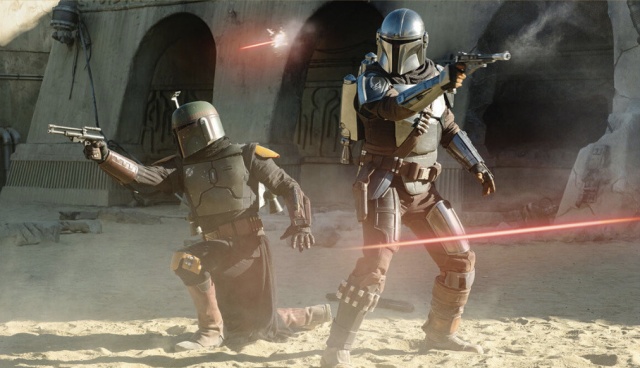
But sometimes it’s not complexity that brings about an unfortunate outcome, but simplicity instead, like that in the form of a happy ending that goes nowhere. The happy ending of “The Book of Boba Fett” is unlucky, for example. The show didn’t really set up a future storyline; well, it did for Din Djarin and Grogu, but not so much for Boba Fett. Sure, it showed that Cobb Vanth was saved and inserted into a bacta pod, but we never see him get out of that bacta pod, and it’s been years since that plot was left unresolved. We never even saw Timothy Olyphant’s character speak to Temuera’s Boba Fett, so it’s hard to even imagine the off screen conversation they’d have. Also, there was bad luck in how Carl Weathers’ character never got an aired scene with Boba Fett, even though the opportunity for one was there in Chapter 14. As a result the audience is left curious if Greef Karga the bounty hunter handler was aware of Fett’s past reputation.
One has to wonder if the missed opportunities are deliberate. Maybe they feel Boba Fett has to maintain some mystery while they simultaneously show us a similar looking character, in Mando/Din, that’s providing action moments that Fett ought to be doing on screen. “The Mandalorian and Grogu” — or TMAG for short — provides a whole film that really ought to be a Boba Fett film. It visually alludes to films Fett was in; borrowing from “The Empire Strikes Back,” “Return of the Jedi,” and “Attack of the Clones.” It continues the Hutt Twins storyline from The Book of Boba Fett, and also features Embo, a silent-and-deadly hat-wearing Kyuzo bounty hunter that was once a member of young Boba Fett’s bounty hunter organization called Krayt’s Claw (cleverly named after Krayt Dragons). Boba Fett and Embo did not have much in the way of interactions but one can’t help but notice the strong-and-silent and mysterious approach of Embo parallels that of the Classic Boba Fett, so essentially Embo is the old school style Boba Fett of TMAG, just as Cad Bane was the same thing for The Book of Boba Fett. However outside of maybe a name reference Boba isn’t part of the movie. While Dave Filoni and Jon Favreau clearly love the legacy of Boba Fett they have a strange way of not giving as much love for the actual character. After all these years a Boba Fett film would have felt deserved, but he’s been pushed aside again, while simultaneously being exploited. We may get cool 4-issue limited series of Jango/Boba Fett to enjoy in the comic book side of things, but if Boba isn’t on the horizon, it feels like his legacy is exploited to boost other characters.
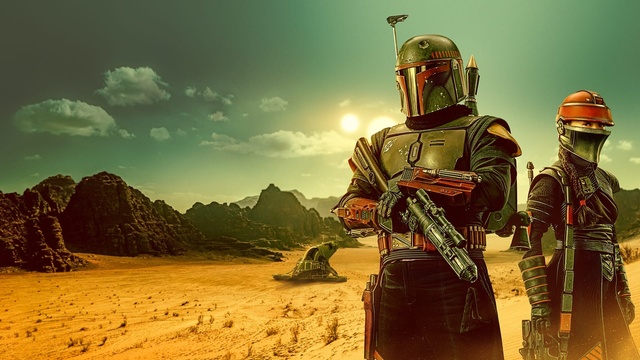
New fans of Star Wars will struggle to see why Boba is so special if he’s continued to be treated this way though, and then a character based off him has less of a chance of success. In my opinion it’s unproductive but others may feel this is a fun approach to honoring the Fett legacy as well, so maybe both can be true, but it’s not exactly the luckiest trajectory. I think one thing is certain, Boba Fett’s history would have played out differently were the property not sold off by George Lucas, and likewise other characters like Luke, Leia, and Han Solo, would have had different histories. That’s the risk of selling a great story off to a more corporate entity that will try to compete with the source material in some ways. Rey was Disney’s Luke, Kylo Ren was Disney’s Darth Vader, Mando is Disney’s Boba, and Grogu is their Baby Yoda (as fans called him during Season 1 and half of Season 2 before Ahsoka Tano figured out his name). It’s an unlucky trend though. You can never fully capture the magic of the original character idea (even when it’s an amazing character like Jango Fett). Sure, they become their own unique character over time, but the original character has the distinction of being first. Part of why the industry does this in modern times is because they believe it’s harder to sell a brand new character and easier to make a semi-original one that exploits the iconography and cultural relevance of a pre-existing classic character. If it’s done out of love it’s fairly harmless a practice, but if its seemingly shameless or nefarious, where the original character is receiving abuse and no effort is made on the business side of things to remedy such a situation, then it’s not so good. And that’s really what made Boba Fett unlucky to begin with, that his creative overlords seem to make sure he can’t advance too far in modern times, just far enough to take advantage of with his dedicated following. As a result people end up missing Boba Fett, and wondering where his weird luck will take him next.
About the Author, Mosh Babilonia
BFFC Member #14255


 Loading ...
The fact that Boba Fett continues to be exploited in the IP business became the main plot of the story, and I mentioned a similar phenomenon in the afterword.
It’s in Japanese, but I hope you find it interesting.
story
https://note.com/deadmans_switch2/n/n7e7e561e54c9?sub_rt=share_pw
afterwaord
https://note.com/deadmans_switch2/n/nf6e48c56a350?sub_rt=share_pw